
What if your biggest margin risk isn’t rising labor costs, supply chain disruptions, or a shortage of skilled workers? What if it’s the fact that you don’t know what’s happening until it’s too late to change the outcome?
Every organization wants to improve profitability. They invest in better planning, forecasting, scheduling, and financial controls. Yet many still struggle to answer one deceptively simple question:
What did this work actually cost us to deliver?
Not what was estimated or invoiced. The actual labor, equipment, materials, travel, and time required to complete the work.

For many organizations, that answer doesn’t emerge until days, weeks, months, or even years after the work is complete. Timesheets are reconciled. Payroll is processed. Project costs are reviewed. Finance closes the books. By then, the opportunity to improve the outcome has already passed. That’s not simply a reporting challenge. It’s a leadership challenge.
Field Service Has Become the Front Line of Financial Performance
For decades, field service was measured by operational metrics: response times, first-time fix rates, technician utilization, and SLA compliance.
Those metrics still matter. But they’re no longer enough.
Today’s service organizations operate in an environment of tighter margins, rising labor costs, increasingly complex projects, and growing customer expectations. Success isn’t defined by how efficiently work is completed. It’s defined by how profitably it’s delivered.
That changes the role of field service. The field is no longer just where work happens. It’s where financial outcomes are created and realized.
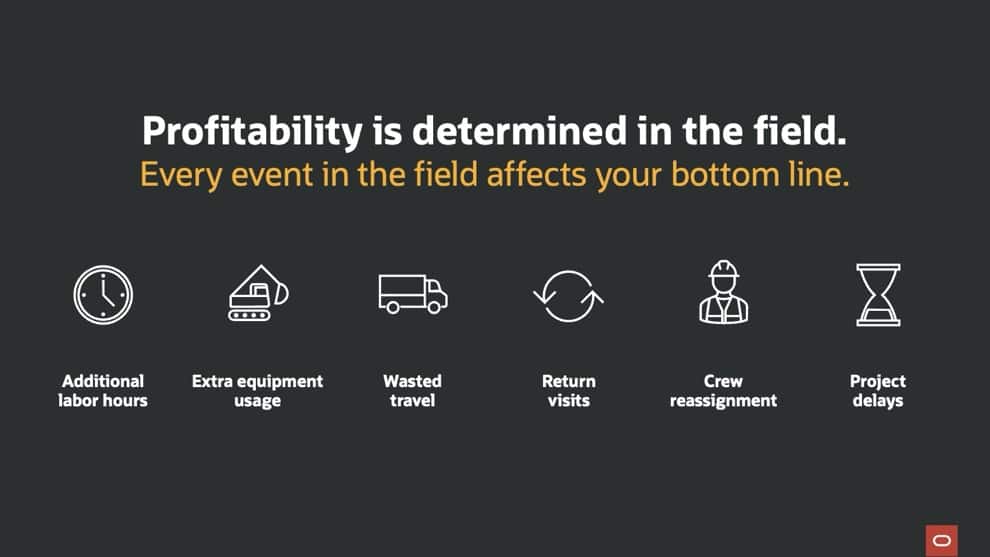
Every additional hour on-site. Every crew reassignment. Every unexpected equipment requirement. Every return visit. Every delay. Every scope change. These aren’t simply operational events. If not managed correctly, they cascade and turn into catastrophic financial events.
Yet many organizations don’t recognize their financial impact until someone manually reconciles systems after the work is complete.
Imagine trying to manage inventory if you only counted stock once a month. That’s effectively how many organizations manage project profitability today.
Visibility Doesn’t Improve Margins. Better Outcomes Do.
Organizations don’t lose profitability because the unexpected happens in the field. They lose profitability because they don’t see it soon enough to respond.
The most successful organizations aren’t simply collecting more operational data. They’re connecting planning with execution so they can understand what’s happening while work is still in progress.
That shift changes everything.
Instead of reacting after the fact, leaders can optimize cost-to-serve before costs escalate. They can rebalance resources before delays compound. They can identify revenue leakage before it affects project margins. They can make decisions based on actual execution rather than assumptions.
Visibility isn’t the end goal. Better outcomes are.
The End of Disconnected Operations
One of the biggest barriers to profitability isn’t the quality of field execution. It’s the fragmentation of information.
Project plans live in one system. Field execution happens in another. Labor is captured elsewhere. Payroll follows its own process. Project costing and financial reporting arrive later still.
The result is an organization that spends more time validating information than acting on it.
One operations leader recently shared that their organization employs a full-time resource dedicated solely to validating technician timesheets before payroll. Even then, they estimate that nearly 20 percent of submitted time still requires correction.
The real cost isn’t just administrative effort. It’s delayed decision-making. When trusted operational data arrives too late, organizations lose the ability to adjust course while it still matters.
Service Is Becoming a Strategic Growth Engine
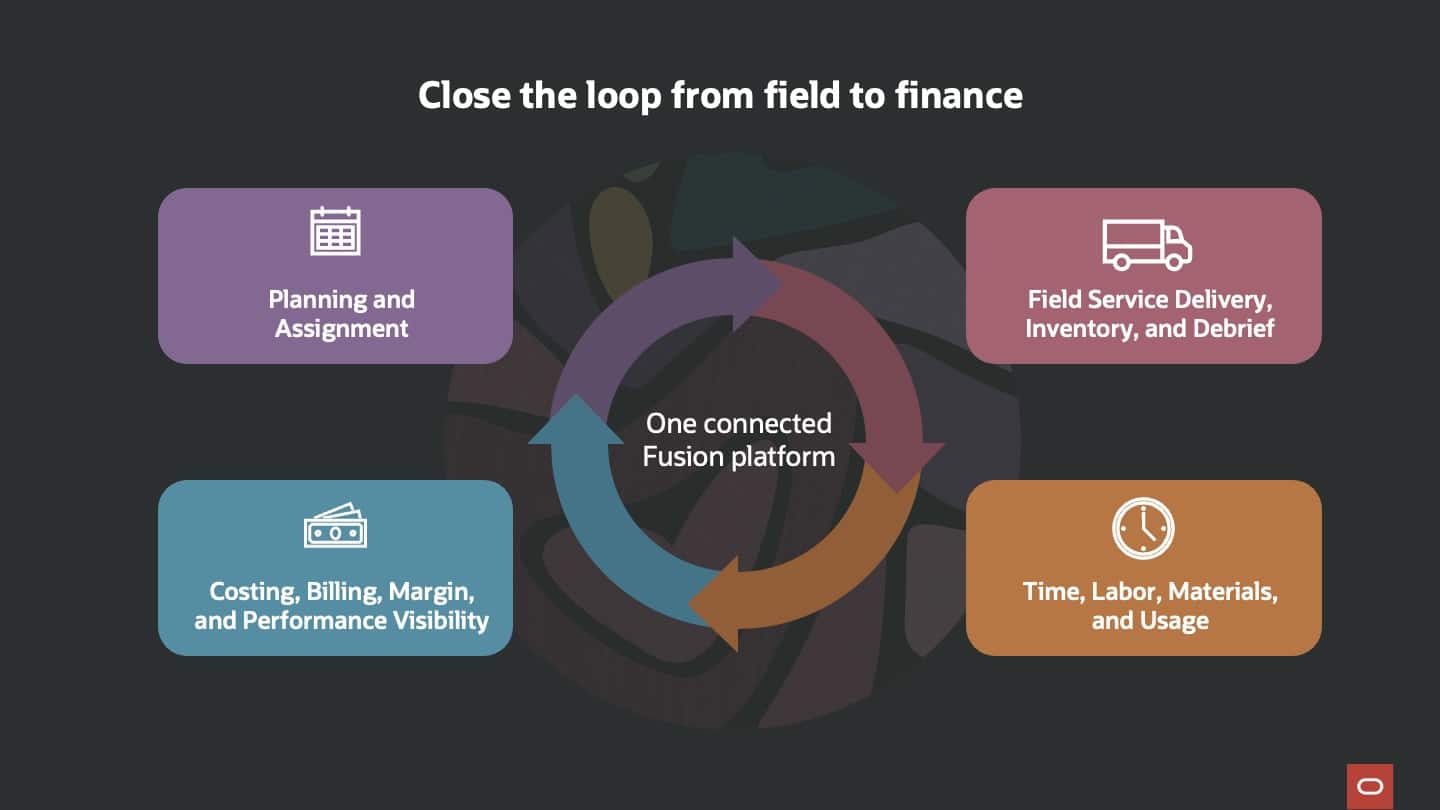
When project planning, field execution, labor capture, payroll, and financial processes work together, organizations gain far more than operational efficiency.
They gain the ability to understand the true cost-to-serve, improve project margins, allocate resources more effectively, protect against revenue leakage, and make future bids with greater confidence because they’re grounded in actual execution data.
That’s a fundamental shift.
Service is no longer simply a cost center responsible for fulfilling commitments. It becomes a strategic contributor to profitable growth.
Looking Ahead
Every industry reaches a point where operational excellence alone is no longer a competitive advantage.
Field service is approaching that moment.
The organizations that lead in the next decade won’t necessarily dispatch technicians faster or complete more work orders than everyone else.
They’ll make better business decisions because they understand the financial reality of every project while work is still underway.
At Oracle, we believe that’s where the industry is headed. As organizations increasingly connect operational and financial processes, the distinction between project execution and business performance begins to disappear.
Because the future of field service isn’t about completing more work. It’s about delivering more profitable work.
Learn how to connect field service with project management, time and labor, inventory, and finance with Oracle Fusion Field Service.