
26C strengthens the path from lifecycle signals to governed action across growth, quote-to-contract, service, and field execution.
Oracle Fusion Cloud Customer Experience (CX) 26C strengthens the connection between customer-facing work and the enterprise systems that execute it. Across marketing, sales, quoting, contracts, service, field service, and employee support, the release reduces the effort required to assemble context, evaluate the next action, and complete work in governed Fusion processes.
The 26C release represents progress toward a broader Fusion CX strategy: customer and business outcomes backed by authoritative and living business state and actionable workflows. In 26C, role-based workspaces surface relevant signals. Embedded agents interpret them and support action. Native Fusion connections move selected actions into the systems responsible for execution. This release-level pattern tightens the path from customer intent to enterprise action.
What changed in CX 26C
26C concentrates innovation at points in the customer lifecycle where decisions must translate into action: identifying growth within the installed base, configuring a valid quote, evaluating contract risk, coordinating service intervention and field work, and supporting employees in context. These capabilities improve decision quality and move more follow-through into controlled Fusion workflows.
Turn lifecycle signals into coordinated growth
Growth depends on recognizing changes in a customer’s relationship with the business early enough to act. Fusion CX 26C brings together customer, product, engagement, service, usage, and commercial signals so go-to-market teams can identify renewal risk, expansion potential, and the action appropriate to each account.
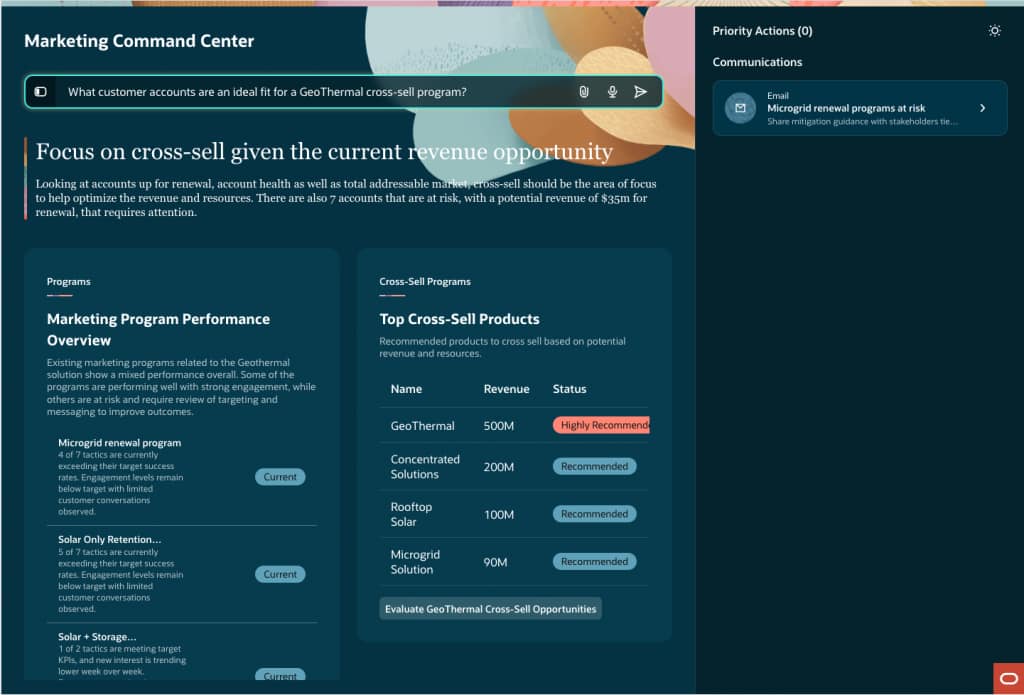
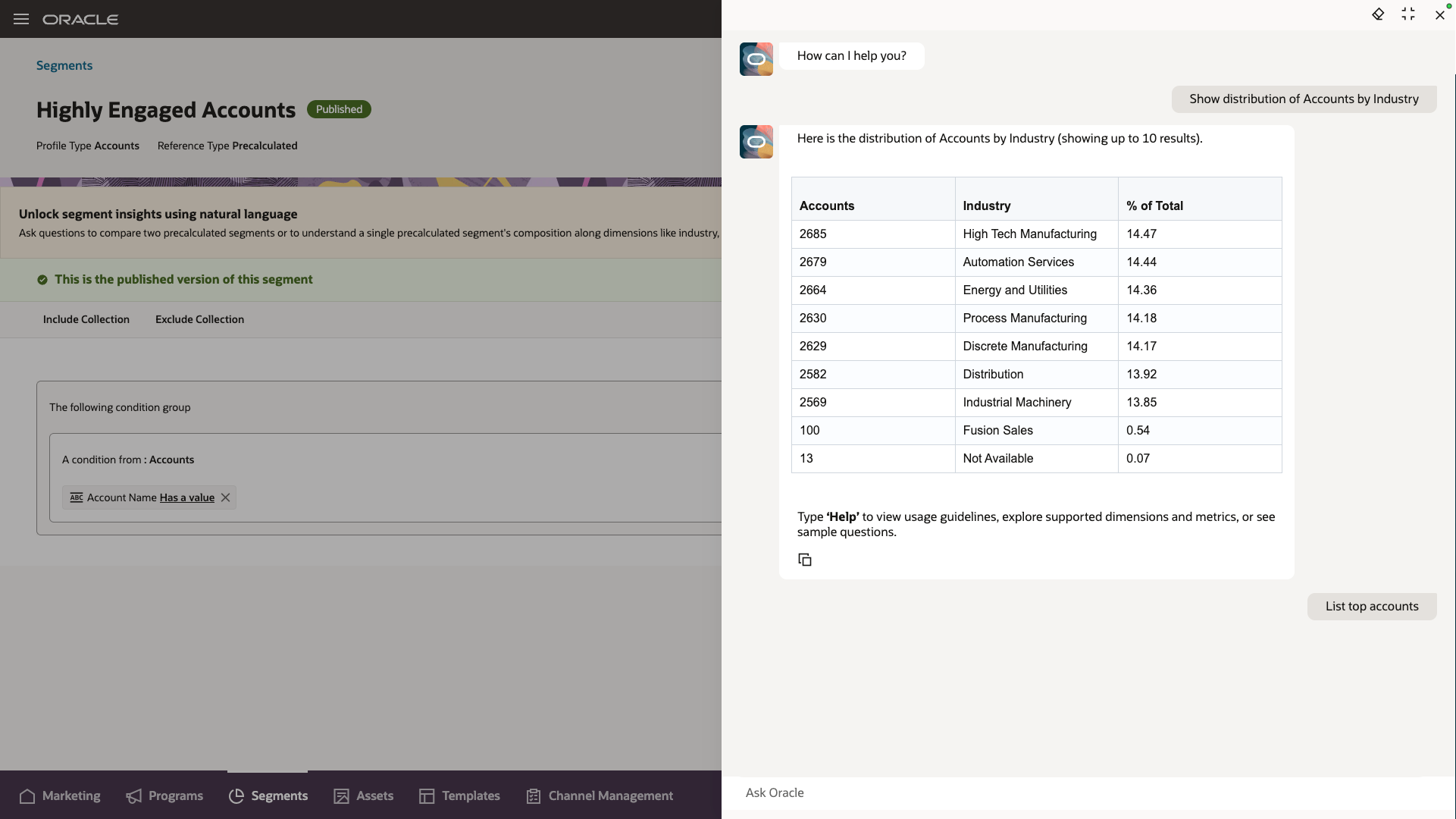
Marketing Command Center gives marketing leaders a consolidated view of customer and account opportunities across the business. Agents analyze signals and whitespace to prioritize programs such as renewal and cross-sell. The workspace also exposes the evidence behind each recommendation, helping teams decide why an opportunity merits investment and what action to take.
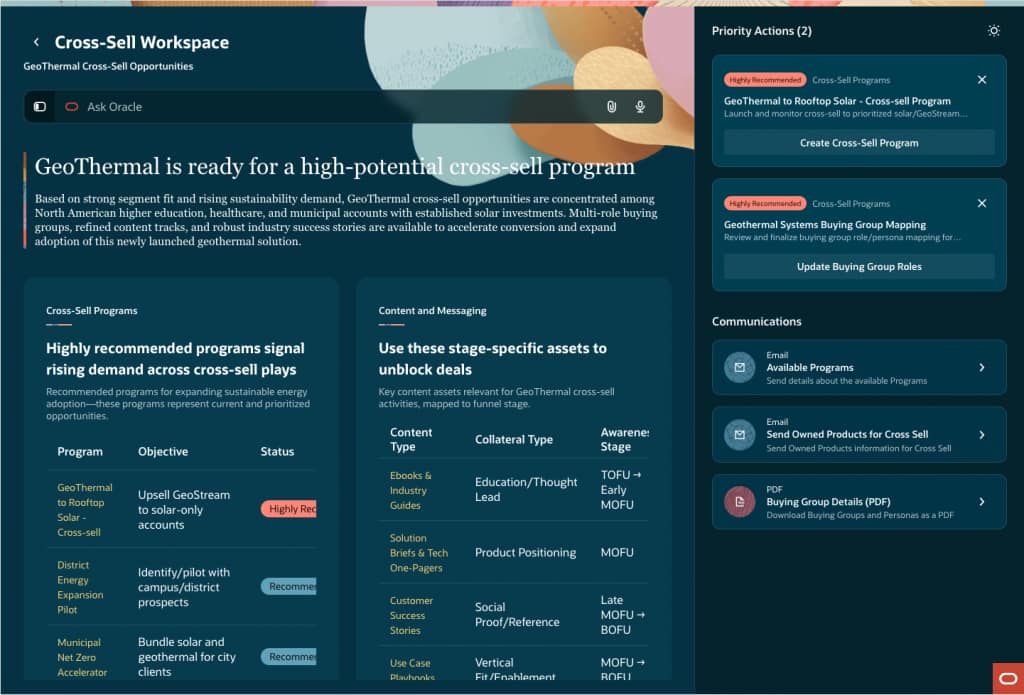
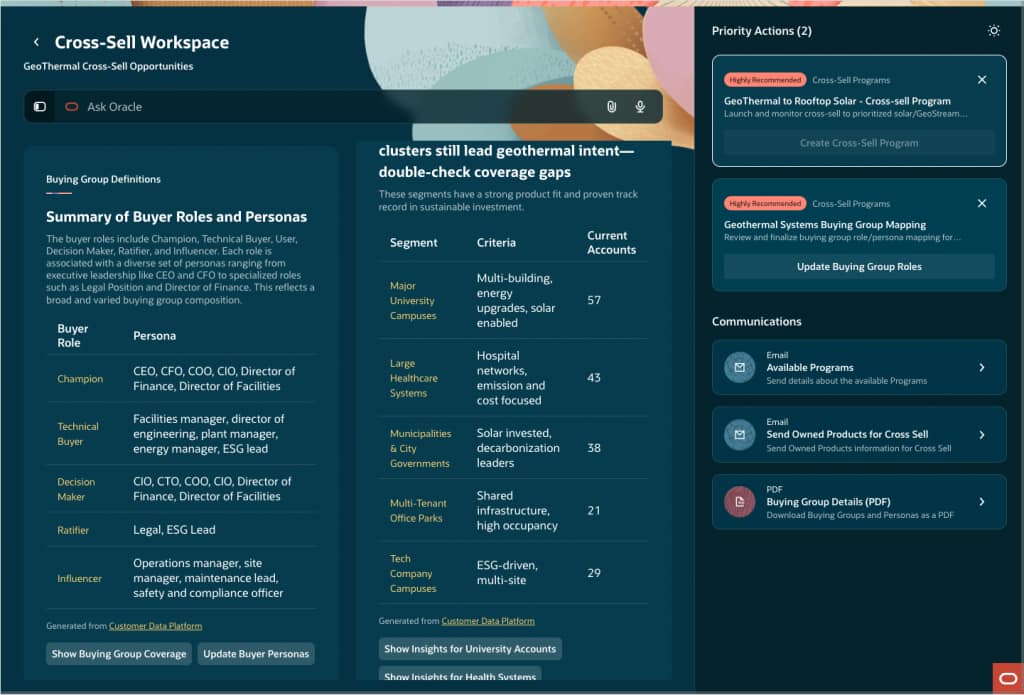
Renewal and Cross-Sell Program Workspaces convert prioritized opportunities into coordinated programs. Renewal teams can identify risk from declining usage, low adoption, open escalations, billing friction, or sponsor changes. Cross-sell teams can combine entitlements, consumption, product footprint, and patterns among similar customers to find expansion opportunities and coordinate marketing and seller actions.
The Buying Group Definition Agent continuously identifies the stakeholders associated with a product or purchase motion. The Customer Insights Advisor places product-at-risk and next-product recommendations in the account context.
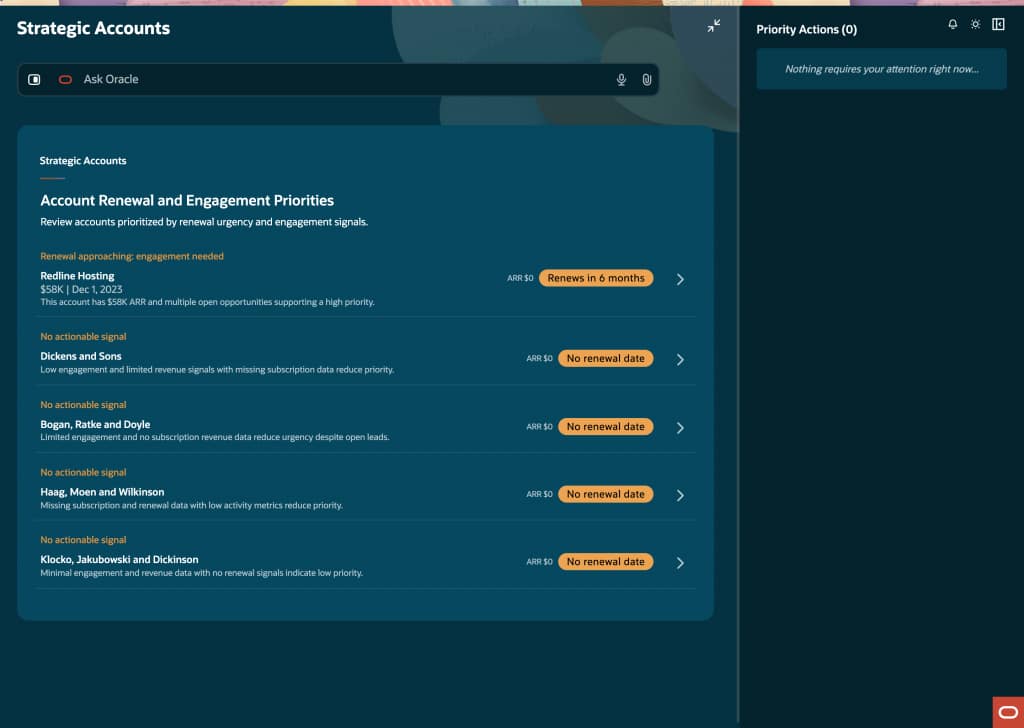
Sales Command Center adds an Account Workspace that prioritizes strategic accounts showing renewal, expansion, or risk signals. It combines customer intelligence, account context, and external insights, then generates an account strategy and explains the factors behind the recommended next move. Sellers can see why an account needs attention and whether the appropriate response is to renew, expand, or mitigate risk.
This changes account management from periodic review to signal-led action. Sellers can focus on accounts with material change, understand the evidence, and act earlier when usage, adoption, or service issues indicate renewal risk.
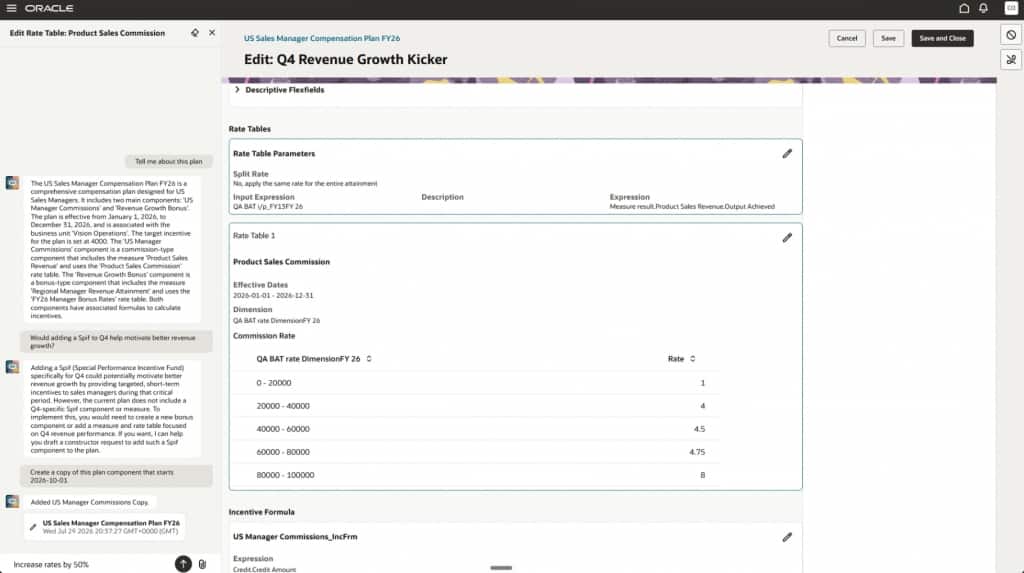
Oracle AI Plan Builder for Incentive Compensation converts an uploaded compensation plan into an initial working configuration for expert review. This reduces manual setup and gives compensation teams a more direct way to align plan design with go-to-market priorities.
Result: Marketing and sales can use a shared set of lifecycle signals to identify renewal risk and expansion potential earlier, prioritize accounts and programs, and coordinate action around current customer and commercial context.
[Note: click on the product images below to enlarge]
Build executable quote-to-contract commitments
Sales User Experience Configuration adds Live and Design modes for tailoring page layouts, sections, actions, and information to specific roles and selling motions. Sellers see the content and workflows relevant to the current task, and administrators can adjust the experience without maintaining a separate interface for every scenario.
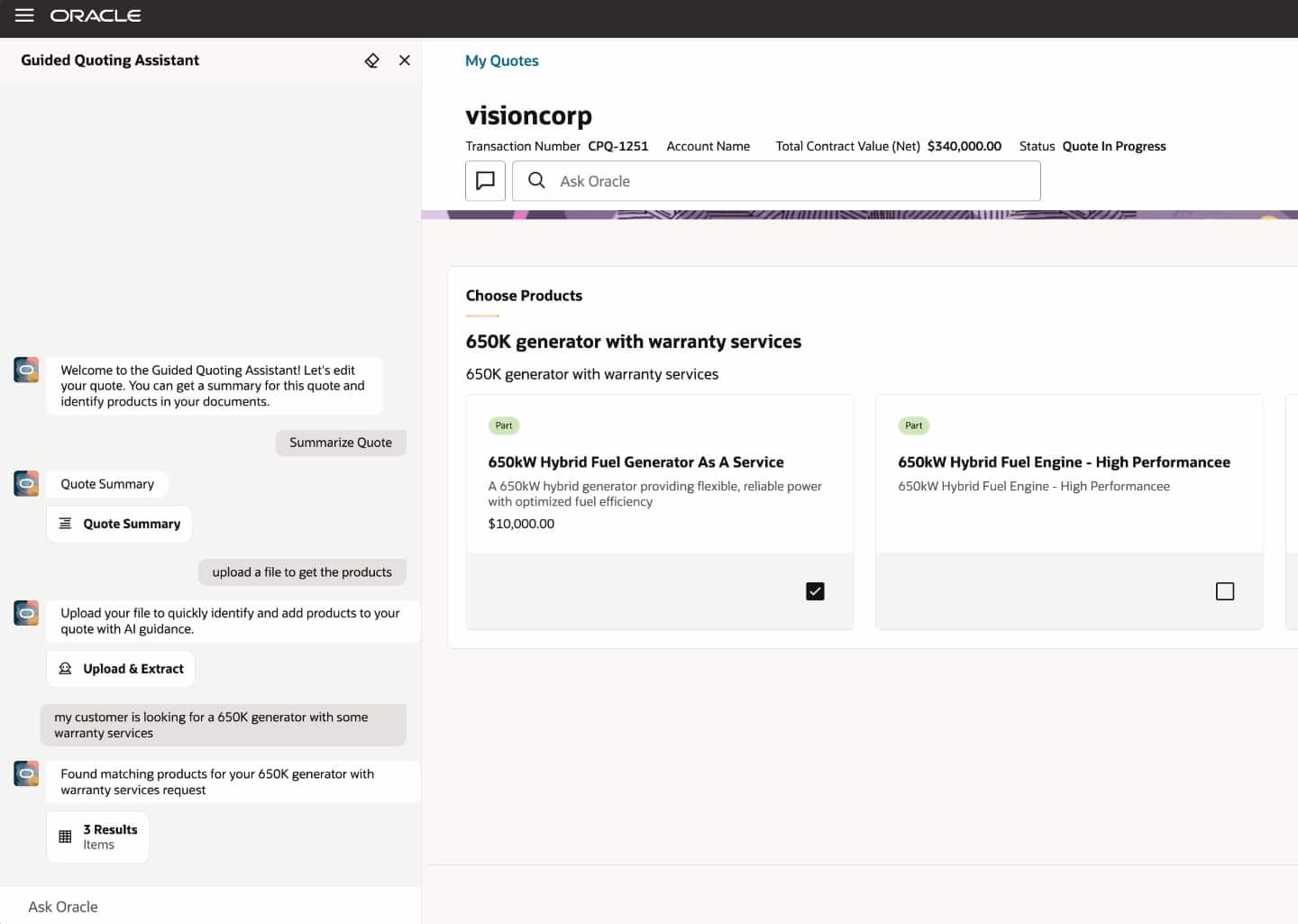
Guided Configuration Agent summarizes the quote, recommends next steps for the current stage, and validates required information before progression. Guided Quote Assistant Agent accepts a seller’s natural-language description of customer need, maps it to valid products, categories, and product families, and creates structured quote actions. The agents reduce manual product search and identify incomplete or invalid submissions earlier.
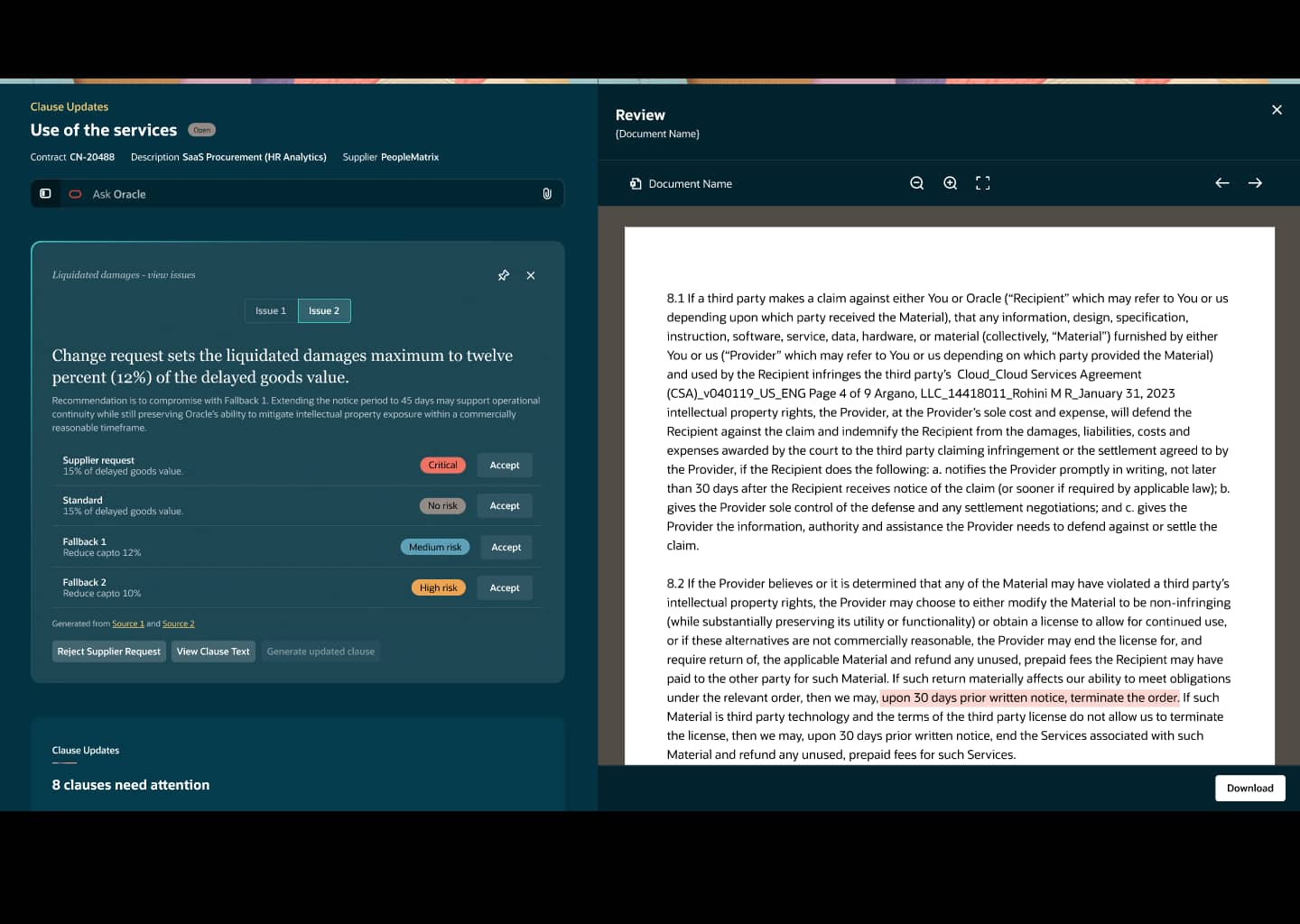
Contract Compliance Workspace brings company standards, approved alternatives, proposed language, and deviation risk into a single review experience for procurement and sales. It identifies nonstandard terms, ranks deviations by risk, and recommends policy-aligned action. Sales Contracts in Redwood connects structured authoring, Microsoft Word drafting and redlining, third-party paper, collaboration, deviation tracking, and digital signature in one sell-side contract workflow.
26C also strengthens the commercial process after the commitment. Revenue recognition support for consumption allowance models accounts for base grants, top-ups, rollover, overage, expiration, and pooled allowances across products and subscriptions. Integrated accounting can align revenue timing with actual consumption and expiration, reducing manual reconciliation.
Result: faster progression of valid quotes, more accurate product selection, earlier control of contract deviations, and a clearer link from the customer commitment to downstream revenue accounting.
[Note: click on the product images below to enlarge]
Connect service decisions to coordinated execution
Service Manager Workspace brings escalations, stalled service requests, service-level agreement risk, and resolution performance into one experience. AI-driven issue analysis connects operating signals and surfaces emerging risk so managers can intervene earlier. For service representatives, Ask Oracle provides guidance in the workflow; persistent conversations retain context by work tab; and interaction metadata can help create service requests. Rich action cards and natural-language summary refinement reduce the administrative work between guidance and action.
26C connects service decisions more directly to field execution. Planned maintenance work orders can flow into Field Service activities, and Oracle Time and Labor can capture labor and equipment hours for payroll and project costing. SR Similarity Advisor surfaces relevant historical resolutions. Part Selection Agent recommends likely parts, and Technician Scheduling Advisor considers customer and technician constraints when proposing appointment options.
Fusion Help Desk for Incentive Compensation applies the same operating pattern to employee support. My Incentive Advisor answers compensation questions in context. AI-led intake can capture, route, and summarize exceptions or disputes for human investigation, while automated and AI-assisted surveys connect resolution with feedback that compensation teams can use to address recurring issues.
Result: service teams can identify operational risk earlier, coordinate action across people, parts, schedules, and labor, and resolve employee support issues with less manual administration.
Strengthen the path from customer intent to enterprise execution
Taken together, the 26C enhancements advance a clear product direction. Growth workspaces use installed-base, usage, adoption, and service signals to identify renewal risk and expansion potential. Configuration, quote, contract, and revenue capabilities improve the integrity of commercial commitments. Service capabilities connect insight to the operational resources and workflows required to resolve an issue.
These release-level advances show how Fusion CX can make customer outcomes more executable by grounding recommendations in enterprise context and carrying authorized actions through governed workflows. The surface and practitioner may change over time. The business still needs an authoritative system to determine what can be done and record what happened. 26C moves Fusion CX closer to that role by turning customer intent into action the enterprise can execute and stand behind.