
In my last two posts, I explored what it means to treat AI agents as part of the service team and why thoughtful service design must come before automation. But how do you know if it’s all working once you get going?
You can’t manage what you don’t measure, and the arrival of AI agents in service operations changes what you need to measure significantly. It’s not just about tracking speed and resolution anymore. It’s about visibility, orchestration, and the evolving role of human agents in an AI-rich environment.
From Speed to Sophistication: Evolving KPIs for AI-Driven Service
Traditional service metrics like AHT (average handle time), FCR (first contact resolution), and CSAT remain important, but they no longer tell the full story. When AI is handling more front-end interactions and human agents are dealing only with the complex or escalated cases, average metrics get distorted.
A new model is needed, one that recognizes:
- Automated Resolution Rate (ARR): How many interactions are fully resolved by AI without human intervention?
- AI Escalation Quality: Are handoffs from AI to humans happening at the right time, with the right context? What are the outcomes for service requests that AI touched and then escalated?
- Agent Enablement Impact: How effectively are AI tools augmenting human performance?
- Operational Containment: Are we solving more at the edge, before issues become full-blown service requests?
These new KPIs help leaders see where AI is adding value, and where it might need more tuning.
Human Agents: From Front Line to Final Line of Defense
As AI handles more volume, human agents are shifting from generalists to specialists. They’re becoming escalation handlers, system orchestrators, and customer advocates. Their performance shouldn’t be judged by volume or speed alone.
Instead, we need to track:
- Resolution effectiveness on high-complexity cases
- Escalation handling and triage accuracy
- Proactive issue identification using AI-derived insights
- Contribution to agent training, tuning, and prompt design for AI
In short, the human role is elevated, and the way we measure it needs to be elevated too.
Visibility Layers: Managing the Blended Workforce
With AI agents and human agents working side-by-side, visibility becomes a management challenge. Leaders need real-time dashboards and analytics that show:
- What agents (human and AI) are doing
- How they’re performing individually and in coordination
- Where workflows are breaking down or being optimized
That requires tighter integration across systems, more thoughtful data models, and a shift in mindset: from managing activities to managing orchestration.
The Future of Service Is Measured Differently
AI is transforming service operations at every level. But without the right metrics, that transformation can’t be managed. Leaders must go beyond the legacy dashboard and build a new system of measurement – one that reflects the complexity, collaboration, and capability of a modern service operation.
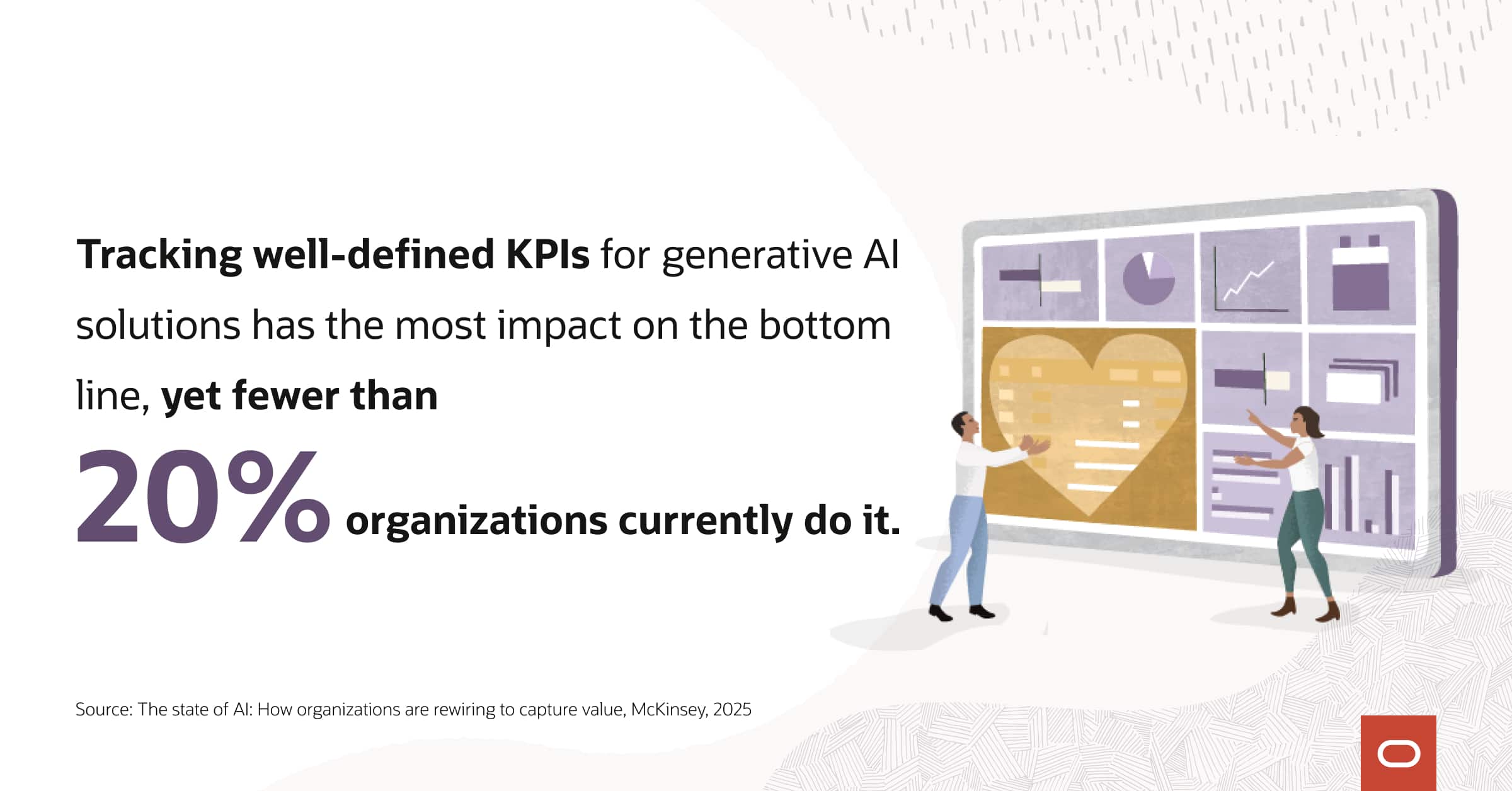
This isn’t just about KPIs. It’s about acknowledging that the service organization of the future is a partnership between humans and machines. And that partnership needs to be evaluated on how well it works together, not just how fast it moves.
The modern service professional must now combine empathy and expertise with systems thinking, data literacy, and the ability to shape AI behavior. These are no longer “soft” or “technical” skills, but core competencies for orchestrating exceptional service in a world where every agent, human or AI, plays a vital role.
For a deeper dive into how to build a unified platform for both human and AI, join me and my colleagues in person at Oracle AI World to explore the Future of Service: Agentic AI Automates All Operations & Experiences End to End. Register here.