
On May 26, The MySQL Community Team at Oracle welcomed MySQL contributors, customers, partners, and community members to the MySQL Contributor Summit at the Oracle Redwood Shores campus, with additional participants joining remotely.
The Contributor Summit brought Oracle engineers and community contributors together to exchange ideas, share ongoing work, and explore opportunities to collaborate on the future of MySQL. This inaugural event featured discussions spanning AI integration, performance and observability, developer experience, extensibility, and community engagement.
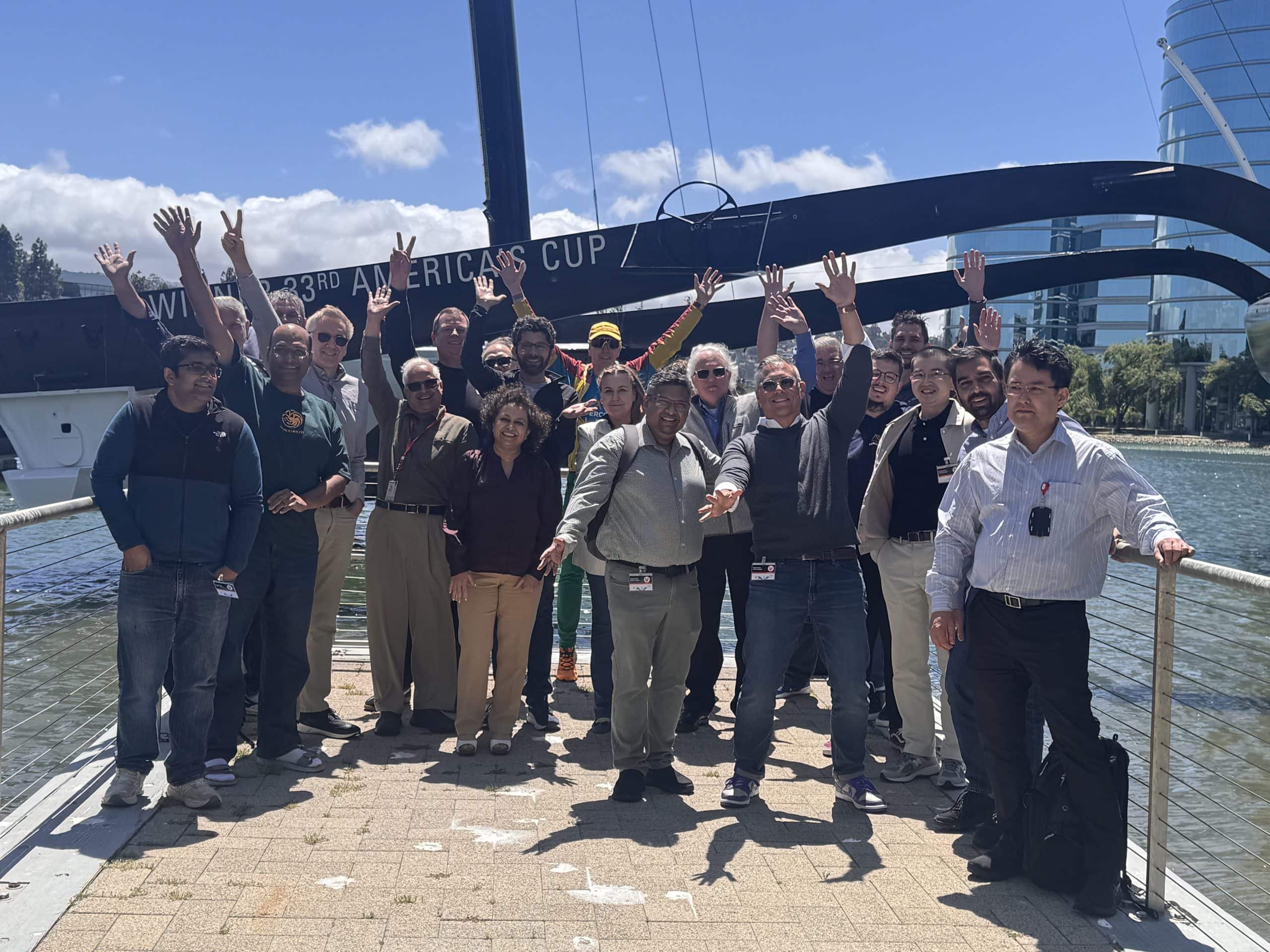
A recurring theme throughout the day was the importance of community participation in shaping the future of MySQL. Through presentations, open discussions, and breakout sessions, contributors shared proposals, research, and feedback that will help guide roadmap planning and community initiatives.
That spirit of collaboration was reflected throughout the agenda, which featured more than 20 sessions and proposals, with nearly half presented by community contributors and organizations outside Oracle. Contributors and Participants included Amazon, Google, Booking.com, Percona, ProxySQL, Readyset, Zhao Song (Hopsworks), VillageSQL, the MariaDB Foundation, Oracle engineers, and MySQL ACE contributors.
Discussions spanned the major themes reflected in the Community Roadmap, including:
- AI-native database capabilities and vector workloads
- Performance optimization and observability enhancements
- Improvements to developer and DBA productivity
- Replication scalability and operational tooling
- Greater transparency and collaboration within the MySQL community
Beyond the technical discussions, the summit provided an opportunity to gather feedback, connect contributors with shared interests, and identify areas for future collaboration across the MySQL ecosystem. To explore all submitted proposals and session details, see the agenda and proposal submissions page. Recordings are also available on the MySQL Youtube Channel.
AI and Cloud
Discussions in the AI and Cloud track focused on vector workloads and AI integration. Topics included native VECTOR storage and indexing, the migration of the MyVector project to the MySQL Component Framework, and a MySQL-native MCP interface for AI assistants and LLM tooling. Together, these proposals explored how MySQL can better support emerging AI use cases while maintaining the reliability, scalability, and performance expected from enterprise database systems.
Performance and Observability
Performance remained one of the most active discussion areas throughout the summit. Presentations covered InnoDB insert path optimization, concurrent split handling, Hypergraph optimizer enhancements, partition pruning visibility, health monitoring, and operational diagnostics. Discussions focused on improving performance, reducing regressions, increasing observability, and helping users better understand and tune system behavior across a wide range of workloads.
The Performance and Observability breakout session focused on operational visibility, replication scalability, governance, and performance optimization. Discussions explored GTID lifecycle management, optimizer diagnostics, health monitoring, schema auditing, replication scalability, and performance benchmarking.
Key topics included:
- Controlled deletion of obsolete UUIDs from GTID state
- Structured JSON optimizer tracing for improved diagnostics and tooling
- Built-in MySQL Health Monitor capabilities
- Native DDL triggers for schema change auditing and governance
- InnoDB batch commit support for optimized group commit and replication apply
- Next-generation replication performance and scalability improvements
Developer and DBA Experience
Developer and DBA experience discussions focused on reducing complexity, improving standards compliance, and modernizing the MySQL development experience. Topics ranged from data type enhancements and schema management improvements to database modeling capabilities and tooling enhancements designed to make MySQL easier to build with and operate at scale.
Replication and Scalability
Replication and scalability discussions explored opportunities to improve throughput, operational efficiency, and manageability in large-scale deployments. Topics included structured change streams, batch commit support, GTID lifecycle management, replication performance improvements, and enhancements designed to help address real-world scalability challenges.
Extensibility / Ecosystem / Tooling Breakout Session
This breakout session focused on the future of MySQL extensibility, ecosystem interoperability, and community-driven innovation. Oracle provided an overview of MySQL’s current Component Framework and extensibility model, while MariaDB shared perspectives on interoperability and ecosystem collaboration. Contributors from Amazon and VillageSQL presented proposals for expanding MySQL’s extensibility through stable extension APIs, query engine extension points, and new approaches for community-developed functionality.
Key topics included:
- Stable extension APIs and ABI compatibility across versions and distributions
- Expansion of MySQL’s Component Framework and query engine extensibility
- Migration of extensions and new functionality to component-based architectures
- InnoDB-based binary log storage and related architectural considerations
- MySQL network protocol evolution, documentation, and interoperability
- Collaboration opportunities across the broader MySQL ecosystem
Community Breakout Session
The MySQL Community breakout session focused on contributor engagement, transparency, release communication, and the overall experience of participating in the MySQL ecosystem. We also discussed forming a group to continue the outreach discussions to further unify and grow the MySQL ecosystem.
Key themes included:
- Greater transparency into bug tracking and feature prioritization
- Clearer contribution pathways and onboarding documentation, along with discussion of the contributor license agreement
- Earlier community involvement in design discussions and feature reviews
- Better communication around releases, versioning, and support policies
- Continued investment in community programs, events, and ecosystem visibility
- Community Metrics reporting on a regular cadence, for instance, at the quarterly Contributor Summits.
We will continue to expand opportunities for engagement through public discussions including those focused specifically on marketing/outreach topics, Contributor Summits, GitHub-based collaboration, Early Access releases, technical design conversations, and enhanced developer resources. These initiatives help create a more open and welcoming environment for participation while preserving the engineering excellence, stability, compatibility, and security that organizations around the world depend on.
Finally, we discussed our commitment to measuring our progress, sharing the status and progress of bugs being worked, and sharing the health of the MySQL ecosystem more transparently. Recent improvements in the bug backlog management and issue responsiveness reflect that commitment.
We reviewed a MySQL Bug Dashboard highlighting continued progress in reducing the bug backlog across MySQL version families. Looking at the bug backlog from January 1, 2025 onward, over 700 bugs have been closed, with active work continuing for the remaining backlog of 1,389 issues. MySQL Server accounts for the majority of reported bugs, followed by MySQL Workbench and Connectors, reflecting the team’s ongoing focus on the areas with the highest community activity. Moving forward, we plan to regularly track and share metrics related to contributor growth, contribution quality, issue response and resolution trends, roadmap participation, Early Access adoption, and engagement across community programs, events, and discussions. These metrics will help us identify opportunities for improvement and support the continued growth of the MySQL community.
Looking Ahead
The summit highlighted a path forward to deepen collaboration, improve contribution workflows, and strengthen the connection between Oracle and the MySQL community. The roadmap reflects many of the discussions from the day and provides a foundation for continued collaboration between Oracle engineers, contributors, customers, and partners.
The summit showcased a broad range of ideas spanning AI integration, performance optimization, developer productivity, observability, replication, extensibility, and operational tooling. Just as importantly, it demonstrated the continued strength of the MySQL community and the value of open collaboration in shaping the future of MySQL.
As community initiatives continue to evolve, GitHub will remain the primary hub for discussions, roadmap tracking, and contributor engagement. The MySQL Community roadmap will be managed through GitHub Projects, and additional GitHub features and workflows will be introduced over time, with corresponding updates published in the MySQL Developer Guide.
Save the Date
Contributor Summits will continue on a regular cadence, providing regular opportunities for Oracle engineers and community members to collaborate on the future of MySQL.
The next MySQL Contributor Summit will take place in Broomfield, Colorado, on August 5–6. We look forward to continuing the conversation and welcoming both returning and new contributors.
Continue the Conversation
We encourage community members to continue the discussions started at the summit and share feedback on the proposals and topics presented. Community input plays an important role in helping shape priorities, refine proposals, and identify opportunities for collaboration.
We also encourage contributors to follow the MySQL Community roadmap for updates on proposal status, roadmap priorities, and new opportunities to participate.
Session recordings will be published on the MySQL YouTube Channel. Use the following resources to stay engaged: