
Enterprise IT leaders are navigating a period of rapid and consequential change. Traditional mission-critical systems, from core banking, to ERP, logistics, and customer platforms are now being augmented by AI-driven workloads that introduce new operational patterns and dependencies. Among the most transformative of these are agentic AI systems, which can act autonomously, interact dynamically with data, and execute multi-step processes across distributed environments.
This shift is not just about adding new capabilities. It fundamentally changes the expectations placed on infrastructure. Systems must remain continuously available, even as workloads scale unpredictably. They must support real-time decision-making while maintaining strong controls over how data is accessed and used. And they must be resilient not only to hardware or software failures, but also to increasingly sophisticated security threats, including those shaped by AI and the emerging risks presented by quantum computing.
Oracle AI Database responds to these challenges head-on. With advancements in availability tiers and integrated security innovations, it enables you to modernize without disrupting existing applications or overburdening teams with complexity.
The opportunity is clear: adopt an infrastructure model that aligns with the realities of modern enterprise workloads, where availability, performance, and security are tightly interconnected and must scale together anywhere and everywhere you choose to run your business.
Platinum-Tier Protection: Elevating Everyday Mission-Critical Resilience
Many organizations have already invested heavily in deploying high availability architectures built out of numerous independent hardware, software, and service components. Yet as workloads grow in scale and complexity, especially with the addition of AI, those architectures can begin to show limitations.
However, as workloads become more distributed and data volumes increase, the gap between modern business requirements for traditional availability and recovery expectations continues to widen. Even short disruptions can ripple across interconnected systems, affecting customer experience, revenue, and compliance.
Oracle AI Database 26ai with Platinum-tier availability is designed to close that gap. It enhances established Oracle Maximum Availability Architecture (MAA) best practices with advances that significantly reduce potential data loss and recovery times while simplifying operations. One of its defining characteristics is that it can be adopted without requiring application changes, making it practical for large-scale enterprise environments running in the cloud and on premises.
Reducing downtime by accelerating failovers is one of the defining characteristics of this tier. Disaster recovery operations that previously took minutes can now occur in under 30 seconds, even for complex, high-throughput environments spanning multiple nodes or regions. This shift reduces the operational and financial impact of outages and supports continuity for workloads that cannot tolerate extended disruption.
Several of the integrated technologies that enable Platinum-tier MAA include:
Oracle Data Guard Failover and Switchover enables disaster recovery operations with failover times typically under 30 seconds. When using Oracle AI Database 26ai, customers will see up to 5.3x faster Oracle Active Data Guard failovers for unplanned outages and 3.5x faster switchovers for planned events. These improvements help organizations achieve application-level gains that enable near-continuous operations:
- Sub-30-second recovery time objectives (RTO) for large and complex outage-sensitive environments (e.g. healthcare and finance), with substantially lower RTOs for simpler deployments.
- Simplified zero-downtime patching and upgrades through faster standby-to-primary and primary-to-standby role transitions
- Improved primary database responsiveness by offloading read-heavy, data-intensive workloads to standby databases. Moving these workloads off of the primary database frees up resources to improve the performance of read/write workloads and enables up to 2X the read performance for reporting and AI workloads that now use the standbys.
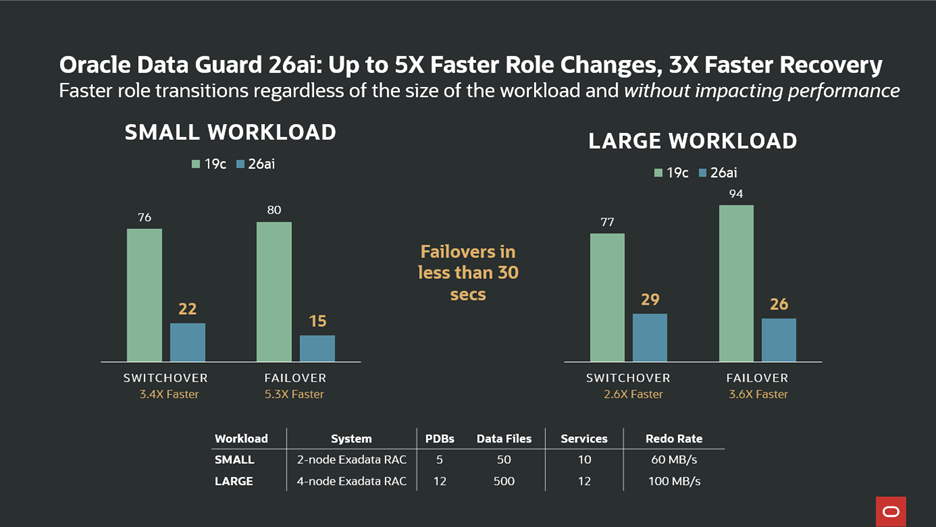
Figure 1: Faster Oracle Data Guard Failover with Oracle AI Database 26ai
Oracle Active Data Guard Remote Data Transfers accelerates data movement between primary and standby systems. With up to 2X faster transfer rates for unencrypted data, and 9X faster transfer rates for encrypted data, organizations can use strong encryption practices without compromising throughput. This is particularly important for enterprises managing sensitive data across regions or clouds.
Oracle RAC Fast Restart Recovery in Oracle AI Database 26ai helps reduce downtime created by failures or planned maintenance operations by parallelizing key operations, enabling online transaction processing (OLTP) applications running on RAC clusters to resume working up to 10X faster than with Oracle Database 19c, with Pluggable Databases experiencing up to 2X faster startup times.
Oracle Transparent Application Continuity helps to further enhance resilience by allowing applications to continue operating seamlessly during backend disruptions. Fast, invisible, application-level failovers using Transparent Application Continuity helps workloads easily achieve high availability and scalable resilience while lowering costs. With Oracle AI Database 26ai, applications now benefit from transparency for more application use cases, queries failover 40 percent faster, and the CPU overhead is up to 50 percent lower on the database servers and 55 percent lower on the client.
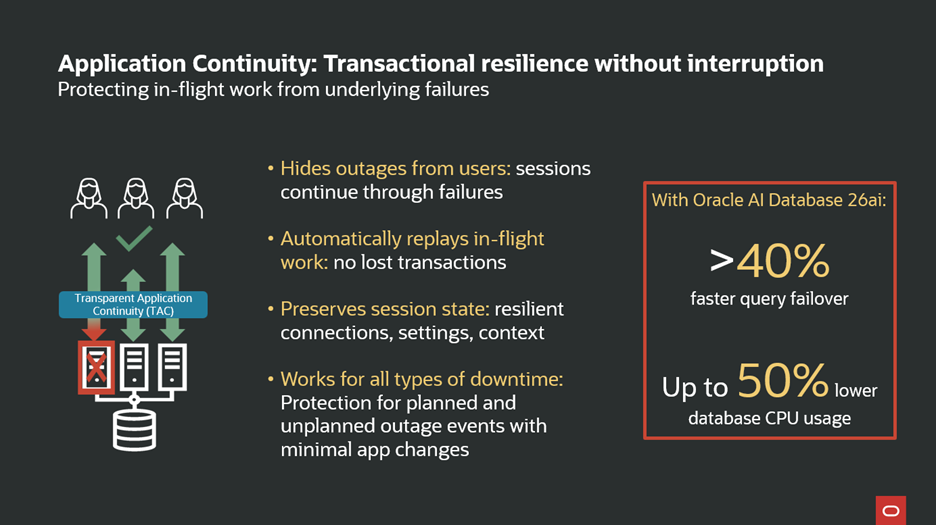
Figure 2: Transparent Application Continuity benefits
Oracle True Cache helps organizations improve the performance and resilience of read-heavy, data-intensive workloads. It helps improve application response time by transparently offloading database reads from the primary database to in-memory, managed SQL caches. Caches are automatically updated based on changes to the primary database so they are consistent with the primary database, and applications can continue to read cached data during primary database outages.
Furthermore, because True Cache is part of Oracle AI Database 26ai, customers no longer need to implement application changes or deploy special-purpose caching technologies with different administration and security procedures, dramatically simplifying deployments.
With True Cache, applications can experience:
- Up to 10X faster query responses from one or more caching nodes.
- Up to 2X read/write performance for applications accessing the primary database due to its lower loading.
- Dramatically reduced speed-of-light delays for remote read scenarios since cached accesses can be local.
- Lower costs, with True Cache nodes requiring less storage and memory than a primary Oracle AI Database 26ai instance.
Zero Data Loss Autonomous Data Guard introduces an additional layer of protection for Autonomous AI Database Serverless deployments. This out-of-the-box capability is provided at no additional charge for every Autonomous AI Database instance that has a local Autonomous Data Guard standby enabled, providing near-zero data loss protection to Autonomous AI Database services deployed in OCI data centers around the world. This latest release:
- Reduces data loss service level objectives (SLOs) from less than 1 minute to zero
- Applies automatically to new and existing local standbys with no required user action
- Has no operational or performance impact.
Oracle Exadata forms the backbone of both MAA Platinum- and Diamond-tier deployments. First introduced 18 years ago, Exadata is the go-to platform for organizations looking to run Oracle AI Database 26ai for mission-critical workloads. It is architected to address the high performance, scale, and availability needs of enterprises running in any mix of multicloud and on-premises environments, delivering the same advanced capabilities everywhere.
Exadata’s design enhances the availability of mission-critical databases with built-in tolerance of multiple component and server failures using triply redundant storage, clusters of compute servers, and parallel networking.. Advanced failure detection mechanisms can detect host node failures within the system in under 5 seconds, much faster than on non-Exadata infrastructure, enabling continuous operations at the server and storage level without need for system or data-center level failovers. These built-in capabilities dramatically reduce the number of times that disaster recovery-based failovers must be implemented.
Together, these MAA Platinum-tier capabilities redefine what organizations can expect from baseline availability. Instead of viewing failover as a disruptive event, Platinum-tier protection enables systems to transition smoothly, often without users noticing any interruption. With Platinum-tier, these capabilities are available transparently to all applications, allowing teams to standardize on a higher level easy-to-deploy availability architecture while reducing the operational overhead typically associated with such improvements.
Diamond-Tier Protection: Designed for Ultra-Critical Workloads
Some applications operate under constraints that go beyond traditional high availability requirements. Real-time payment systems, telecommunications networks, and global trading platforms require continuity that is effectively uninterrupted. Even brief outages can have immediate and far-reaching consequences.
Diamond-tier availability is designed for these ultra-critical workloads. It builds on Platinum-tier capabilities while introducing architectural patterns that support near-instantaneous failover and zero data loss.
Oracle Diamond-tier MAA is built for organizations that cannot tolerate downtime or data loss, delivering the highest level of resilience for Oracle AI Database with near-zero potential data loss and downtime. This architecture brings together Oracle AI Database 26ai, Oracle Exadata, Oracle RAC, Active Data Guard, Zero Data Loss Recovery services, and logical replication technologies into an integrated and validated environment that provides comprehensive protection against a wide range of failure scenarios.
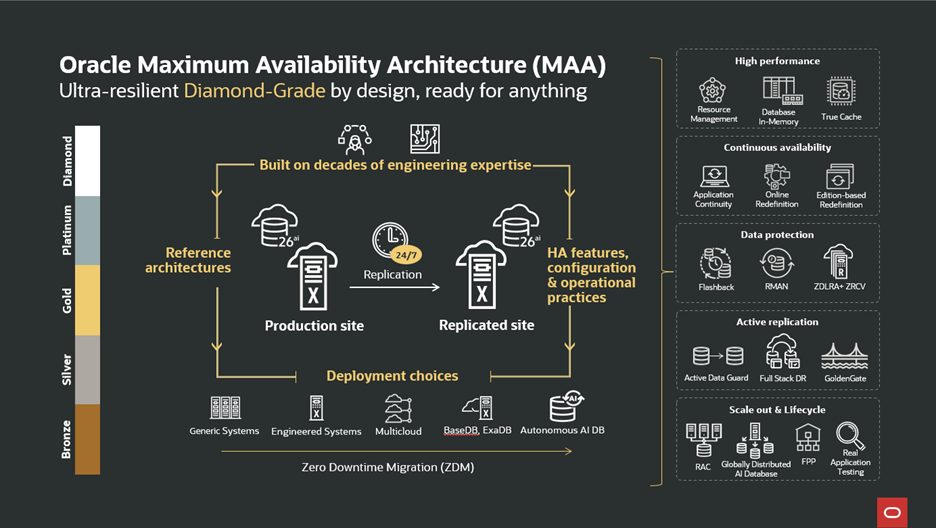
Figure 3: Diamond-tier integration with Oracle MAA
In practical terms, Diamond-Tier is designed to enable ultra-critical workloads to be continuously available through component failures, planned maintenance and lifecycle operations, and even site-level disruptions.
Just as important, Diamond-Tier MAA helps reduce operational challenges that often undermine availability goals: inconsistent configurations, uneven patch levels, and complex integrations. It’s a prescriptive design you can standardize on, and it’s especially valuable when you’re supporting multiple application teams and a growing portfolio of workloads.
Oracle GoldenGate 26ai is a key enabler of Diamond-tier availability, supporting active-active data replication across geographically distributed regions. By allowing multiple systems to process transactions simultaneously, GoldenGate reduces reliance on passive standby systems. Its built-in conflict detection and resolution capabilities help maintain data consistency, even when updates occur concurrently in different locations.
Oracle Globally Distributed AI Database complements Oracle GoldenGate with distributed database capabilities built into the database. It uses built-in synchronous Raft replication to enable rapid in-regions failover in less than 3 seconds, and asynchronous Raft replication to enable data replication and continuous operations in cross-region and cross-geography deployments. Oracle Globally Distributed AI Database deployments can span multiple clouds and on-premises environments, providing flexibility in deployment while maintaining strong consistency.
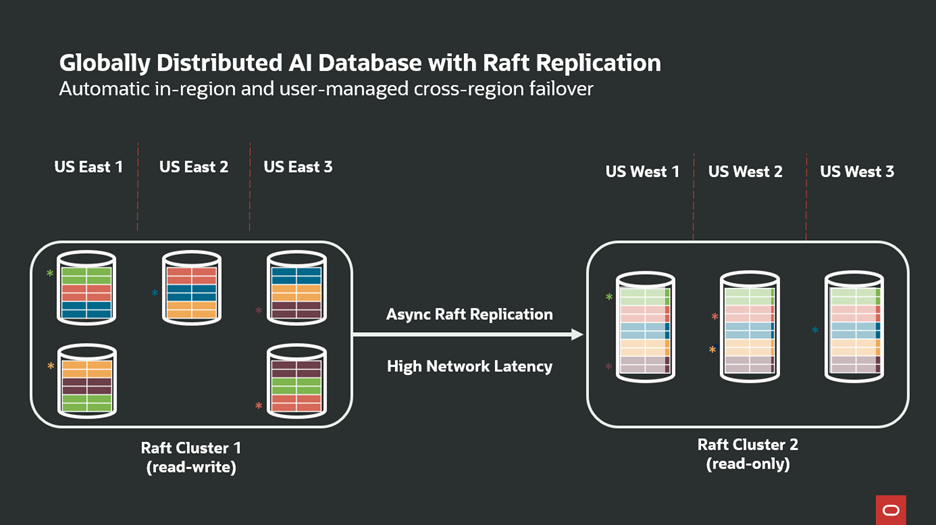
Figure 4: Globally Distributed AI Database with Raft replication
From a strategic perspective, Diamond-tier availability represents a shift toward continuous operations. Systems are designed to operate across systems, data centers, and regions as a single logical entity, with failure handling integrated into normal operations rather than treated as an exception.
For IT decision makers, Diamond-tier capabilities open the door to rethinking how critical systems are designed and deployed. They provide the tools needed to support applications that demand a higher level of continuity, while also enabling flexibility in how infrastructure is managed across environments.
Enhanced Security: Protecting Data in an AI-Driven World
As organizations expand their use of AI, the importance of robust data security becomes even more pronounced. AI systems often require access to large volumes of sensitive data, and their autonomous nature introduces new challenges in controlling how that data is accessed and used.
Oracle AI Database 26ai addresses these challenges through a set of integrated security capabilities that focus on protecting data at its source and throughout its lifecycle. The following enhanced security capabilities are available to all Oracle AI Database 26ai customers—those using MAA Platinum-tier, Diamond-tier, or other approaches for delivering mission-critical availability.
Oracle Deep Data Security is a cornerstone innovation that enables fine-grained, identity-aware access control directly within the database as opposed to at the application-level. This allows organizations to define and implement policies based on user identity, roles, and context, rather than relying solely on diffuse application controls.
This approach is particularly valuable for agentic AI systems. By implementing policies at the data layer, organizations can control what AI agents are able to access, even when those agents operate autonomously. This makes security rules very difficult to bypass, which helps prevent unintended data exposure and supports consistent governance across different types of data, including relational, vector, and lakehouse sources.
Post-quantum cryptography is a new, forward-looking capability that helps customers address emerging risks associated with advances in quantum computing. By supporting NIST standard quantum-resistant encryption methods and hybrid key exchange mechanisms, Oracle AI Database 26ai allows organizations to begin preparing for a future where traditional cryptographic approaches may no longer be sufficient. With improved data-at-rest and data-in-flight encryption and faster TLS 1.3 key negotiations, organizations can more effectively thwart “harvest now and decrypt later with quantum” strategies.
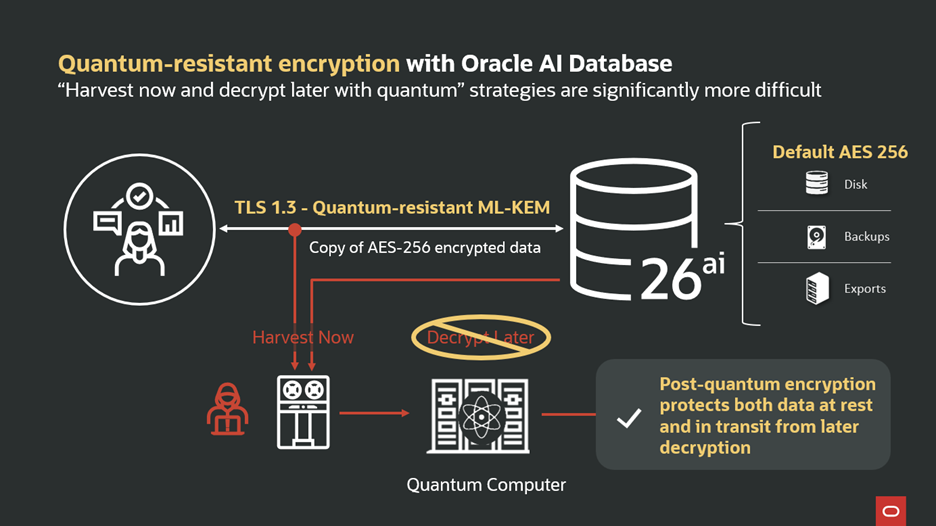
Figure 5: Enhancing Oracle AI Database 26ai security with post-quantum cryptography
Database Security Central provides a unified view of security posture across an organization’s on-premises database estate. It helps IT security teams generate insights into user risk, sensitive data exposure, and configuration changes. By consolidating these capabilities into a single, integrated solution, organizations can improve their ability to detect and respond to potential issues in a timely manner. Oracle customers running in multicloud environments have access to similar capabilities with Oracle Data Safe.
Zero Data Loss Recovery solutions include database-aware protection mechanisms that help protect and recover Oracle AI Database data up to 5X faster than other products traditional recovery methods, being able to restore a 160 TB database in the time it would take a traditional method to restore a 30 TB one. These solutions include real-time transaction protection with virtually zero data loss, immutable backups, and granular access controls that help organizations recover from attacks while maintaining data integrity. They provide a virtual air-gap solution to isolate backups from potential threats, while improvements in backup compression enhance efficiency without compromising security. Zero Data Loss Recovery Appliance has already been used by major financial firms as a key component of their SEC 17a-4(f) recordkeeping compliance strategies. Together, these features provide a comprehensive approach to protecting data against both current and emerging threats.
For IT leaders, these security innovations represent a shift toward integrated protection. Instead of layering multiple independent tools, organizations can embed security directly within their data infrastructure, aligning protection strategies with the needs of modern, distributed, and AI-driven environments.
Conclusion: Building a Foundation for Next Generation Enterprise Workloads
The evolution of enterprise workloads, driven by AI, data growth, and increasing interconnectivity, requires a corresponding evolution in how infrastructure is designed and managed. Availability and security are no longer separate considerations; they are deeply intertwined and must be addressed together.
Oracle AI Database 26ai provides a framework for doing just that. Platinum-tier protection elevates application-transparent baseline resilience across a wide range of workloads, while Diamond-tier architectures support ultra-critical workloads that demand near-continuous operation. Enhanced security capabilities help organizations navigate a complex threat landscape, including the unique challenges introduced by AI and emerging technologies.
For IT decision makers, the path forward involves more than incremental improvements. It requires adopting platforms that can support both current requirements and future innovation. By exploring these capabilities, organizations can position themselves to support agentic AI, protect critical data assets, and maintain continuity in an increasingly dynamic environment.
As enterprises continue to expand their use of AI across the business, the importance of resilient and secure data platforms will only grow. Now is the time to evaluate how these advancements can support that journey.
For more information
In addition to the advancements discussed in and linked to from this blog, you can explore a few others at:
Oracle Autonomous AI Lakehouse