

Enterprise databases power applications that are expected to never go down. Whether it is a payment platform processing transactions at midnight or a global SaaS product serving users across continents, downtime can translate directly into revenue loss and eroded customer trust.
Today’s applications not only need to be highly available, but also globally distributed – processing millions of transactions per second and operating on petabyte-scale data across regions. These requirements push beyond the need for traditional high availability and into the realm of distributed systems.
Single-region deployments can introduce a critical risk since they are one outage away from taking an entire application offline. To address this, organizations are increasingly adopting always-on distributed database architectures that span multiple regions. In addition to supporting local Raft-based replication in an active-active-active configuration, an upcoming release of Oracle Globally Distributed AI Database will also support multi-region resilience using Raft-based replication with an active-passive topology and unidirectional asynchronous replication, enabling data to be continuously replicated across regions.
The Always-On Imperative
Traditional high availability architectures such as standby replicas, failover clusters, and periodic backups were designed for localized failures. While effective for node-level issues, they fall short when an entire region becomes unavailable.
Two metrics are often used to define recovery effectiveness:
- RPO (Recovery Point Objective): How much data can you afford to lose? The lower, the better since you never want to lose data.
- RTO (Recovery Time Objective): How fast can you be back online? The lower, the better since every second of downtime matters.
Meeting near-zero RPO and low RTO goals across multi-region deployments requires a fundamentally different approach, one built on continuous, asynchronous replication across independent clusters, each with built-in fault tolerance.
Oracle Globally Distributed AI Database: Raft Replication across Regions
Oracle Globally Distributed AI Database delivers an always-on architecture with Raft-based replication at its core.
Multi-region deployments are already available with Globally Distributed AI Database using other replication mechanisms, enabling data distribution and resilience across geographies. Building on this foundation, an active-passive multi-region pattern using unidirectional asynchronous Raft replication will simplify operational design while maintaining strong consistency within a region.
Each cluster operates as an independent Raft group, providing:
- Synchronous, strongly consistent replication within a region
- Asynchronous replication across regions
This design decouples regions operationally while maintaining a single logical database.
Architecture: Active-Passive Multi-Region Deployment
The active-passive model is particularly well suited for workloads that require strong consistency, predictable write behavior, and simplified operations without cross-region conflict resolution. It provides a foundational step toward more advanced distributed deployment patterns.
The diagram below illustrates the Oracle Globally Distributed AI Database active-passive topology across two regions.
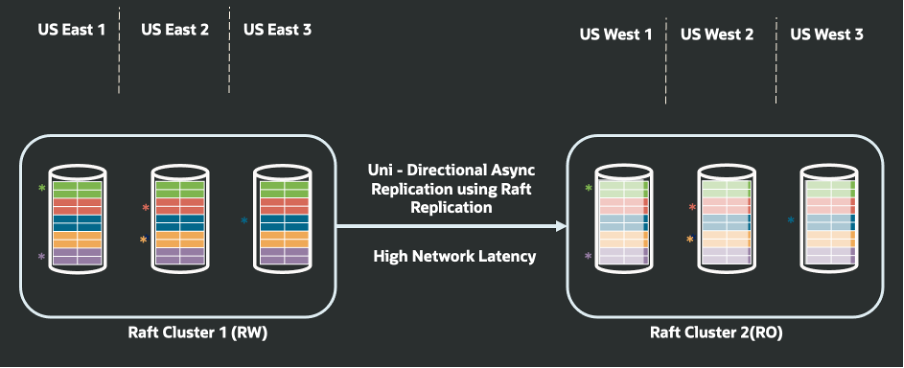
Figure 1: Active-passive multi-region architecture for always-on deployments with data fully replicated across regions
The architecture follows an active-passive model across two regions:
- Primary (Active) region: Handles all read-write traffic
- Secondary (Passive) region: Maintains a continuously replicated copy through unidirectional asynchronous replication (primary to standby).
Replication Model
Key characteristics of this pattern include:
- Strong in-region consistency: Raft uses quorum-based commits to provide strong consistency within the primary region.
- Low-latency writes: Primary commits do not wait for the remote region, keeping steady-state write latency low.
- Transactionally consistent standby: Changes are applied in order at transaction boundaries, so the standby reflects a consistent snapshot of the primary.
- Clear operational model: Writes flow in one direction (primary to standby), avoiding cross-region write conflicts.
- Cross-region recovery point: RPO is bounded by asynchronous replication lag, which depends on network conditions and workload.
Failover: What Happens When a Region Goes Down
This architecture supports two layers of recovery:
Within a Region
Raft provides automatic failover for in-region failures (for example, a node failure in US East 1) with near-zero data loss, as long as quorum is maintained. This enables strong consistency and uninterrupted operation within the region.
Across Regions
If the primary region experiences a disruption:
- The standby region already maintains a continuously replicated, transactionally consistent copy of the data (up to replication lag).
- A switchover or promotion procedure transitions the standby to read-write mode, redirecting application traffic to the secondary region.
- Any potential data loss is bounded by the asynchronous replication lag at the time of the failure.
This provides a predictable recovery model with fast restoration of service and controlled data loss.
Example: Real-Time Payments Platform
Large financial institutions often need a multi-region deployment for a real-time payments platform in order to provide low-latency transaction processing, strong consistency within the primary region, and continuous availability. This architecture allows the platform to sustain high transaction throughput in the primary region while maintaining a continuously synchronized standby capable of rapid failover during regional disruptions.
To improve resilience, the institution could use a deployment that spans two geographically separated regions within the same country. The primary region would handle all read-write traffic, while the standby region maintains a continuously replicated copy via unidirectional asynchronous replication. In the event of a regional disruption, the standby can be promoted and application traffic redirected with minimal downtime.
Flexible Deployment Model
Oracle Globally Distributed AI Database provides flexibility in how shards are deployed across infrastructure environments. Shards can be placed on-premises, in the cloud, or across multiple cloud providers. This allows customers to independently choose the deployment location for each shard or country, enabling fine-grained control over data placement to help address performance and compliance needs.
A key architectural advantage is that shards are not restricted to a single cloud provider. A cluster can span Oracle Cloud Infrastructure (OCI), AWS, Azure, and Google Cloud, enabling multicloud deployments rather than isolated cloud-specific instances. Such an architecture can reduce dependency on any single cloud environment. Even if a region or an entire cloud provider experiences disruption, applications can continue operating by leveraging shards running in other regions or clouds.
This provides:
- Protection from cloud-specific and regional failures
- Flexibility to distribute and migrate workloads without re-architecting
In addition, this flexibility enables:
- Optimized scaling based on regional demand and cloud availability
- Avoidance of cloud lock-in
- Online movement of shards across clouds
- Improved cost efficiency with CapEx and OpEx optimizations
Being able to deploy an architecture across multiple clouds is particularly valuable for organizations trying to address data residency and regulatory requirements, since it helps them keep data within specific geographic or jurisdictional boundaries.
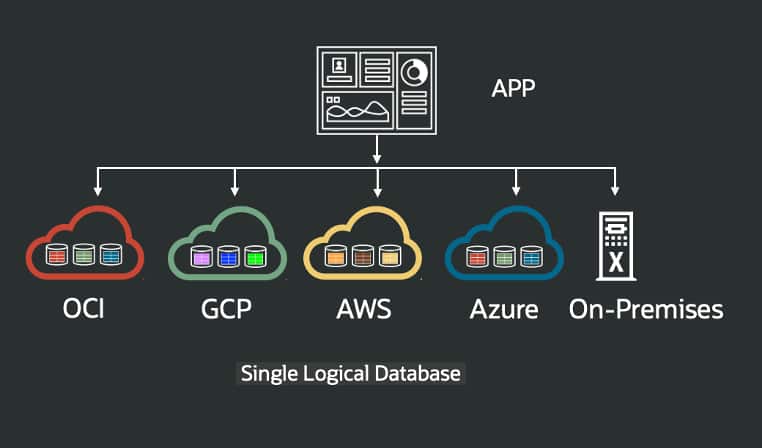
Figure 2: Oracle Globally Distributed AI Database deployment options
Conclusion
This architecture pattern doesn’t just support disaster recovery, it represents a shift from traditional high availability to globally distributed systems designed for continuous operation, predictable performance, and operational simplicity.
Oracle Globally Distributed AI Database combines:
- Raft-based synchronous replication within a region for strong consistency
- Asynchronous, unidirectional replication across regions
- Flexible deployment options, including multicloud patterns
With multi-region replication at its core and flexible deployment options, building always-on distributed databases is now both practical and operationally simple.
Resources:
Globally Distributed AI Database oracle.com product page