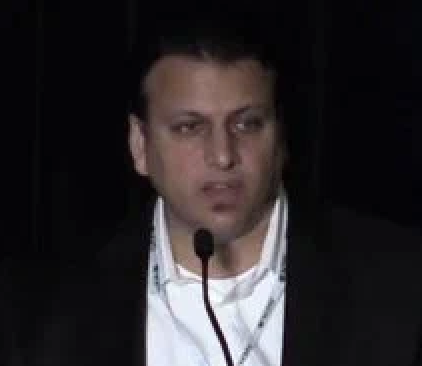

In this episode of PeopleSoft NOW!, Paco Aubrejuan, Senior Vice President of Software Engineering, joins Russell Broom, Vice President of PeopleSoft Strategy and Development, for an executive-level discussion about Oracle’s strategy and continued investment in PeopleSoft.
Their conversation connects two important priorities: helping customers generate more value from their current PeopleSoft environments and giving organizations the time and flexibility to determine when a transition to Oracle Fusion Cloud Applications makes sense for their business. The episode also previews investments associated with PeopleTools 8.63, including advances in user experience, search, generative AI enablement, customization management, security, and lifecycle operations.
Continued Commitment and Customer Choice
Oracle’s PeopleSoft strategy remains centered on protecting customer investments while supporting continuous modernization. Under Applications Unlimited, Premier Support for PeopleSoft is currently available through at least 2037, with Oracle continuing its practice of extending the support window annually.
This long-term commitment gives customers greater certainty for planning upgrades, adopting new capabilities, and managing their application strategy. At the same time, Oracle continues to encourage customers to evaluate Fusion Cloud Applications as their long-term cloud direction. The central message is one of choice: customers can continue innovating with PeopleSoft today while developing a cloud transition plan that aligns with their organizational priorities, readiness, and timeline.
Key PeopleSoft Investments
A more personalized user experience
PeopleSoft continues to move toward experiences that guide users to the information and actions most relevant to them. The PeopleSoft Landing Page provides a foundation for a more dynamic entry point, bringing together tasks, notifications, announcements, and personalized content.
PeopleTools 8.63 builds on this direction with additional landing-page capabilities and more personalized experiences. PeopleSoft is extending this approach beyond employees and internal users to better support job candidates, suppliers, customers, and other external users through event-driven information, alerts, and guided actions.
Semantic and natural-language search
Search is becoming an increasingly strategic part of the PeopleSoft experience. PeopleTools 8.63 investments include semantic search, natural-language interaction, and improved typo tolerance.
These capabilities are designed to help users search based on meaning and intent rather than requiring them to know the exact terminology, navigation path, or name of a transaction. The result can be faster access to information and less dependence on application expertise for completing everyday work.
Generative AI enablement with customer flexibility
Oracle’s PeopleSoft generative AI strategy is focused on providing the infrastructure needed to connect PeopleSoft securely with AI services and agentic platforms.
A Model Context Protocol, or MCP, server is intended to provide standardized access to PeopleSoft data and operations while preserving user context and PeopleSoft security. Natural-language services and a configurable chat experience are also expected to help customers build assistants that work with their selected AI platforms and large language models.
For developers, Application Designer Code Assist shall introduce an LLM-enabled assistant that can help explain PeopleCode, suggest improvements, support troubleshooting, and generate code. Rather than prescribing one embedded AI platform for every customer, the strategy gives organizations flexibility to select the AI services and use cases that best fit their environments.
Greater visibility into customizations
Managing customizations remains one of the most significant operational challenges for many enterprise application teams. PeopleTools 8.62 introduced Customization Insights to help customers understand which customizations are actively used, and which objects are most frequently affected by updates.
PeopleTools 8.63 expands this investment with customization groups and additional insights. These capabilities are intended to help organizations classify custom objects by function, owner, business area, or other meaningful categories.
With better visibility, teams can make more informed decisions about retiring unnecessary modifications, assigning ownership, adopting delivered functionality, and reducing the cost and complexity of future maintenance.
Stronger authentication and security
Security continues to be an important part of the PeopleTools roadmap. The episode highlights support for SAML single sign-on and time-based one-time passwords, or TOTP, for multifactor authentication.
TOTP support is expected to work with standards-based authenticator applications and may be invoked during sign-in or at selected application events. These investments can help organizations strengthen identity controls without having to build and maintain entirely custom authentication processes.
Simpler lifecycle and infrastructure management
Oracle is also investing in tools that can simplify how customers deploy, update, and operate PeopleSoft environments.
Containerized PeopleSoft Update Manager images are intended to make update infrastructure more portable and repeatable. Continued investment in PeopleSoft Cloud Manager and Oracle Cloud Infrastructure can further help customers automate provisioning, scaling, patching, backups, environment refreshes, and other administrative activities.
Together, these capabilities can reduce manual effort for IT teams while supporting more consistent and resilient operations.
What Should PeopleSoft Customers Do Next?
Customers can begin preparing by focusing on several practical actions:
- Stay current with PeopleTools and application images. Review the capabilities already available in PeopleTools 8.62 and establish an upgrade strategy that positions the organization to evaluate PeopleTools 8.63 when it becomes available.
- Activate delivered modernization features. Explore the PeopleSoft Landing Page, Customization Insights, Smart Prompts, WorkCenter 3.0, notifications, and other delivered functionality before considering custom alternatives.
- Assess customization ownership. Inventory high-cost and high-impact customizations, identify accountable owners, and determine where delivered capabilities can replace custom code.
- Define AI use cases now. Identify repetitive tasks, high-volume questions, search challenges, development activities, and business processes that could benefit from natural-language or agentic experiences.
- Review security readiness. Evaluate current single sign-on and multifactor-authentication approaches and determine how SAML and TOTP capabilities could complement the organization’s identity strategy.
- Modernize operations. Consider where containerization, PeopleSoft Cloud Manager, and OCI can reduce administrative effort and improve the repeatability of lifecycle processes.
- Plan the cloud journey around business outcomes. Continue evaluating Oracle Fusion Cloud Applications while aligning any transition decision with organizational readiness, transformation objectives, and value.
Key Takeaways
Long-term support provides planning confidence. PeopleSoft customers have a substantial support horizon and can continue investing in the platform.
Modernization extends to every stakeholder. Oracle’s roadmap addresses employees and administrators as well as candidates, suppliers, customers, developers, and IT operations teams.
AI enablement is designed for flexibility. PeopleTools services are intended to connect PeopleSoft securely with the AI platforms and models selected by each customer.
Operational innovation matters as much as the user interface. Customization management, stronger authentication, containerization, Cloud Manager, and OCI can help lower the cost and complexity of running PeopleSoft.
Customers retain control of their journey. Organizations can modernize PeopleSoft today while planning a future move to Fusion Cloud Applications according to their own priorities and timelines.
Watch the full PeopleSoft NOW! 2026 Executive Summary episode to hear Paco and Russell discuss how these investments are designed to help customers protect their existing PeopleSoft environments, improve productivity, and prepare for the future