
Modern logistics operations are under constant pressure. Transportation delays, warehouse allocation gaps, appointment conflicts, and shipment bottlenecks can quickly disrupt fulfillment timelines and customer commitments. To stay ahead, logistics teams need more than visibility — they need intelligent systems that can proactively identify risks, recommend corrective actions, and help operators resolve issues before they impact execution. That’s where the new Logistics Execution Command Center Agentic Application comes in.
From Reactive Logistics to Proactive Execution
Built as an agentic AI experience within Oracle Fusion Cloud Logistics, the application continuously evaluates execution conditions across the logistics network to identify risks, prioritize operational actions, and help teams keep shipments moving on schedule.
Unlike traditional dashboards that require users to manually search for problems, the Logistics Execution Command Center proactively surfaces operational exceptions that require immediate attention. The experience begins with an AI-generated command summary that highlights at-risk orders, timing conflicts, fulfillment delays, and transportation issues across both warehouse and transportation workflows. Logistics managers can quickly focus on the highest-priority issues through guided recommendations and prioritized actions. By reasoning across fulfillment workflows, the application identifies orders that are only partially allocated, shipments missing appointments, and warehouse execution risks that could disrupt outbound delivery commitments.
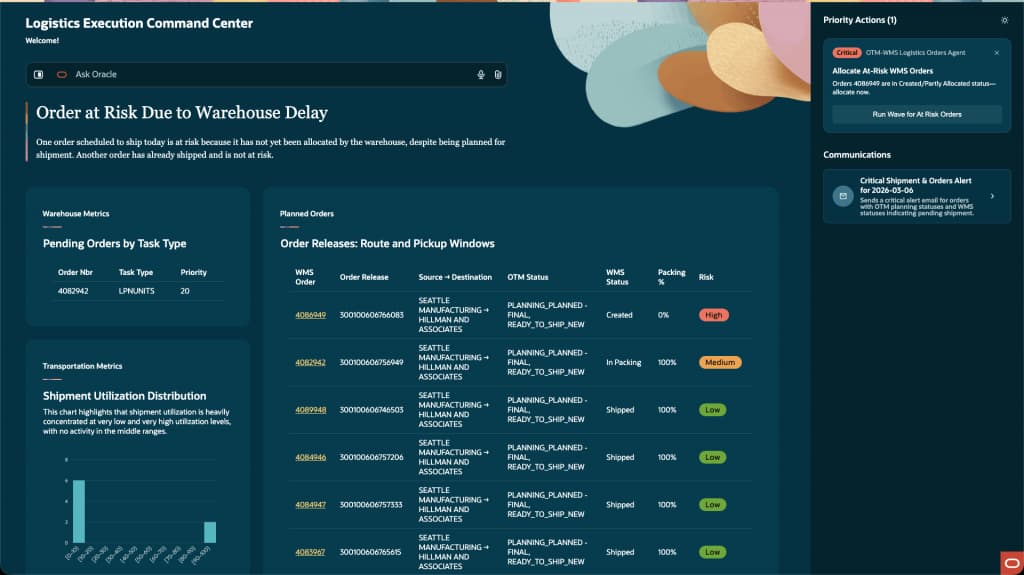
A Unified View Across OTM and WMS
One of the most compelling aspects of the experience is its ability to unify transportation and warehouse execution into a single operational view. Rather than switching between multiple systems, planners can see warehouse and transportation risks together, understand the root cause of disruptions, and take corrective action directly from the command center.
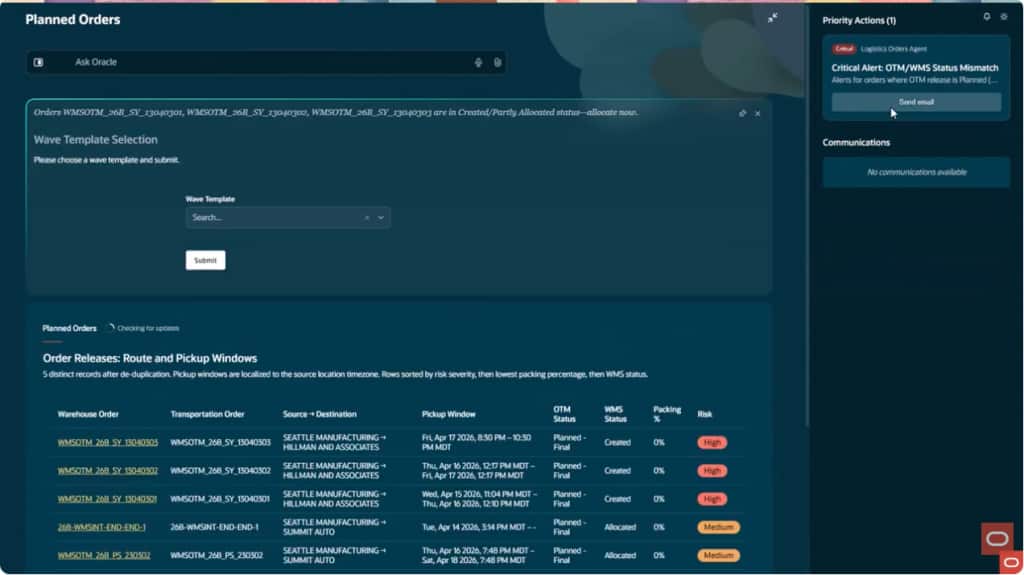
The application also introduces a conversational “Ask Oracle” experience that enables users to interact with logistics operations using natural language. Teams can ask questions, investigate risks, and receive contextual operational insights without navigating through multiple screens or manually assembling data from different systems.
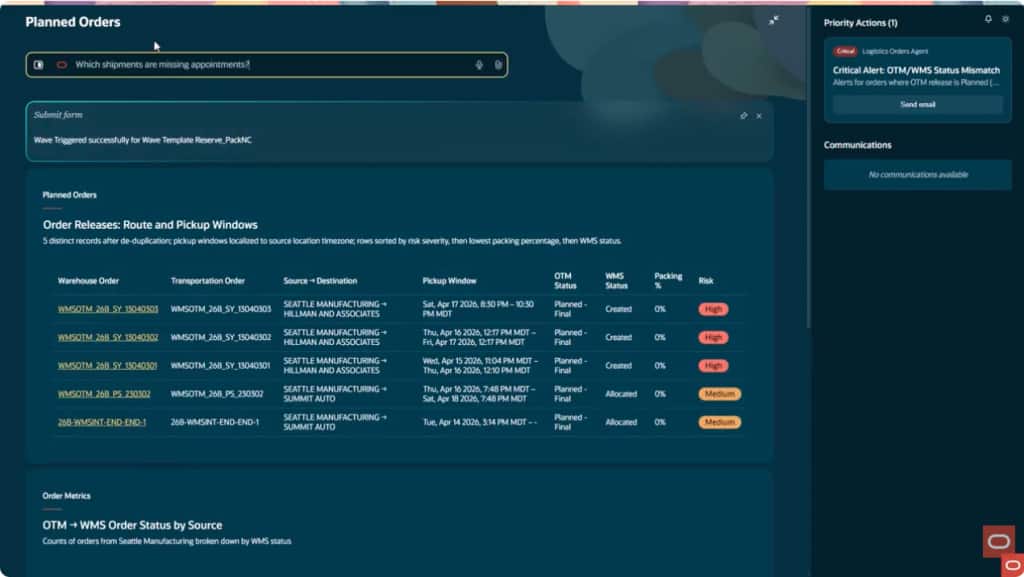
Behind the scenes, specialized AI agents continuously monitor logistics signals across OTM and WMS, helping organizations detect operational disruptions earlier and coordinate execution more effectively. The result is a more proactive logistics operation that reduces delays, minimizes manual intervention, improves operational visibility, and supports on-time fulfillment performance.
The Future of Logistics Execution
As supply chains become more dynamic and execution complexity grows, logistics organizations need systems that can do more than monitor operations. They need intelligent execution platforms that can reason, recommend, and act.
The Logistics Execution Command Center represents a shift from reactive logistics management to intelligent execution orchestration—where AI agents not only identify issues, but also guide teams toward the next best actions to maintain operational continuity across the supply chain.
To learn more about the new Logistics Execution Command Center, visit the Oracle Transportation Management 26B What’s New page, and the Oracle Warehouse Management 26B What’s New page.