
For over 30 years, MySQL has grown through the contributions, feedback, and collaboration of a global community of developers, database administrators, customers, partners, educators, and open source advocates.
That community has helped make MySQL one of the world’s most widely used open source databases. As the ecosystem continues to grow and evolve, so do the opportunities for collaboration.
Over the past year, we have taken important steps to increase transparency and engagement across the MySQL ecosystem. Through public roadmap discussions, Early Access releases, publication of worklogs, bug transparency and backlog reduction, community public discussions, increased use of GitHub discussions, and contributor events, we have created more opportunities for the community to understand what is being built, provide feedback, and help shape the future of MySQL.
Today, we are taking the next step.
From Visibility to Deeper Participation
Our goal is simple: accelerate innovation and contributions, make it easier for the community to participate meaningfully in the evolution of MySQL and grow the MySQL Ecosystem.
Transparency is important, but participation is what drives innovation. Contributors need clear pathways to engage. Users need opportunities to share real-world feedback. Partners need visibility into long-term priorities. Community leaders need a forum for collaboration and strategic discussion.
As participation grows, communities need structures that help turn ideas into innovation. By defining roles and responsibilities, we can make it easier to contribute, collaborate, and accelerate the evolution of MySQL while maintaining the quality, stability, and security that users expect.
That spirit of collaboration is reflected across the MySQL ecosystem. The recent Contributor Summit brought together Oracle engineers and contributors from many diverse organizations including Amazon Web Services (AWS), Google Cloud, Percona, ProxySQL, Readyset, VillageSQL, and other ecosystem participants such as the MariaDB Foundation to share ideas and help shape the future of MySQL.
To support this, the governance model introduces a framework for participation and leadership. Community members can contribute through code, testing, documentation, reviews, and technical discussions as Contributors. Experienced contributors may take on additional responsibilities as Committers, helping review changes and maintain code quality, guided along the way with Mentors. Project Leads provide technical leadership for key areas of MySQL, guiding their long-term evolution while confirming stability, performance, and compatibility.
The governance model also includes a Technical Steering Committee and a dedicated Vulnerability Group responsible for coordinating vulnerability reporting, security reviews, and responsible disclosure.
As MySQL continues to evolve, we believe strong community participation should be supported by equally strong governance.
Governance Matters
Successful open source projects depend on more than just code. It is about people and the community. Trust is built through transparent processes, clear decision-making, and meaningful opportunities for participation. As projects grow, governance helps ensure diverse perspectives are heard while maintaining the quality, stability, compatibility, and security that a community of users expect. The MySQL Governance Document is now available on MySQL.com, joining the MySQL Developer Guide as a resource for participating in the evolution of MySQL.
“Stronger governance gives the MySQL community clearer ways to participate and accelerate innovation while preserving the quality, security, and compatibility users expect,” said Jason Wilcox, Senior Vice President, Data and AI Platform Services, Oracle Cloud Infrastructure.
Introducing the MySQL Steering Committee
To support the next phase of community engagement, we are introducing the MySQL Steering Committee.
The Steering Committee is planned to serve as a forum for strategic guidance and community representation, bringing together perspectives from across the MySQL ecosystem. The committee will help guide long-term priorities, ecosystem growth, governance evolution, and community engagement. It will provide a structured mechanism for community feedback while helping shape the future direction of MySQL.
The Steering Committee is not intended to replace technical leadership or day-to-day development processes. Rather, it complements the broader governance model by helping ensure important strategic discussions benefit from broad participation and diverse perspectives.
By strengthening the connection between the community and the project’s long-term direction, the Steering Committee represents an important step in the continued evolution of the MySQL ecosystem.
The initial Steering Committee will include Amazon Web Services (AWS), Google Cloud, and Oracle, with additional perspectives from users of MySQL.
“Open source thrives when the community shapes its direction together. MySQL is one of the most widely used databases in the world, and a transparent, inclusive governance model strengthens it for everyone who depends on it,” said Ganapathy Krishnamoorthy, Vice President, AWS Databases. “AWS welcomes Oracle’s move toward open development, and we are glad to participate alongside other contributors, customers, and the broader community to keep MySQL fast, reliable, and trusted for the long term.”
Building a Sustainable Community
We are continuing to expand opportunities for engagement through public roadmap discussions, Contributor Summits, GitHub-based collaboration, Early Access releases, technical design conversations, and enhanced developer resources.
Together, these initiatives help create a more open and welcoming environment for participation while preserving the engineering excellence, stability, compatibility, and security that organizations around the world depend on.
We are also committed to measuring our progress and sharing the health of the MySQL ecosystem more transparently. Recent improvements in the bug backlog management and issue responsiveness reflect that commitment.
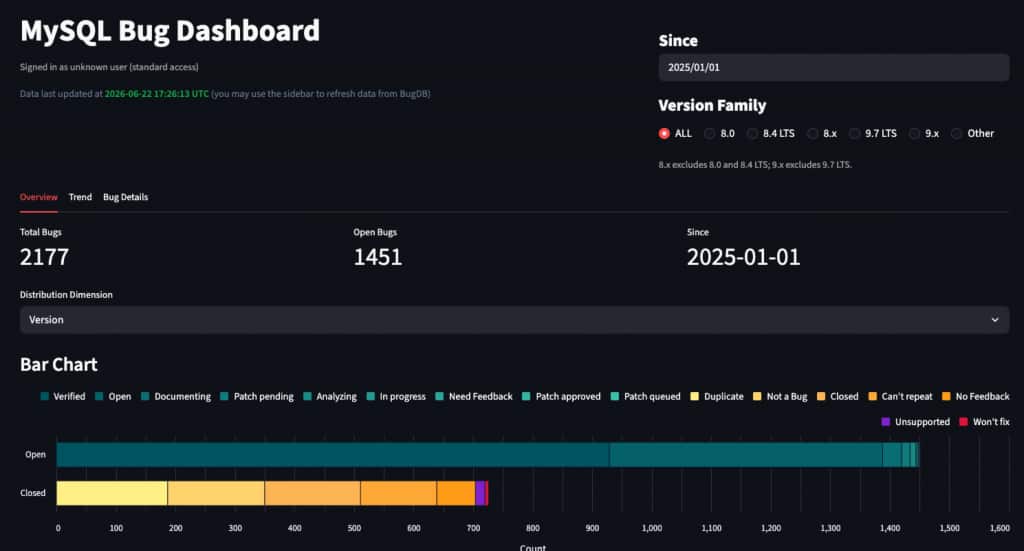
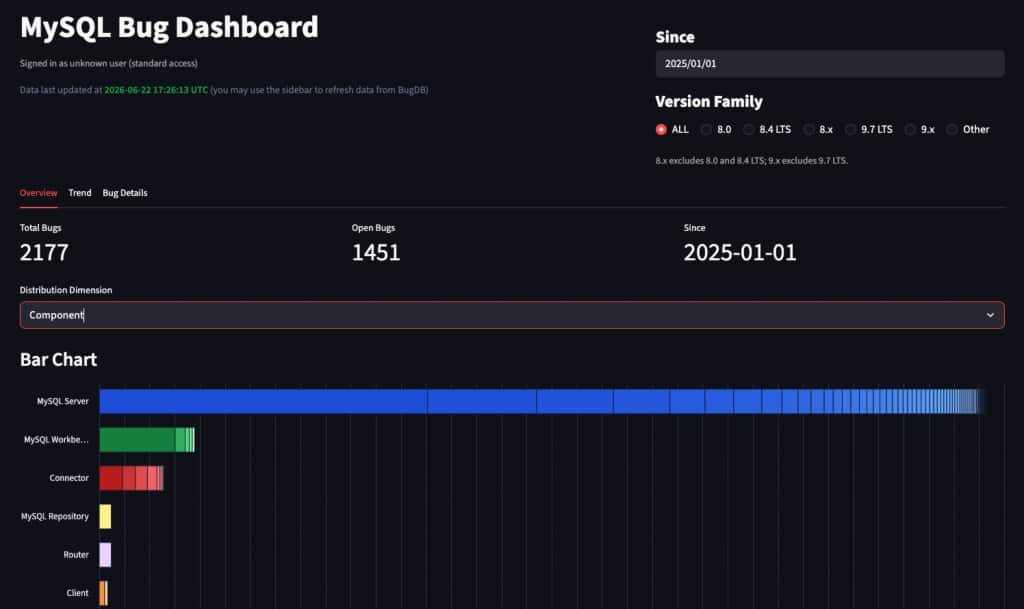
The MySQL Bug Dashboard highlights continued progress in reducing the bug backlog across MySQL version families. MySQL Server accounts for most reported bugs, followed by MySQL Workbench and Connectors, reflecting the team’s ongoing focus on areas with the highest community activity.
Moving forward, we plan to regularly track and share metrics related to contributor growth, contribution quality, issue response and resolution trends, roadmap participation, Early Access adoption, and engagement across community programs, events, and discussions. These metrics will help us identify opportunities for improvement and support the continued growth of the MySQL community.
Stay Involved
The MySQL community continues to grow through open collaboration, feedback, and participation. Join GitHub Discussions, explore the MySQL Community Roadmap, and share your feedback on upcoming features and technical discussions.
As part of this effort, the community will host public discussion #5 on July 15 at 7:00 AM PT, providing an opportunity for contributors, users, and ecosystem partners to discuss priorities, ask questions, and help shape future direction.
The next opportunity to connect with the community will be on August 5–6 at the Contributor Summit in Broomfield, Colorado.
Whether you’re a developer, DBA, customer, partner, educator, or open source contributor, there are many ways to get involved and help drive the next chapter of MySQL innovation.
Additional Resources