

Almost 200 participants came together in Nashville for HackTN26 with a shared ambition: use Oracle technology to address challenges in their communities. Over two days, teams turned ideas about health, education, and resource sharing into prototypes, drawing on each other’s skills and Oracle technologies, including Oracle Linux, Java, MySQL GenAI, and Oracle Cloud Infrastructure (OCI), to explore what they could build.
The inaugural Tennessee hackathon, held October 17–18, 2026, was organized by Hackathons International, with Oracle as the core sponsor and participation from VandyHacks and local technology communities. The event connected local talent with opportunities to learn, collaborate, and develop solutions around real-world needs. Thirty-seven teams completed the hackathon, with six advancing to the final round.
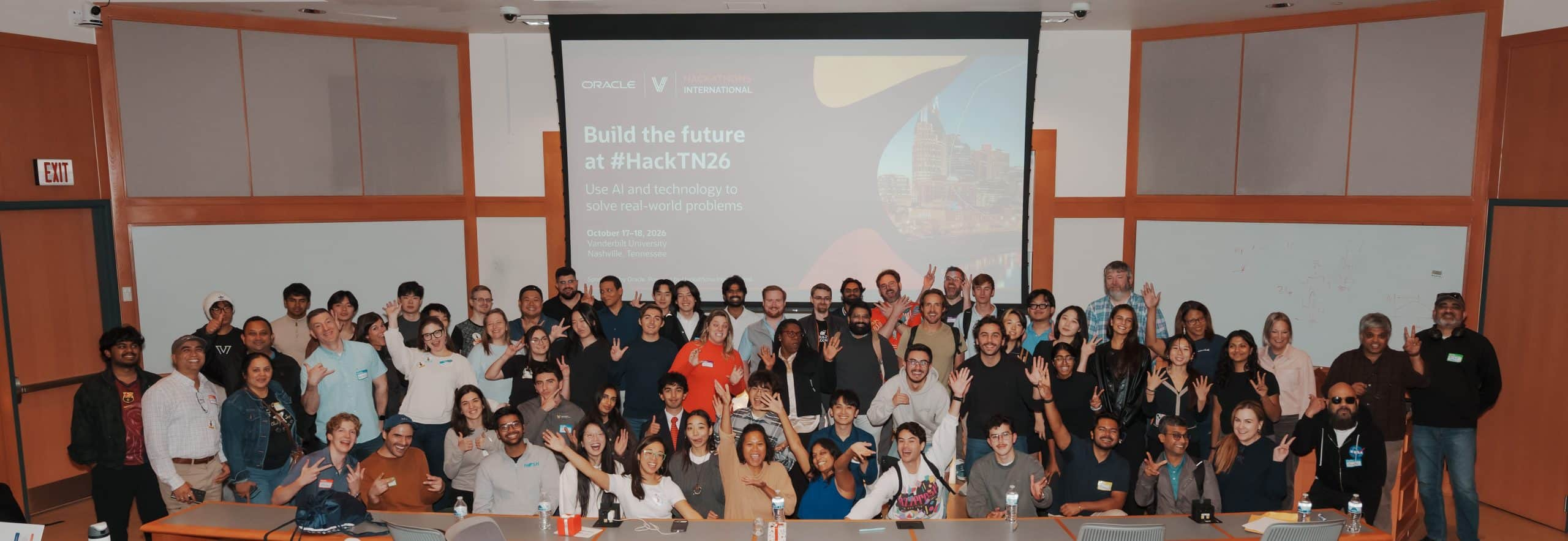
Connecting local talent with community needs
HackTN26 was designed to bring diverse talent together, strengthen Tennessee’s technology ecosystem, and support regional economic development. Teams combined software development with design, user research, business thinking, and communication to approach community challenges in sustainability, education and healthcare from different perspectives.
For Oracle, supporting HackTN26 connected its growing presence in Tennessee with opportunities for local talent to learn and build solutions to local community needs. Working alongside Hackathons International, VandyHacks, and local organizations, Oracle helped participants gain experience with AI and cloud technology while developing ideas with the potential for community impact.
That support began before the hackathon weekend. An October 15 information session introduced the challenges and included an OCI workshop to help participants prepare. During the event, 13 mentors from Oracle and Middle Tennessee State University delivered 59 formal, 45-minute mentoring sessions, giving teams dedicated time to work through challenges and refine their prototypes.
Oracle employees contributed as judges, mentors, and helpers alongside representatives from Vanderbilt University, VandyHacks, HCA Healthcare, Asurion, and Middle Tennessee State University. VIP judges included Heather VanCura, Oracle’s Vice President of External Standards and Community Engagement; Julie Johnson, Vanderbilt’s Associate Dean for Academic Affairs in the College of Connected Computing; and Murari Sridharan, Oracle’s Senior Vice President of OCI Networking. Their involvement brought expertise across technology, education, healthcare, and business into the event, helping teams connect what they were building with the needs of the people they hoped to serve.
Turning challenge statements into ideas with purpose
Each team’s work began with a challenge statement. From there, participants had to identify a specific need, understand who experienced it, and decide how their prototype could help. The resulting tracks provided a framework for exploring these needs and developing solutions.
- From Surplus to Social Good: Teams explored how institutions could redirect usable resources to community organizations. The challenge drew on familiar situations, such as food left after a catered event, furniture available after a renovation, or clothing collected during a residence-hall clear-out. Teams also considered the connections needed to make donations possible, including recipient needs, timing, and transportation.
- Health Access, Equity and Experience: Participants addressed barriers throughout the health journey. They focused on a clearly defined group of people and explored where better information, coordination, or support could potentially improve their experience.
- AI That Strengthens Learning: Participants explored how technology could support learners and educators, make learning more engaging, and help teachers recognize where students needed additional support.
Across all three tracks, the challenge statements gave teams a starting point. Collaboration helped them narrow those broad opportunities into something they could build and demonstrate over a weekend.
Bringing ideas to life with Oracle technology
As teams moved from discussion to development, they had to connect their technical choices with the needs they had identified. OCI gave participants a platform for exploring how cloud and AI capabilities could support their approaches.
During the hackathon, teams used the OCI Hackathon Starter Kit on GitHub to help prepare their development environments. The kit provides infrastructure modules for networking, an application server, and optional MySQL HeatWave and Autonomous Database deployments. For developers interested in building similar applications, it also offers a starting point for their own projects on OCI.
The event’s judging criteria kept the connection between technology and purpose in focus. Teams were assessed on social impact, problem validation, credibility, user experience, communication, and technical execution, including meaningful use of OCI.
Teams also had to explain who would use their prototype, what problem it addressed, and why their approach could be useful. That process brought the different contributions within each team together into a single story about the project and its intended impact.
Recognizing the winning teams
The three winning projects reflected the range of community needs explored throughout the weekend.
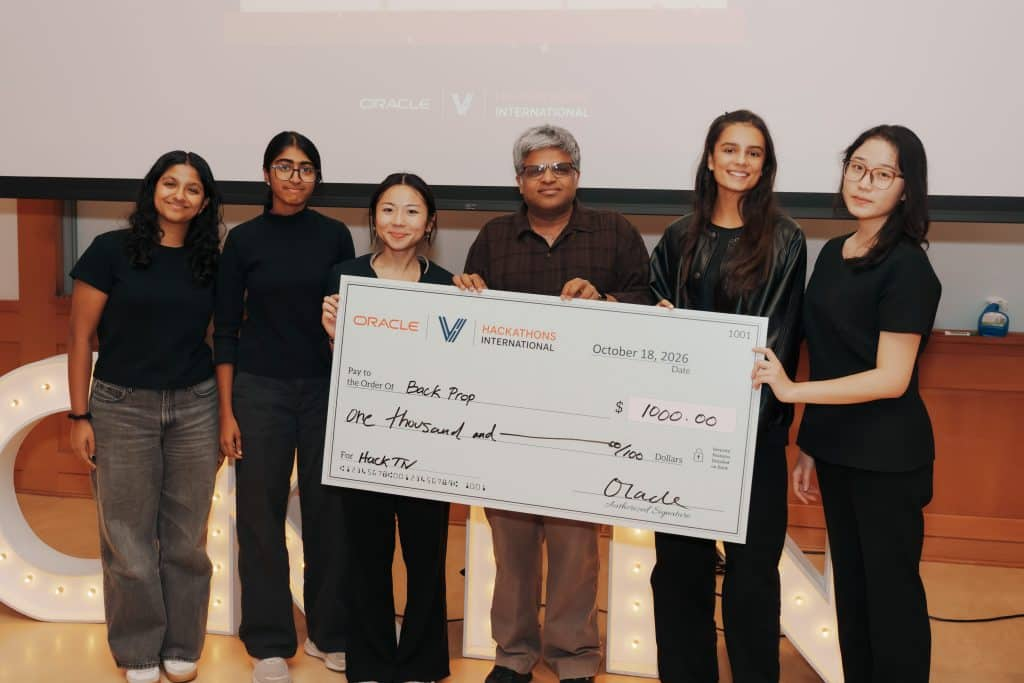
First place — Team BackProp with Kinetix
Kinetix helps patients practice physical therapy exercises between appointments. The browser-based prototype uses a laptop or phone camera to provide feedback on form during a 12-exercise lower-back program, without requiring a wearable device or an app download.
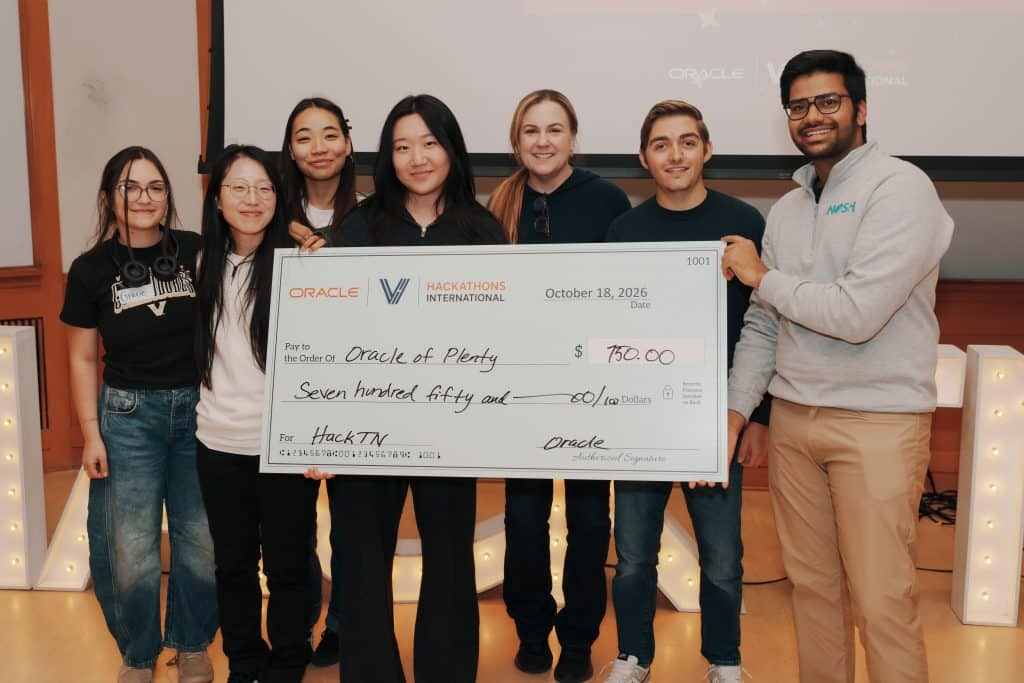
Second place — Team Oracle of Plenty with Not Wasted
Not Wasted helps organizations arrange donations of surplus food, furniture, and clothing before an event or clear-out ends. By planning who can accept the items and how they will be collected, the prototype is designed to help simplify the donation process.
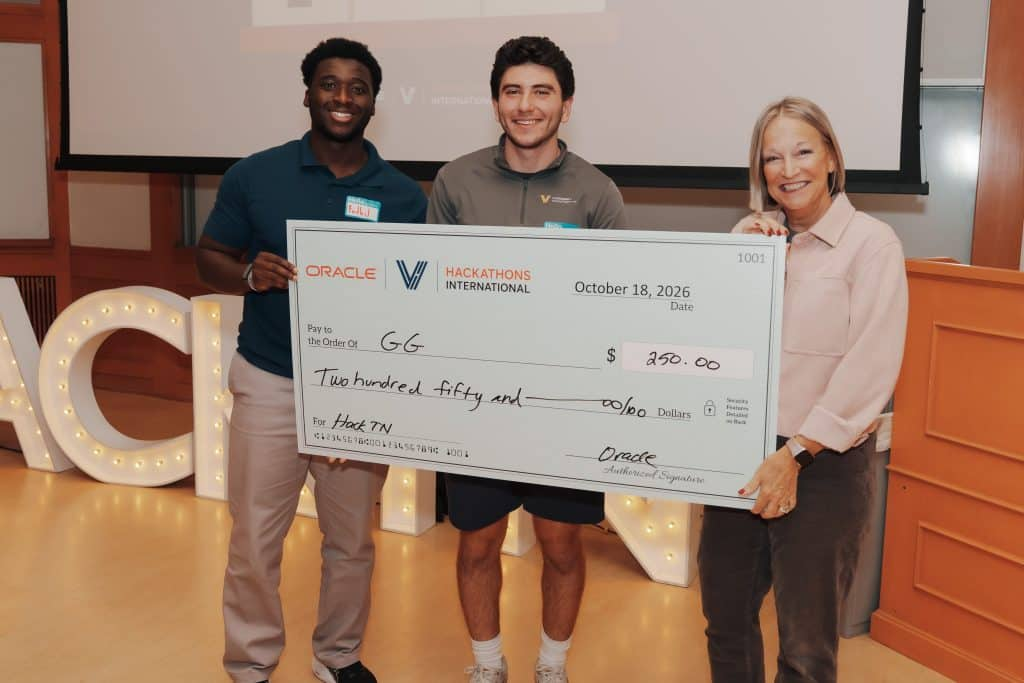
Third place — Team GG with ScribbleVU
ScribbleVU turns a teacher’s lesson plan into an interactive mixed-reality lab. Students can explore the lesson and ask their teacher private questions, while an AI-generated class is designed to help teachers assess student understanding and identify areas where additional support may be useful.
Building connections beyond the hackathon
By the end of HackTN26, 37 teams had taken an idea from a challenge statement to a final demonstration. Participants gained experience collaborating, making decisions under time constraints, and explaining how their work could help others.
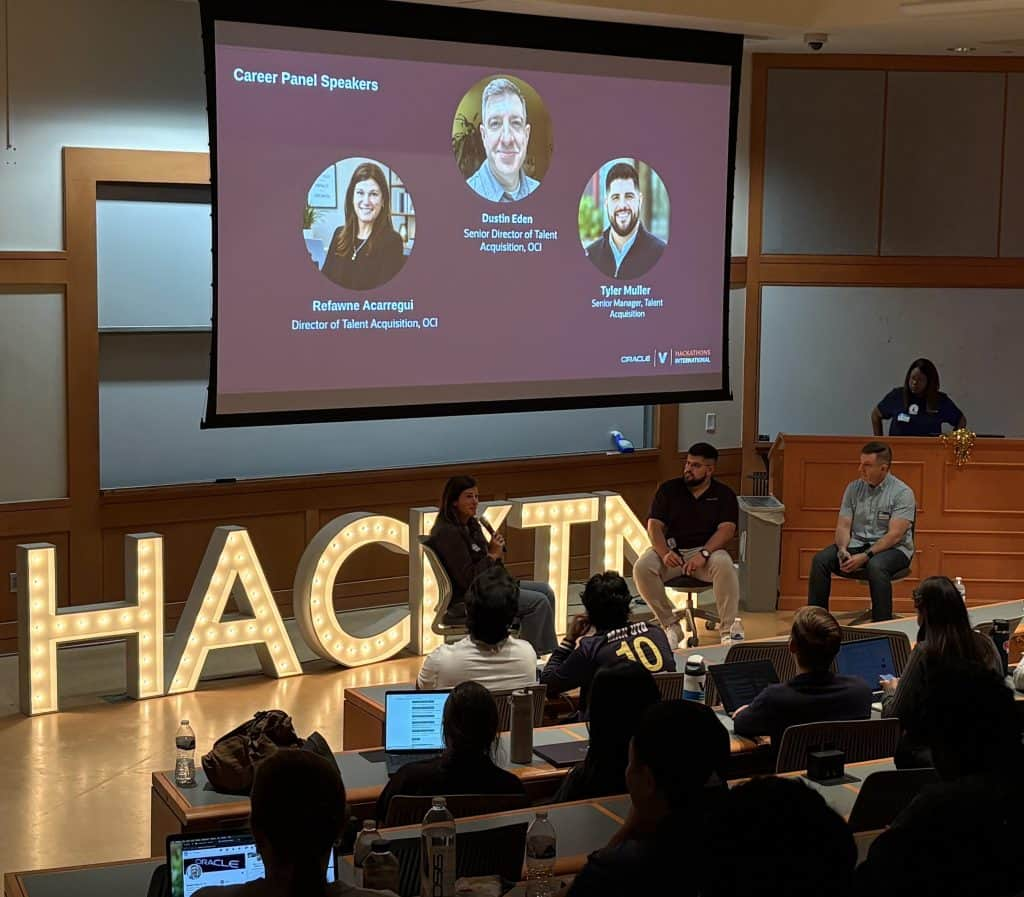
A career advice panel extended the conversation to what comes next. Oracle’s Tyler Muller, Refawne Acarregui, and Dustin Eden shared perspectives from talent acquisition, giving participants an opportunity to learn about professional development and careers in technology.
Alongside the experience of building a prototype, participants could carry those career insights and professional connections into their next steps, whether continuing their education, developing their projects, or exploring future professional opportunities.
Stay tuned for a closer look at the three winning projects and the other three finalists, including how they used Oracle technology to bring their ideas to life.