


Rack-scale GPU acceleration, E7 CPU Compute, and programmable networking support the demands of production AI
An AI service is only as dependable as the infrastructure behind it. As organizations serve more users, support longer contexts, and deploy agents that retrieve information and execute tools, GPU performance depends increasingly on the system around it. Compute, memory, networking, software, and operations all affect how much useful AI output a business can deliver.
Oracle Cloud Infrastructure (OCI) and AMD are addressing these requirements across their compute portfolio, giving customers access to AI infrastructure through OCI so they can focus on their applications without having to build and operate the underlying infrastructure themselves. AMD Helios™ is the centerpiece for frontier AI and sovereign computing needs, bringing together an open rack-scale design for large-scale inference, training, and fine-tuning. AMD Pensando™ networking and OCI Compute E7 instances based on 6th Generation AMD EPYC™ “Venice” CPUs extend the broader infrastructure story, enabling agentic AI workflows, and supporting the data movement and CPU services that production AI applications require.
AMD Helios brings the AI system together at rack scale
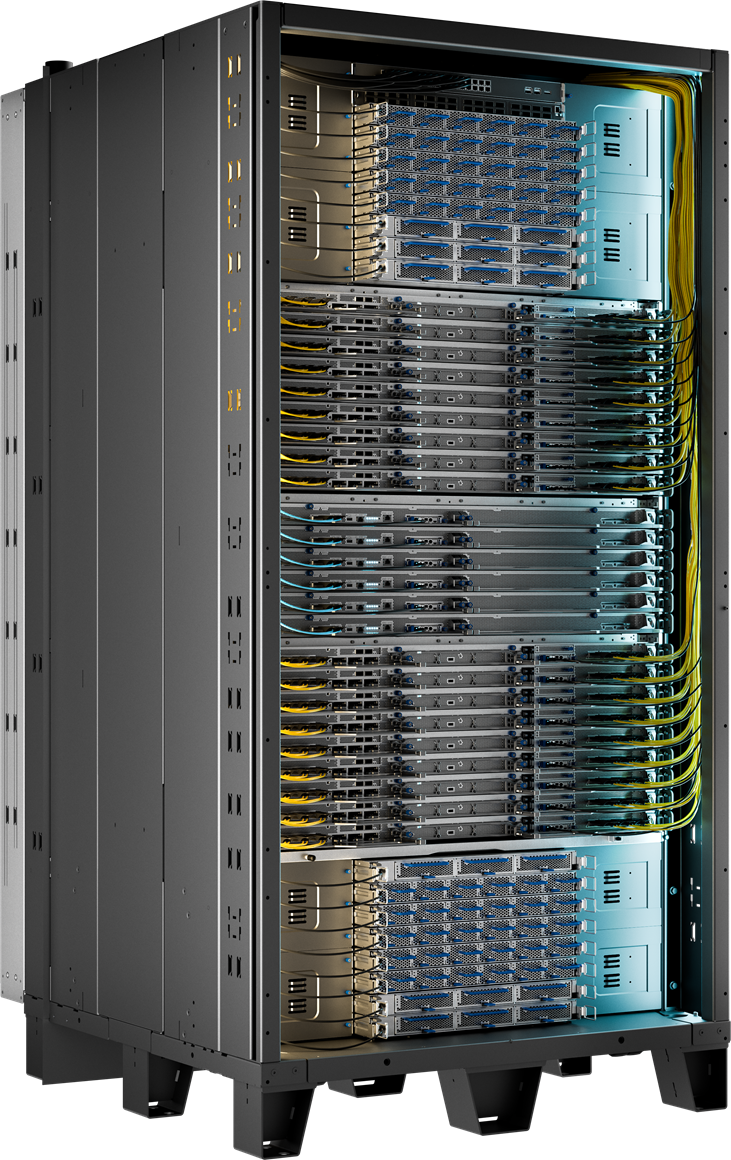
AMD Helios is an open, co-designed AI infrastructure platform aligned with the Open Compute Project Open Rack Wide design. It integrates 72 AMD Instinct™ MI455X GPUs across 18 four-GPU compute trays, alongside 6th Gen AMD EPYC™ “Venice” CPUs, AMD Pensando networking, and AMD ROCm™ software. This approach coordinates GPU compute with the memory, communication, and software needed to put it to work.
That coordination matters as AI moves into continuous use. A customer service agent may need to retrieve account information, consult company knowledge, and use business tools before responding. An operations application may continuously monitor data and coordinate actions as conditions change. These services need sustained throughput and dependable response times as adoption grows.
Across a full 72-GPU rack, AMD Helios provides up to 31 TB of HBM4 memory and up to 1.7 PB/s of aggregate peak memory bandwidth. That capacity keeps more model weights, key-value (KV) cache, and active context close to GPU compute. The design supports larger models and longer contexts, higher concurrency, and sustained inference output. Training and fine-tuning draw on the same memory, fabric, and software foundation.
AMD Helios also combines high-bandwidth communication within each rack with networking that connects racks into larger clusters. Together with AMD ROCm software, this supports distributing demanding workloads across more GPUs. OCI customers can evaluate configurations around their models, request volumes, and response-time requirements as capacity needs to expand beyond a single rack.
Programmable networking helps keep AI workloads moving
Scaling GPU capacity increases the importance of efficient data movement. Training can generate large, synchronized bursts of traffic among a relatively fixed set of GPUs. Inference needs fast and consistent responses, while agentic applications add communication among services, tools, and data sources. Congestion on a small number of network paths can affect an entire training job or reduce GPU utilization.
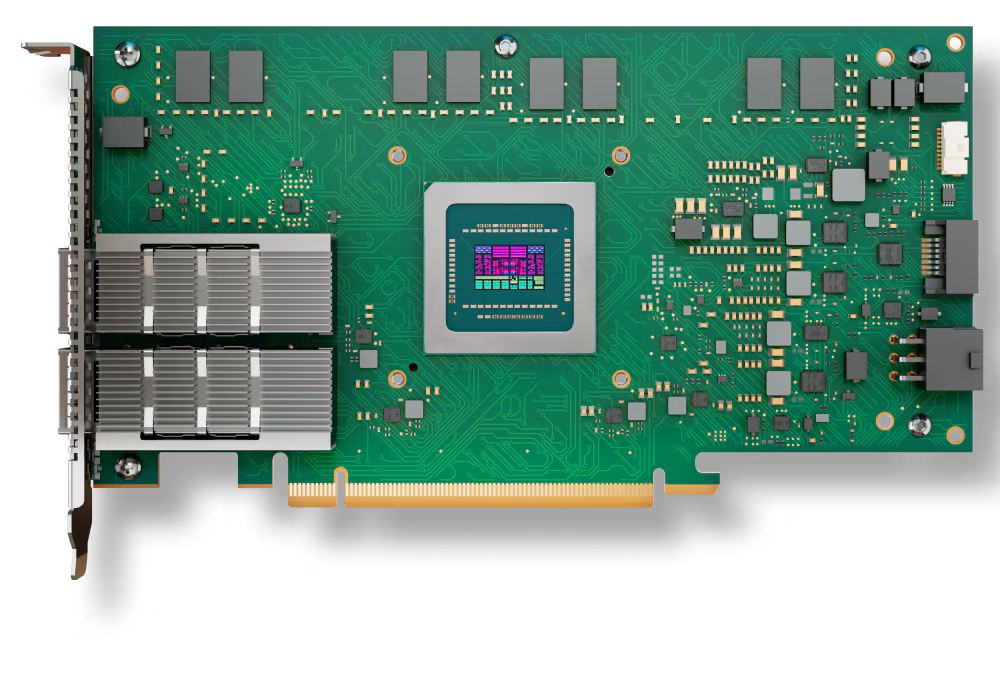
AMD Pensando data processing units (DPUs) help power Oracle Acceleron SmartNICs for OCI’s AMD compute and accelerator instances. Oracle and AMD have co-engineered this foundation to move networking, storage, security, and infrastructure functions closer to the data path, preserving host CPU capacity for customer applications.
Oracle Acceleron SmartNICs combine host networking and cloud-control functions in a single architecture while maintaining isolation between customer and cloud-managed functions. Hardware acceleration reduces data-path overhead, supporting more consistent performance for demanding workloads. These capabilities also serve databases, cloud-native applications, and enterprise services that continue to run alongside AI.
Programmability gives OCI a way to evolve networking, storage, security, and observability services as workloads change. For organizations scaling AI, this complements the AMD Helios system-level approach: useful throughput depends on how efficiently infrastructure moves and processes data as well as on the compute resources available.
E7 supports the CPU work surrounding AI models
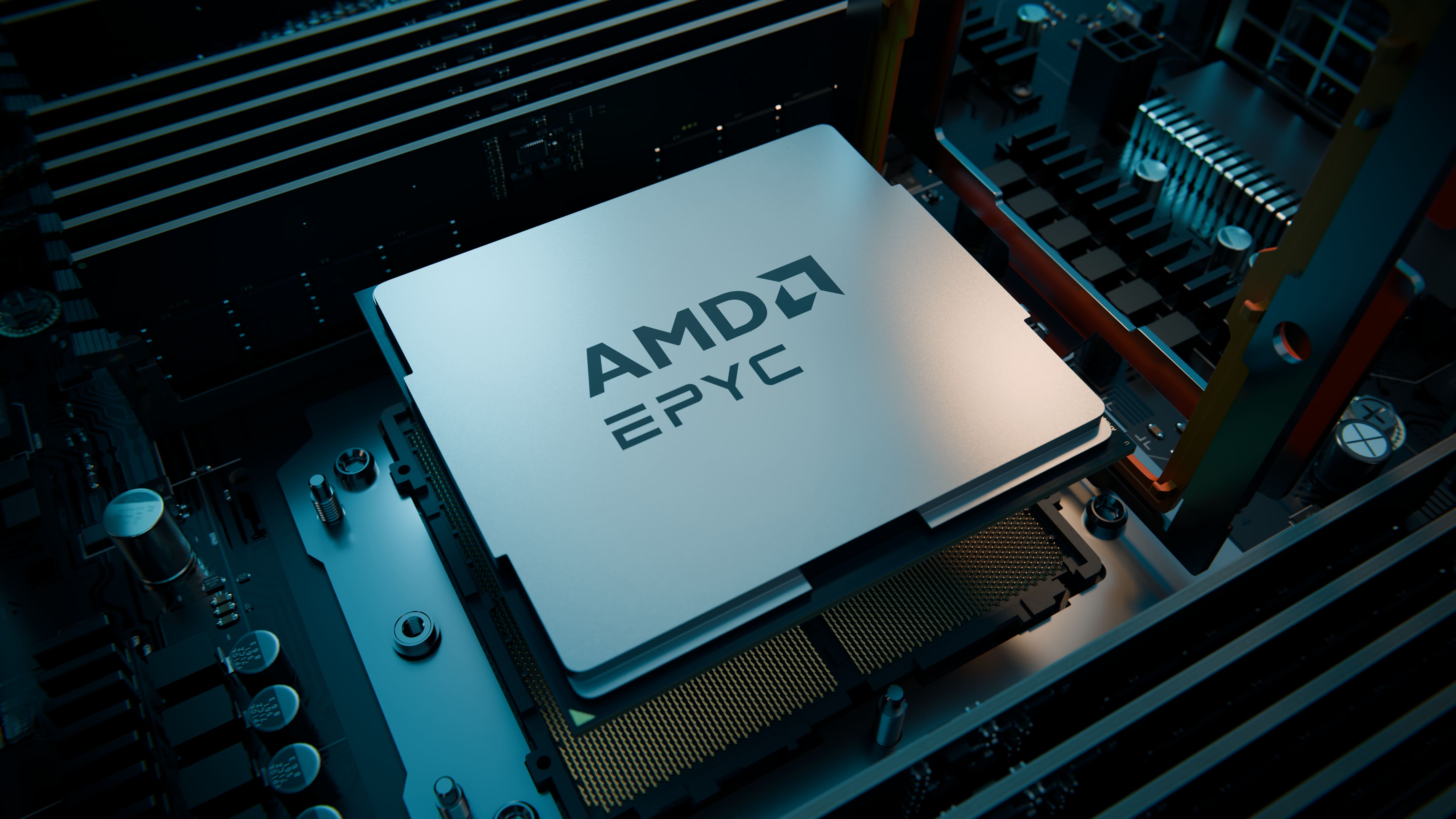
The AMD “Venice” CPU architecture is part of AMD Helios’s integrated design and also underpins OCI Compute E7 instances for enterprise applications and the services surrounding AI models. E7 uses 6th Gen AMD EPYC processors from the EPYC 9006 Server Processor Series. 6th Gen EPYC processors provide up to 256 cores and 512 threads per socket, up to 1,024 MB of L3 cache, 16 memory channels with up to 8000 MT/s, and PCIe 6.0 connectivity. These provide significant uplifts over 5th Gen EPYC CPUs and power enterprise workloads more quickly and efficiently, and allow for the deployment of more agents per instance and per watt
In an agentic application, CPUs assemble context, route actions, retrieve knowledge, query databases, parse documents, and execute tools. These stages influence application performance alongside model inference. E7 gives customers a CPU option for agent orchestration, concurrent agent sandboxes, retrieval services, and in-memory caches, as well as web, API, and enterprise application tiers.
E7 Acceleron Standard virtual machines offer flexible configurations. Flexible sizing helps customers match CPU and memory resources to the services they run. E7’s standards-based x86 foundation also supports continuity with existing enterprise software stacks.
For an AMD Helios-centered AI deployment, sizing these surrounding services is part of planning the complete application. Customers should evaluate CPU capacity, concurrency, and latency targets alongside GPU requirements, with workload testing to determine the right balance.
Open software helps teams build and optimize
AMD ROCm software supports widely used AI frameworks and serving tools, including PyTorch, JAX, vLLM, and SGLang. Teams can build on familiar development workflows while adapting to new models and application requirements. ROCm.AI and tools such as ROCm CLI, AMD Skills, and Hyperloom assist with environment setup, troubleshooting, and workload optimization.
An open software ecosystem allows AMD, framework maintainers, and developers to contribute improvements in model support and performance. Customers can use those advances to optimize their applications over time. AMD Helios extends that openness across the platform, including programmable networking that creates additional opportunities to improve data movement as workloads evolve.
Security and isolation support dependable AI services
Production AI connects models to business data, applications, and tools, making security and workload isolation part of infrastructure planning. AMD Helios includes security and isolation capabilities to support those needs. Customers can work with OCI to align data protection and availability requirements with their deployment configuration and cloud services.
Oracle Acceleron SmartNICs add a security-first architecture that enforces isolation at the host level. They support OCI Zero Trust Packet Routing, which applies access policies close to where traffic enters and leaves the host, helping contain unauthorized traffic early. The architecture also enables security patching with near-zero downtime, supporting service continuity as infrastructure protections are updated.
Build an AI foundation that can grow with the business
The collaboration between Oracle and AMD gives OCI customers options across enterprise compute and AI, including AMD EPYC processors and AMD Instinct MI300X, MI355X, and MI455X GPUs. In October 2025, Oracle announced general availability of OCI Compute with AMD Instinct MI355X GPUs, following its launch of MI300X-based instances in 2024. AMD Helios extends that portfolio with an integrated rack-scale foundation for the most demanding inference, training, and fine-tuning workloads.
For customers, the goal is more useful AI output, responsive inference, and better workload economics. Cost per token or completed workloads provide a practical way to assess that value against each application’s performance requirements. AMD Helios brings GPU capacity, HBM4 memory, communication, and open software together. AMD Pensando-based Oracle Acceleron SmartNICs support efficient, secure infrastructure services, while E7 provides CPU capacity for the applications and agent workflows surrounding the model.
Talk to an OCI compute expert about evaluating AMD Helios and the supporting AMD-based OCI portfolio for your workloads. Bring your models, context lengths, expected request volumes, and performance and cost targets to discuss a suitable configuration, supported software, and deployment availability. Explore Oracle and AMD.

Chris Raymond is a Product Marketing Manager at AMD focused on AI infrastructure, including the AMD Helios™ rackscale solution and AMD Instinct™ GPUs.