


Oracle Fusion Data Intelligence (FDI) is a family of prebuilt, cloud-native analytics applications for Oracle Fusion Cloud Applications that provide ready-to-use insights to help improve decision-making. It’s extensible and customizable, allowing you to ingest data and expand the base semantic model with additional content.
Overview
This blog is part of the series FDI Notifications focusing on formatted email notifications.
FDI pipeline events can be sent as email notifications using Oracle Cloud Infrastructure (OCI) Event Services. You can use OCI Functions to customize and format pipeline email notifications to meet your organization’s needs. By connecting OCI Functions with Event Services, you can trigger a function whenever a pipeline event occurs, process and format the notification details into a user-friendly email, and integrate it with OCI email delivery tools.
Creating Application and Deploying Function
- Read Deploy OCI Functions for Fusion Data Intelligence Event Notifications blog to learn how to set up an application and create a function.
- While defining policies, in addition to the policy mentioned in the deployment blog, set up the policy required for OCI Email Delivery Services in the same compartment. See the Sample Mail Format Policy template.
Note: Replace<Child Compartment Name>in the policies with the compartment where you’re creating all artifacts. - In the
func.pyfile, delete the existing code and replace it with the new function code provided as a sample. See Formatting OCI Email Event Notifications Sample Code. - Open the
requirements.txtfile using the command:nano requirements.txt - Add
ociandpytzas dependencies since the code uses those libraries. Save and close the file.oci pytz - Follow the rest of the steps in the blog to deploy the application.
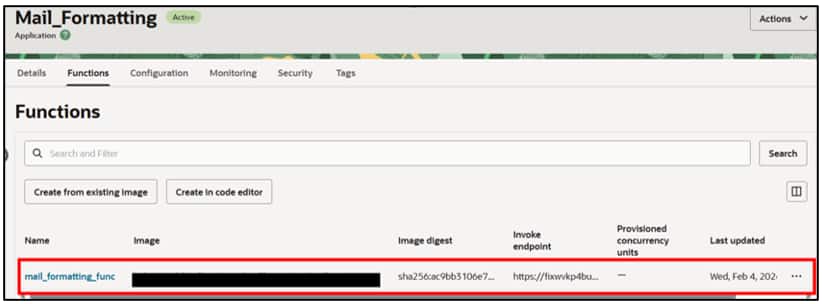
- If you’ve created an application called Mail_Formatting and a function called mail_formatting_func, on deployment you’ll see the highlighted state in your OCI application artifact.
Configuring Environment Variables for the Function
- Under your function, go to Configurations then Manage Configurations and define values for the environment variables used by the script.
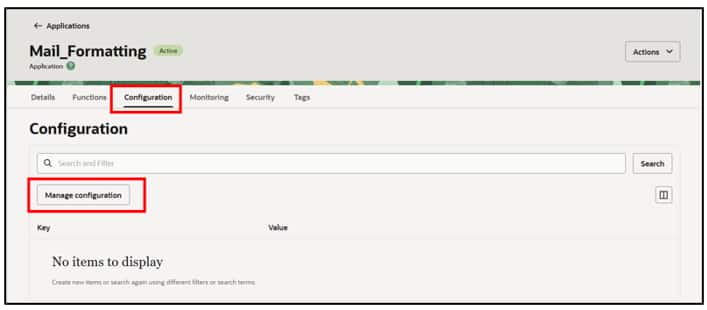
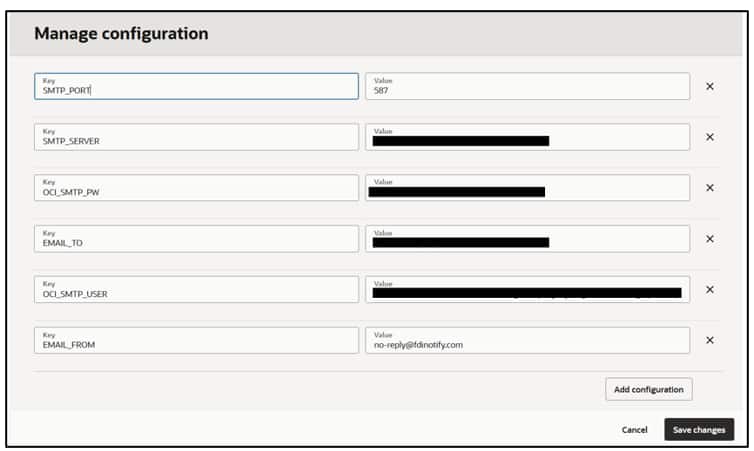
- Follow these steps to get each environment variable in the tenancy:
- SMTP_PORT and SMTP_SERVER:
- Navigate to Developer Services and click Email Delivery.
- Under Configuration, find the SMTP public endpoint server and ports.
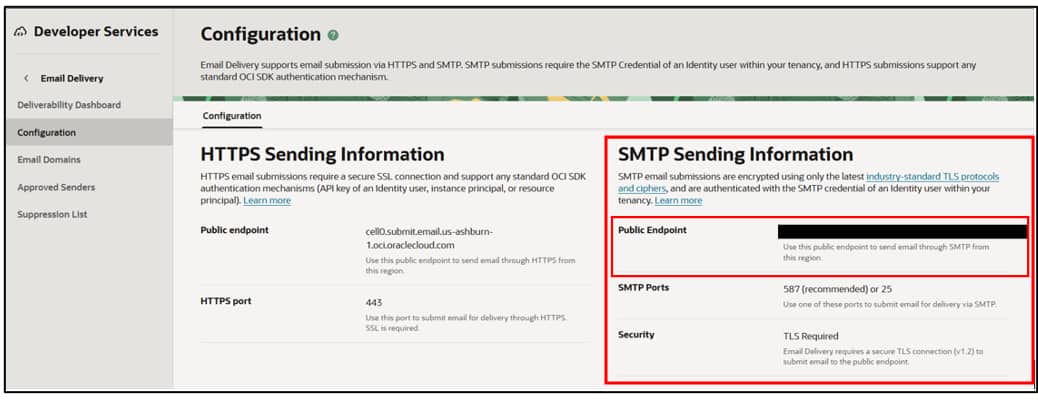
SMTP Endpoint Details - OCI_SMTP_USER and OCI_SMTP_PW:
- In the user account you’re using, create a SMTP token and make a note of the values.
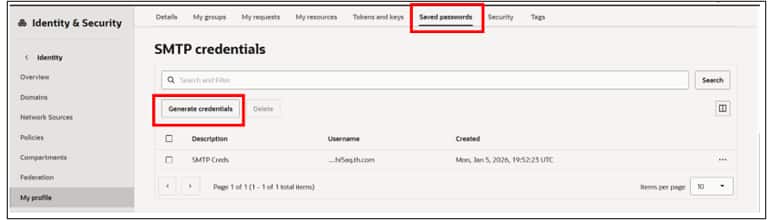
SMTP Token Creation - EMAIL_FROM:
- You can create a dummy email to send notifications through the method below:
- Navigate to Developer Services and click Email Delivery.
- Under Email Domains, create a domain called
fdinotify.com. - Under Approved Senders, register a sender called
no-reply@fdinotify.com. All notification emails are sent through this email to the email address entered as EMAIL_TO.
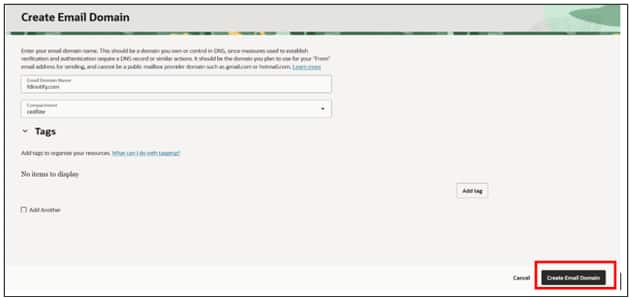
Email Domain Setup 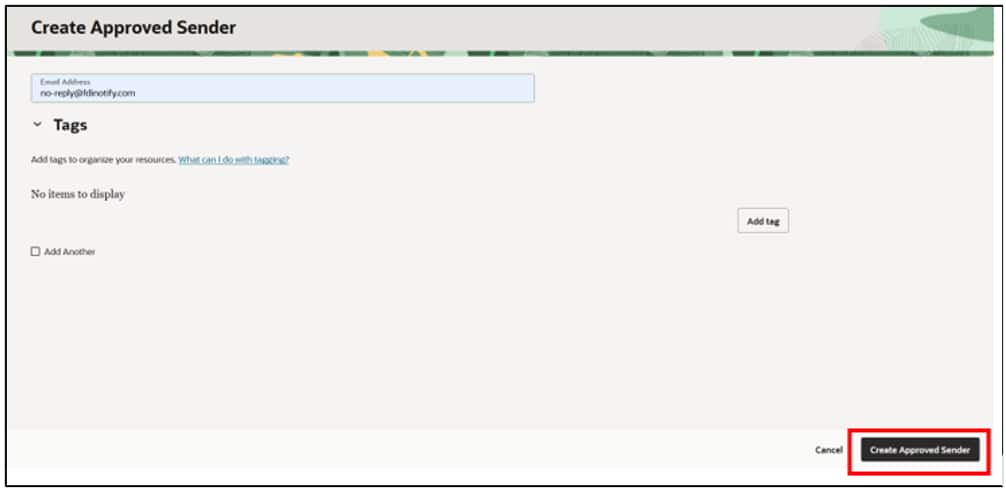
Approved Sender Setup Email Domain: fdinotify.com Approved Sender: no-reply@fdinotify.com - You can create a dummy email to send notifications through the method below:
- EMAIL_TO:
- To create multiple recipients, separate email addresses with a comma.
username1@domain.com, username2@domain.com
Configure Topics and Rules
- Read Overview to set up Topics and Rules for Event Monitoring blog to set up Topics and Rules for the events.
- To subscribe a function to your topic, select Function as the protocol, then choose the application and function containing your code. Click Create.
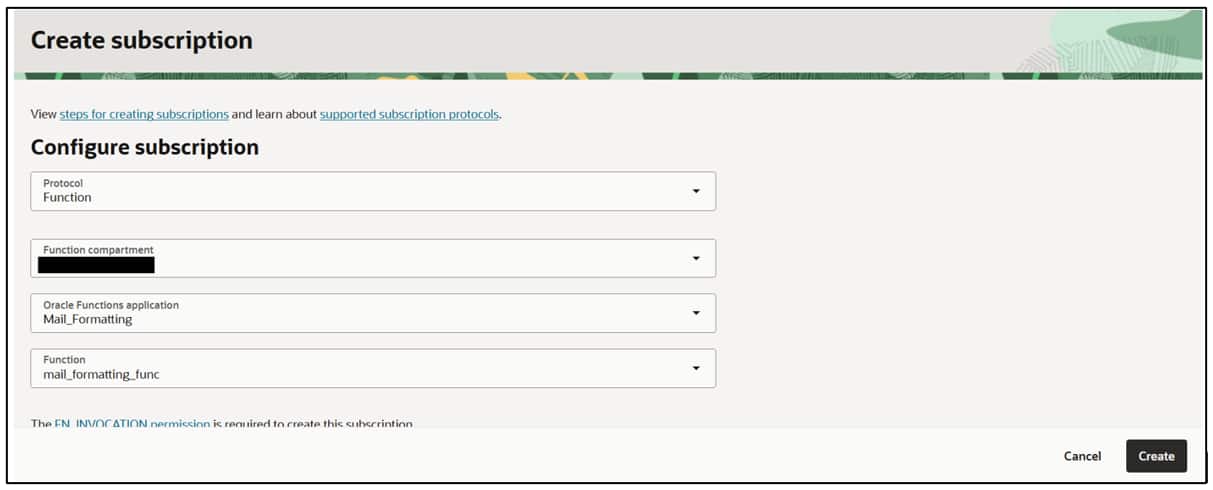
- As an example, provide the details below and configure the rule conditions and attributes to receive notifications upon completion of prioritized data refreshes.
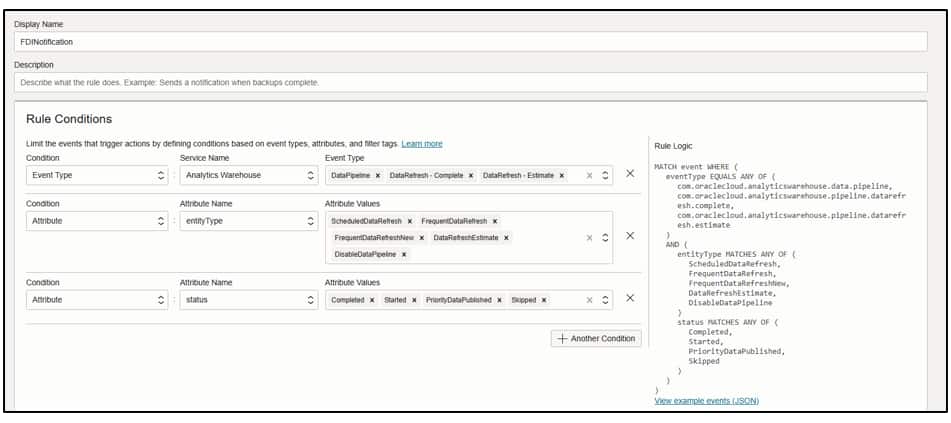
- To review all available Event Types and Attributes, see Event Types, Attributes, and Attribute Values for Event Rules.
Receiving Formatted Email Notifications
- To test the function without waiting for the actual pipeline trigger, you can use the Publish Message option associated with the topic you just created.
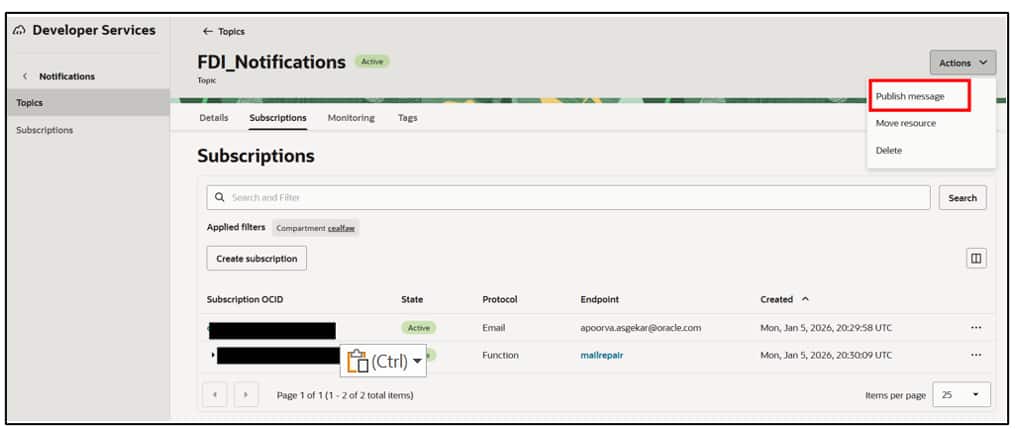
- The message can be any format, such as a JSON payload or even a single-line statement, depending on what your function requires as input. The title is used as the subject of the email you receive if your email address is subscribed to the topic.
- Click Publish and validate the results.
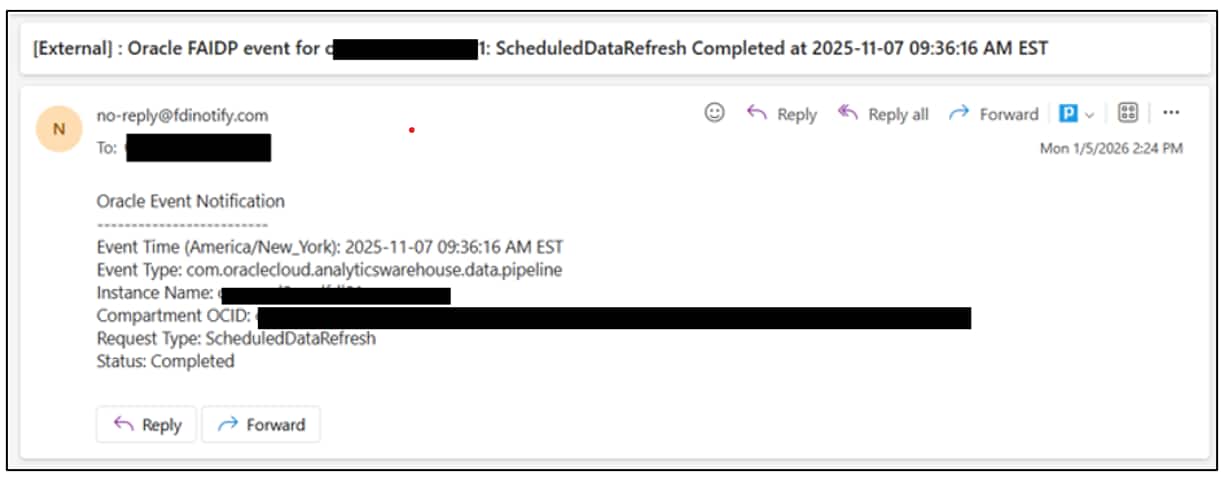
You will now receive notifications upon completion of jobs in the below format as triggered by FDI pipeline jobs.
Conclusion
Using OCI Functions to format Oracle FDI pipeline email notifications brings consistency, clarity, and customization to communication workflows. This ensures recipients receive well-structured, relevant information, improving operational transparency. Review these topics for information on additional options to store these notifications for further processing and analysis:
- Store notifications in database tables, as covered in Writing events to Autonomous AI Lakehouse via ORDS.
- Store them as files in an Object Storage bucket, as covered in Writing events to OCI Object Storage.
Call to Action
Now that you’ve read this post, try it yourself and let us know your results in the Oracle Analytics Community, where you can also ask questions and post ideas.