
At a recent panel discussion during the Global CSR & ESG Awards 2026 in New Delhi, India, leaders from industry, sustainability, corporate social responsibility (CSR), livelihoods, and grassroots implementation came together to discuss an increasingly important question: How can India create sustainable rural transformation by integrating education, skills development, and livelihoods?
At the event—the leading global sustainability and corporate social responsibility event recognizing Indian enterprises—the session was moderated by Anuradha Sharma, Head, South Asia, Oracle Academy, who led an engaging and interactive conversation with distinguished panelists representing diverse perspectives across the social impact ecosystem.
Designed to move beyond conventional panel formats, the discussion encouraged reflection, rapid insights, and audience participation—creating space for meaningful dialogue around collaboration, inclusion, scalability, and sustainable impact.
Moving beyond fragmented interventions
One insight emerged consistently throughout the conversation: rural communities do not experience challenges in silos, and therefore development solutions cannot be designed in silos.
For rural communities, education, employability, digital access, livelihoods, healthcare, and inclusion are deeply interconnected realities. A student’s educational journey is closely tied to access to skills and employment opportunities. Similarly, livelihood sustainability depends not only on income generation, but also on access to learning, technology, and community support systems.
Yet, development initiatives are often implemented through fragmented approaches. Through thoughtfully curated questions and interactive exchanges, the panel explored the importance of creating integrated ecosystems where education, digital skills, livelihood creation, and community empowerment work together intentionally to drive long-term impact.
Preparing rural communities for the future
As technology and AI continue to reshape economies and industries, the conversation also focused on the growing importance of future-ready skills. Ensuring equitable access to education and digital learning opportunities for rural youth and women is becoming increasingly critical to inclusive growth.

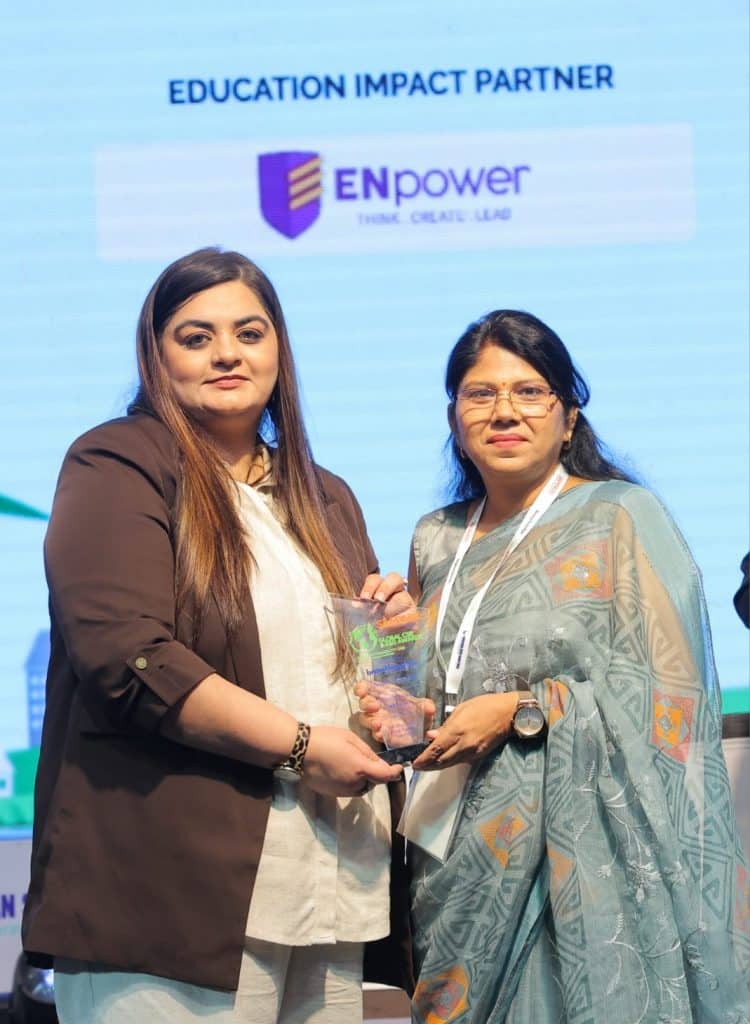
Drawing from Oracle Academy’s focus on technology education and future-ready learning, Anuradha Sharma highlighted how digital skills and access to technology learning are becoming increasingly important for inclusive growth and rural empowerment.
The panel also emphasized that digital inclusion must extend beyond infrastructure. Sustainable transformation requires mentorship, ecosystem support, industry collaboration, and localized engagement that empowers communities meaningfully.
Collaboration as a catalyst for scale
Another strong theme emerging from the discussion was the importance of collaboration across sectors. Sustainable rural transformation requires corporations, nongovernmental organizations, educational institutions, policymakers, and communities to work together with shared vision and long-term commitment.
Several panelists emphasized the need to move beyond transactional CSR approaches toward collaborative models focused on capability building, scalability, and measurable social impact.
Under Anuradha Sharma’s moderation, the session successfully brought together diverse viewpoints while reinforcing the idea that complex rural challenges require collective action and long-term ecosystem thinking.
Creating ecosystems of opportunity
One of the most encouraging aspects of the session was the active engagement from both panelists and the audience. From interactive “fill in the blank” introductions and rapid-fire reflections to audience questions, the discussion evolved into a dynamic exchange of ideas and experiences.
The conversation ultimately reinforced a simple but powerful idea: Empowering rural India is not about isolated projects. It is about building interconnected ecosystems of opportunity where:
- education connects with employability,
- digital skills enable future readiness,
- livelihoods become sustainable,
- and partnerships create scalable impact.
As India continues its journey toward inclusive and sustainable growth, integrated approaches and collaborative ecosystems will play a critical role in ensuring rural communities are not only included in the future—but empowered to shape it.
Not yet a member of Oracle Academy? Join now. Learn more at academy.oracle.com.