
Supply chain leaders continue to face pressure to improve service, manage risk, and operate more efficiently in an increasingly complex environment. Oracle Fusion Cloud SCM 26C introduces new capabilities that help organizations automate routine work, improve visibility across operations, and respond faster to changing conditions.
This release builds on Oracle’s investment in AI-powered supply chain processes while expanding the use of agentic applications that bring together information, recommendations, and actions in a single experience. Across product lifecycle management, supply chain planning, procurement, supply chain execution, order management, and logistics, 26C focuses on helping teams spend less time managing processes and more time driving outcomes.
Improve product data quality and accelerate new product introduction
In Product Lifecycle Management, Oracle continues to strengthen product governance and change management.
Enhancements to trading partner item management improve synchronization across suppliers, manufacturers, customers, and partners. New change control capabilities provide greater oversight of configurator rule updates, while item onboarding workflows help identify missing information earlier in the process. Support for coverage and subscription items within a unified data model improves consistency across downstream systems.
Result: faster product introductions, improved data quality, and fewer downstream errors.
Optimize inventory investments and planning decisions
Supply Chain Planning introduces new Inventory Optimization Planning capabilities that help organizations balance inventory levels across complex supply networks.
Planners gain visibility into service-level risks, safety stock requirements, and network dependencies while AI recommendations help identify opportunities to improve inventory placement. Additional enhancements support buyer planning, parallel manufacturing operations, and forecasting at the product-family level.
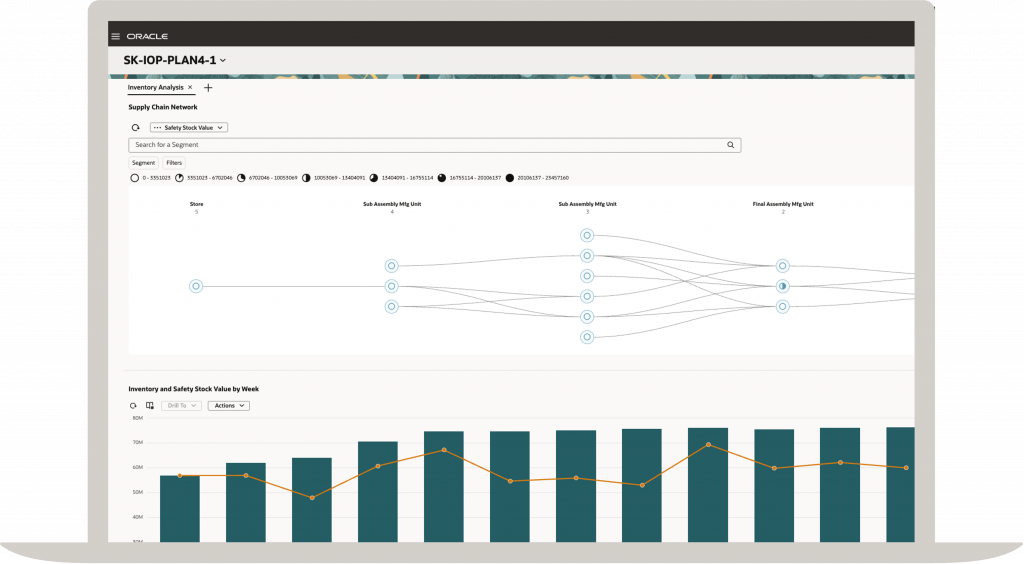
Result: lower inventory risk, improved service levels, and better alignment between demand and supply plans.
Strengthen procurement controls and supplier validation
Procurement enhancements improve how organizations manage purchasing requests and supplier onboarding.
A new procurement intake process captures business requirements, approvals, budgets, and risk considerations before purchasing begins. Integration with TINCheck by Sovos helps validate supplier tax registration information during onboarding.
Result: improved compliance, reduced fraud risk, and better purchasing governance.
Reduce manual effort across inventory, manufacturing, and maintenance
Supply Chain Execution receives many new AI capabilities. Inventory teams can identify reservation issues, streamline returns processing, automate document printing, optimize replenishment levels, and improve cross-docking decisions.
Manufacturing enhancements strengthen material traceability, support parallel operations, and simplify Kanban planning. Maintenance teams benefit from improved scheduling, real-time technician updates, automated labor tracking, and standardized maintenance operations across sites.
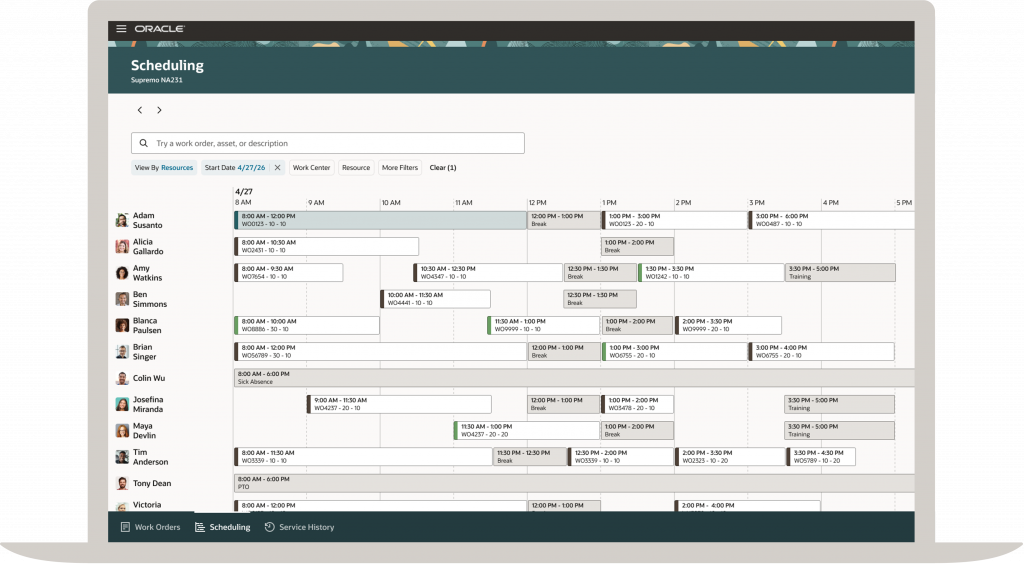
Result: greater operational efficiency, improved traceability, and better resource utilization.
Accelerate order processing and pricing administration
Order Management continues to automate key processes. Organizations can now automatically convert emailed purchase orders into sales orders, while AI agents help resolve order exceptions and simplify price administration. New automation for deduction settlement reduces manual effort in channel revenue management workflows.
Result: faster order processing, improved pricing accuracy, and reduced administrative overhead.
Improve compliance and logistics execution
Across logistics, new AI agents help simplify trade compliance and transportation activities.
Global Trade Management now assists with product classification and restricted party screening preparation. Transportation Management adds conversational access to shipment and order information, and enables self-service dock appointment scheduling. Warehouse Management strengthens controls around expired inventory.
Result: improved compliance, faster customer response times, and more efficient logistics operations.
Expanding the role of agentic applications
A major theme of 26C is the continued evolution of Oracle Fusion Applications from systems that record transactions to systems that help drive outcomes.
New agentic applications for inventory planning, procurement operations, supplier qualification, production readiness, and Kanban management proactively identify issues, prioritize actions, and help users resolve problems before they impact operations.
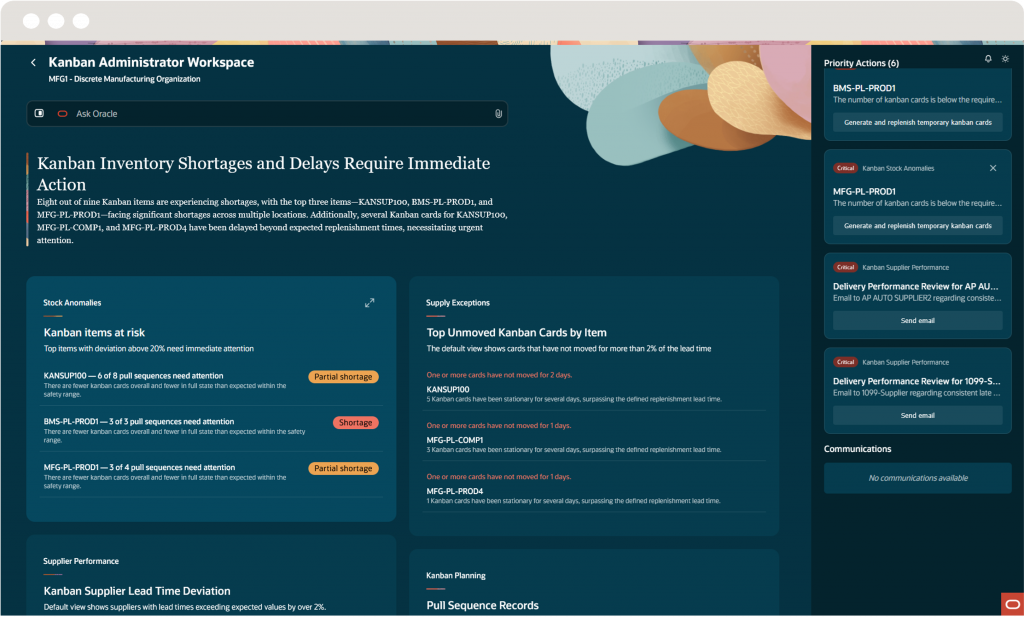
Result: faster decisions, stronger cross-functional coordination, and improved operational performance.
Oracle Fusion Cloud SCM 26C continues Oracle’s focus on embedding intelligence directly into everyday supply chain processes. By combining AI-powered automation, connected business processes, and agentic applications, organizations can improve efficiency, reduce risk, and respond more effectively to change.
To learn more, watch the Supply Chain and Manufacturing 26C Spotlight and visit the SCM Release Readiness page to explore the latest release update.