
Supply chain leaders need to improve service and control costs while responding faster to change. Oracle Fusion Cloud SCM 26D introduces practical innovations that help teams reduce manual work, strengthen operational control, and follow through on decisions.
A major highlight is Fusion Claw, a new capability that helps AI applications carry out complex work within established business controls. The release also expands embedded AI and Redwood user experiences across the supply chain.
Take on more complex work with Fusion Claw
Fusion Claw extends agentic applications’ ability to analyze issues, plan actions, and carry work through to completion.
For example, a product team can ask whether a bill of material is ready for launch. Fusion Claw gathers relevant information, evaluates options against business constraints, and recommends next steps. It can carry out actions within established controls and monitor progress as conditions change, reducing the coordination required from the team.
People retain control of goals, policies, and important approvals. Fusion Applications enforce permissions and business controls, with an auditable record of actions.
In 26D, Fusion Claw powers capabilities in applications such as Product Readiness Workspace, Sourcing Command Center, and Supply Planning Allocation Workspace.
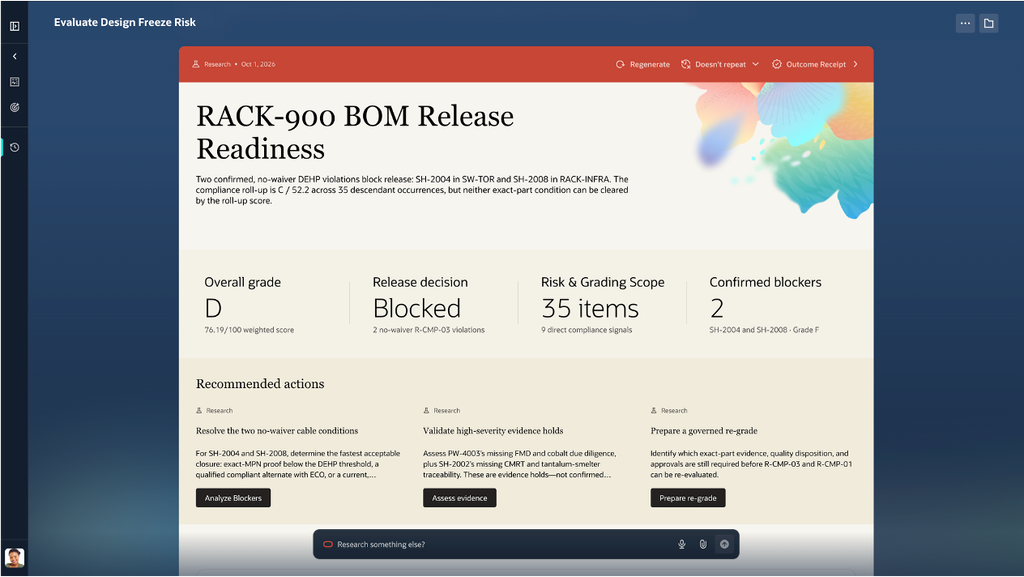
Result: less manual coordination and faster follow-through, with business controls built in.
Improve product data quality and onboarding
Product Lifecycle Management simplifies bulk item onboarding and updates through item batches in Redwood. Teams can also review trading partner item and manufacturer details directly within relationship views, reducing navigation and helping validate product information.
Result: more efficient product onboarding and better data quality across related items.
Align planning with production and customer requirements
Supply Chain Planning adds centralized production campaign management, helping teams sequence work and coordinate schedules with manufacturing to reduce changeover effort.
Shelf-life planning matches supply to customer freshness requirements. The Business Growth Planning Workspace also helps planners forecast new products using comparable launches when little historical data exists.
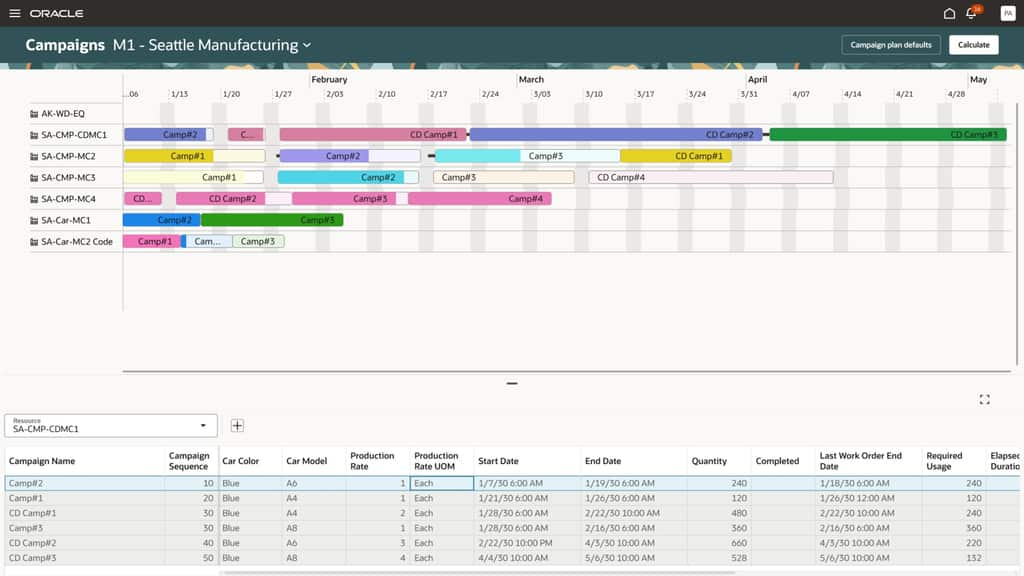
Result: better production alignment, reduced changeover effort, and supply plans that reflect customer requirements.
Accelerate procurement collaboration and contract onboarding
Procurement users can start Microsoft Teams conversations directly from requisitions, purchase orders, or intake requests, keeping discussions connected to the work. Contract digitization extracts key information from existing documents to create managed contract records.
Result: faster issue resolution and less manual effort bringing existing contracts into managed processes.
Strengthen control across inventory, manufacturing, and maintenance
Inventory teams can track stock by grade and expiration date to meet fulfillment requirements. AI agents recommend packing configurations and alternate storage locations, helping reduce handling and manual lookups.
Manufacturing adds approval workflows for work definition changes and barcode scanning for work-in-process inspections. Maintenance enhancements support multiple labor assignments per technician, improving scheduling flexibility and cost accuracy.
Result: fewer manual steps, stronger traceability, and better use of inventory and workforce capacity.
Simplify complex orders and pricing changes
AI assistance helps teams diagnose and reprocess failed sales order imports. Asset-based ordering supports changes to customers’ existing products and services, while Configurator combines products, warranties, and subscriptions in one configuration.
The Price Administration Assistant supports promotions and discounts, validating request details with users before creating promotions.
Result: faster order resolution, more accurate configurations, and reduced pricing administration effort.
Resolve quality and fulfillment issues earlier
New agentic applications help teams address risks earlier. The Product Genealogy Workspace connects information across operations and suppliers to identify affected products and guide investigations. The Quality Assurance Workspace detects emerging inspection risks and process instability to support timely corrective action.
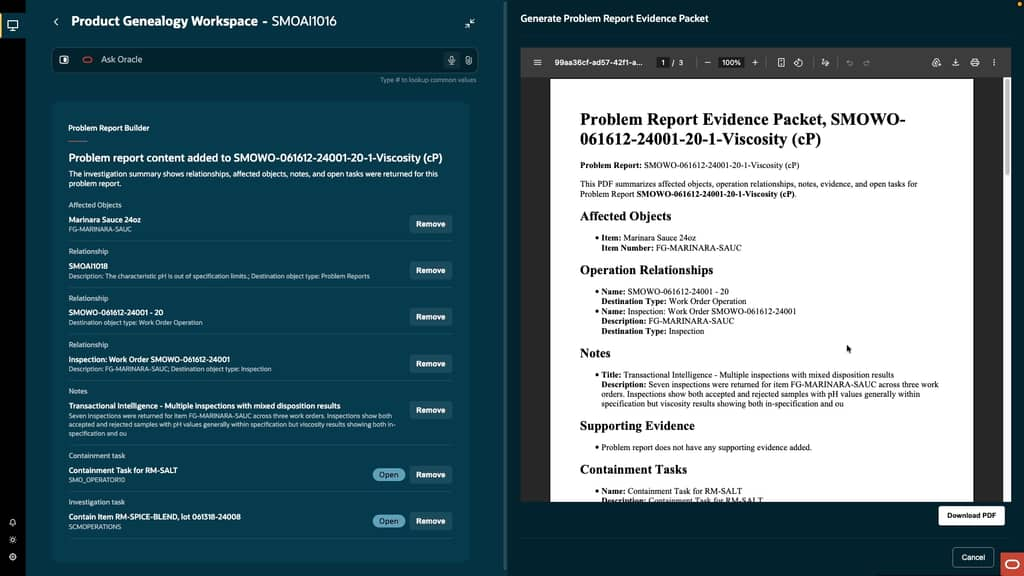
The Warehouse Execution Command Center highlights priorities across fulfillment activities, helping teams address bottlenecks and use labor and equipment more effectively.
Result: faster investigations, earlier corrective action, and better coordination across operations.
Watch the video for more details on Oracle Fusion Cloud SCM 26D
Oracle Fusion Cloud SCM 26D helps organizations improve service and operational efficiency with intelligence built into everyday work. Fusion Claw extends that progress by helping teams complete complex work while maintaining control over execution.
To learn more, visit the SCM Release Readiness page and explore the latest release update.