
Executive Summary
AI applications rely on vector embeddings to power search and recommendations, but these data-rich vectors introduce new security and privacy risks. This blog explains the main threats to AI embeddings, how attacks can occur, and proven strategies for protecting vector data with MySQL—covering secure storage, access controls, encryption, auditing, and compliance best practices.
What’s in an AI Vector?
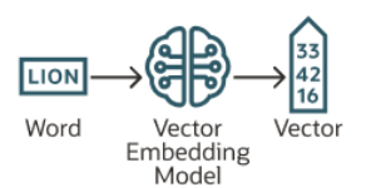
AI and machine learning models rely on vectors—also known as embeddings —to numerically represent data such as text, images, or other inputs. These embeddings power advanced applications like retrieval-augmented generation (RAG), semantic search, and recommendation engines. However, the rich information contained within vectors introduces new attack surfaces, privacy risks, and compliance concerns that organizations must understand and address.
Methods of Attack on Vectors
- Partial Recovery: Researchers have shown it’s possible to partially reconstruct original input data from embeddings. For example, studies like “Can You Recover User Data from Large Language Model Embeddings?”demonstrate the recovery of a significant percentage of words from sentence embeddings, exposing potential privacy vulnerabilities.
- Generating Similar Data: Attackers can train decoder models to generate new data semantically similar to the original input using stolen vectors. If vectors are compromised, sensitive data can leak—even without full inversion.
How Do These Attacks Work?
1. The Mathematical Structure of Embeddings
- Semantic Preservation: Embeddings summarize meaning and context in compressed formats, clustering semantically similar items in high-dimensional space.
- High Dimensionality and Linearity: Embedded vectors preserve enough pattern that, if left unprotected, can be exploited for partial recovery.
- No One-Way Security: Generating embeddings is not cryptographically secure. “Can You Recover User Data from Large Language Model Embeddings?” reports 50–70% recovery rates in some cases.
2. Vector Database Implementations
- Linked Metadata: Vector databases often store both the embedding and metadata (like document IDs). Unauthorized access can expose linked content and amplify privacy risk.
- Lack of Security Controls: Early or unsecured vector databases may lack authentication or encryption, making theft easier.
- Weak Data Validation: Poor validation can let attackers inject malicious data or exfiltrate through model manipulation.
Key Issue: When embeddings aren’t anonymized—they remain information-dense. Security weaknesses in storage and retrieval enable a variety of data extraction attacks.
Example Incident
The following is a hypothetical example based on risks highlighted in industry research and OWASP standards.
A company used AI-driven search by storing text embeddings in an unsecured vector database. A contractor with internal access exported thousands of vectors and used open-source tools to partially reconstruct customer information. This exposure provoked a privacy investigation and emergency security upgrades.
Takeaway: Even if embeddings seem abstract, unprotected storage poses real risks for data leakage and compliance violations.
Why Protecting Vector Data Matters
The Open Web Application Security Project (OWASP) classifies “Vector and Embedding Weaknesses” as a top AI security threat.
- Privacy and Data Leakage
- Vector Inversion Attacks: Reconstructing personal or proprietary info from embeddings.
- Membership Inference: Detecting if specific data was used in training.
- Cross-Context Leakage: Multi-tenant risks.
- Integrity and Manipulation
- Data Poisoning: Malicious data can degrade or bias results.
- Semantic Deception: Perturbed vectors can cause misleading system output.
- Intellectual Property & Compliance Risks
- Model Exfiltration, Loss of Competitive Edge: Reverse-engineering via query analysis or stolen vectors.
- Regulatory Penalties: Embedding-related breaches can trigger GDPR, HIPAA, or other compliance action.
- Trust Impact: Breaches erode customer and stakeholder trust.
How Do You Protect Your Vector Data?
- Secure Storage: Use storage with fine-grained access controls. Avoid file-based or minimally protected stores.
- Access Management: In MySQL HeatWave and MySQL AI, secure access to dedicated schemas using robust roles and grants.
- Data Lifecycle: Review how both structured and unstructured data are protected from ingestion to archival/deletion.
- Best Practices:
- Encrypt data at rest and in transit
- Limit access by least-privilege
- Enable MySQL Audit logging
- Regularly review and update your pipeline security
Example: Storing Vector Embeddings Securely with MySQL’s VECTOR Data Type
Store embeddings for senstive data in MySQL. when vector data is in the MySQL Database access can be limited, audited, and protected.
CREATE TABLE `sensitive_data_vectors` (
  `document_name` varchar(1024) NOT NULL,
  `metadata` json NOT NULL,
  `document_id` int unsigned NOT NULL,
  `segment_number` int unsigned NOT NULL,
  `segment` varchar(1024) NOT NULL,
  `segment_embedding` vector(384) ,
  PRIMARY KEY (`document_id`,`segment_number`)
);
Learn more about the VECTOR datatype in MySQL.
MySQL Security Features for Vector Protection
MySQL AI and MySQL HeatWave offer robust, built-in protection for vectors:
- Encryption by Default: MySQL HeatWave encrypts all data in transit and at rest. With Transparent Data Encryption (TDE), on-premises MySQL AI can do the same.
- Auditing and Monitoring: MySQL Audit tracks and logs every access.
- Fine-Grained Access Control: Secure embeddings and metadata via roles, grants, and schema-level privilege.
- Native VECTOR Data Type: Store embeddings efficiently and securely—without exposure to risks of file-based storage.
- Lifecycle & Compliance Management: Backups, retention, and compliance policies cover vector data automatically.
Why This Is Stronger: Using MySQL’s VECTOR data type with robust database security integrates access controls, encryption, auditing, and compliance—offering far greater protection than files or unmanaged stores.
Summary
AI vectors encode valuable, sensitive business information. Protect embeddings with the same rigor as your most sensitive data assets. Use MySQL’s security features—encryption, access control, auditing, and modern datatypes—to minimize risk and assure compliance.
For more information about securing AI workloads with MySQL HeatWave and MySQL AI, visit the Oracle AI for Employees site (internal) or contact your MySQL representative.
References and Further Reading
- OWASP Top 10 for LLM Applications – Vector and Embedding Weaknesses (LLM08)
- Can You Recover User Data from Large Language Model Embeddings? (arXiv, Carlini et al., 2021)
- Embedding Security: New Threats in Modern AI Architectures (Cloud Security Alliance)
- MySQL HeatWave on Oracle.com
- MySQL HeatWave Security Features
- MySQL Enterprise Edition on Oracle.com
- Transparent Data Encryption (TDE) in MySQL
- MySQL Security Overview
- MySQL Audit Plugin Documentation
- Oracle AI Solutions
- MySQL Blog on AI and Data Security
- MySQL Product Page
- MySQL Documentation
- MySQL Support on Oracle.com
- Oracle Community and Forums