
Modern applications generate and consume enormous amounts of semi-structured data. User profiles, product catalogs, IoT telemetry, application events, AI prompts, and content metadata rarely fit neatly into rigid relational schemas anymore.
At the same time, enterprises still need the reliability, security, analytics, and operational maturity of a traditional database platform.
This is where MySQL HeatWave Document Store stands out.
It combines the flexibility of a NoSQL document database with the enterprise-grade capabilities of MySQL all within a single managed platform.
What Is MySQL HeatWave Document Store?
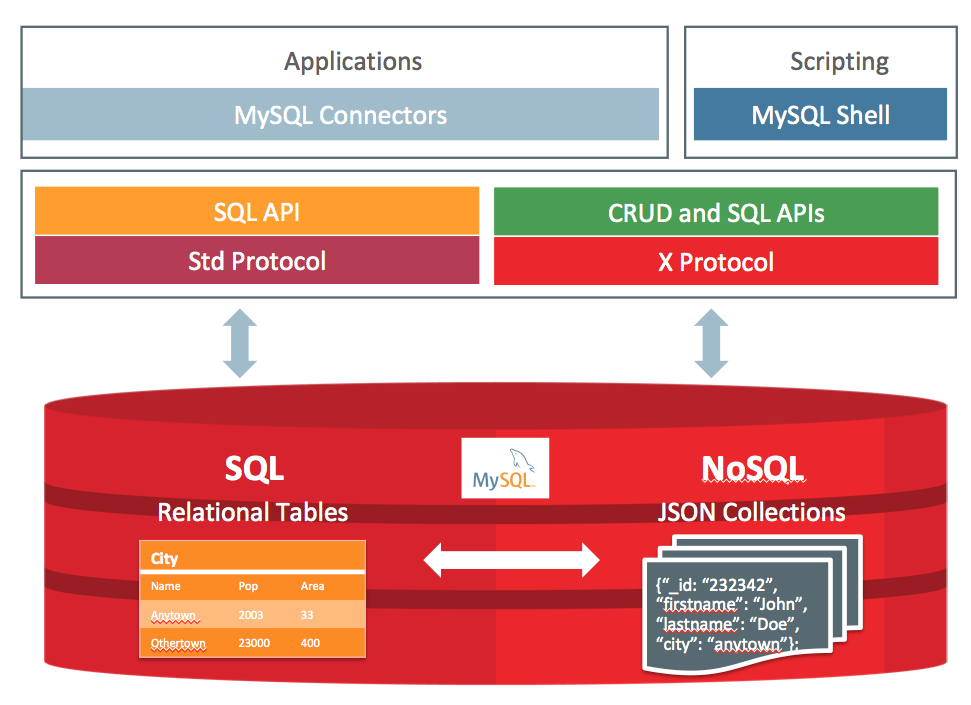
MySQL HeatWave Document Store allows developers to work with JSON documents directly inside MySQL using the X DevAPI and CRUD-style operations.
Instead of designing rigid table structures upfront, developers can store flexible JSON documents while still benefiting from:
- ACID transactions
- High availability
- Replication
- Backup and recovery
- SQL compatibility
- HeatWave analytics acceleration
In other words, you get the simplicity of a document database without giving up the power and maturity of MySQL.
The Biggest Benefits of MySQL HeatWave Document Store
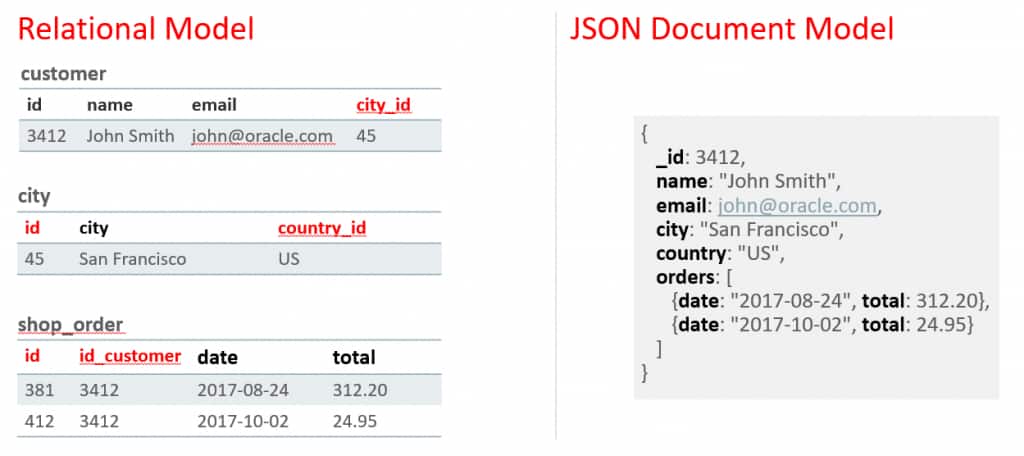
1. Flexible JSON Data Modeling
One of the biggest challenges with modern applications is handling constantly evolving data structures.
With Document Store, developers can:
- Store dynamic JSON documents
- Add new attributes without schema re-design
- Handle semi-structured data naturally
- Build applications faster
2. SQL and NoSQL Together in One Platform
Traditionally, organizations had to choose:
- Relational SQL database
- NoSQL document database
HeatWave removes that tradeoff.
Developers can:
- Use SQL where relational modeling makes sense
- Use JSON documents where flexibility is needed
- Query both together in the same database
This dramatically simplifies architecture and reduces operational complexity.
3. Real-Time Analytics Without ETL
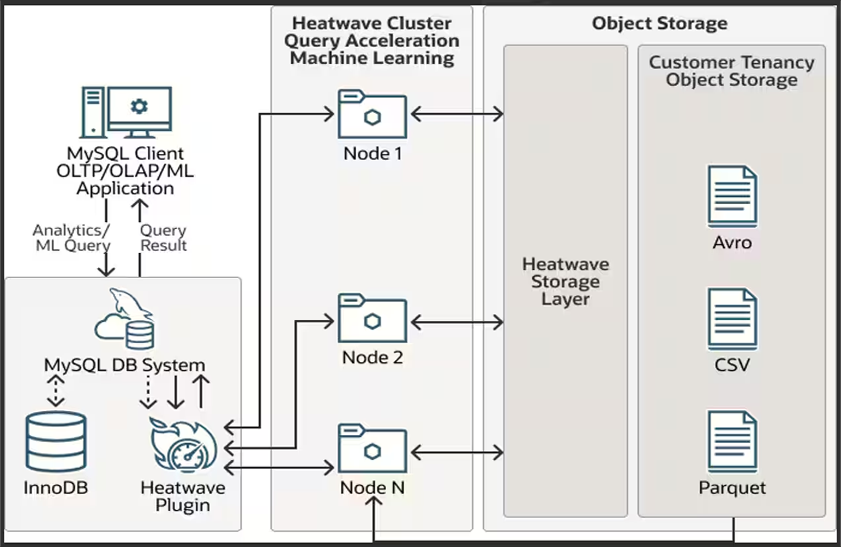
One of the most powerful advantages of HeatWave is that analytics can run directly on transactional and document data.
That means:
- No ETL pipelines
- No duplicate analytics database
- No delayed reporting
Organizations can analyze JSON document data in near real-time using HeatWave’s massively parallel in-memory query engine. This is a major advantage over traditional NoSQL platforms that often require separate analytics systems.
4. Enterprise Reliability with ACID Transactions
Many standalone document databases prioritize flexibility over consistency.
MySQL HeatWave Document Store keeps the reliability enterprises expect, including:
- ACID compliance
- Transactional consistency
- Replication
- Automated backups
- Failover protection
- Enterprise security controls
This makes it suitable for mission-critical applications where data integrity matters.
5. Faster Development Cycles
Document Store enables developers to work with modern application patterns more naturally.
Using the X DevAPI, developers can:
- Interact with JSON documents directly
- Use familiar CRUD operations
- Work efficiently with Node.js, Java, Python, and other languages
This can significantly improve developer productivity and accelerate feature delivery.
6. Reduced Infrastructure Complexity
Many modern architectures become unnecessarily complex because organizations maintain:
- Relational databases
- NoSQL databases
- Analytics platforms
- ETL pipelines
7. High Performance at Scale
HeatWave’s architecture is designed for high-performance analytics and mixed workloads.
Benefits include:
- Massively parallel query execution
- In-memory acceleration
- Hybrid columnar processing
- Optimized JSON analytics
Applications can scale transactional and analytical workloads without deploying multiple specialized systems.
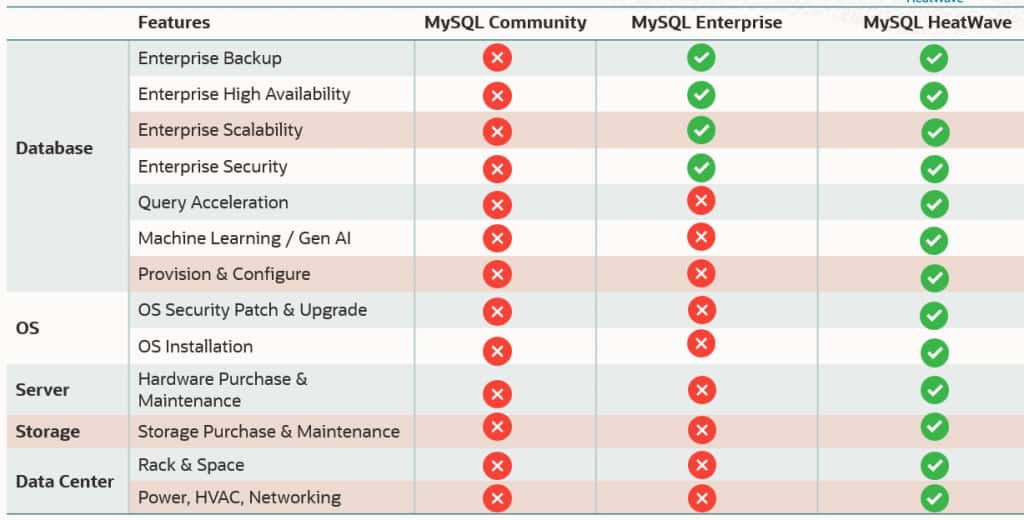
8. Fully Managed Operations
Because MySQL HeatWave is a managed cloud service, Oracle handles much of the operational burden, including:
- Patching
- Backups
- Infrastructure maintenance
- Monitoring
- Scaling
- Security updates
This allows database teams and developers to focus more on applications and less on infrastructure management.
9. Easier Modernization for Existing MySQL Users
For organizations already using MySQL, Document Store provides a low-risk modernization path.
Instead of migrating to a completely different NoSQL platform, teams can:
- Continue using MySQL
- Incrementally adopt document-based models
- Reuse existing tools and expertise
- Modernize applications gradually
This lowers migration risk and reduces retraining requirements.
Common Use Cases
MySQL HeatWave Document Store is particularly well-suited for:
| Use Case | Why It Fits |
| Product Catalogs | Flexible product attributes |
| User Profiles | Dynamic user preferences |
| IoT Applications | Semi-structured telemetry |
| Content Management | Evolving metadata |
| Event Logging | High-volume JSON events |
| Mobile/Web Apps | Agile schema evolution |
| AI Applications | Vector and semantic search |
| Real-Time Analytics | Unified OLTP + analytics |
Final Thoughts
MySQL HeatWave Document Store bridges the gap between traditional relational databases and modern NoSQL application development.
It delivers:
- the flexibility of document databases
- the reliability of MySQL
- the performance of HeatWave analytics
- the simplicity of a managed cloud platform
For organizations looking to modernize application architectures without increasing operational complexity, MySQL HeatWave Document Store offers a compelling all-in-one solution.