
Enterprises are moving from isolated AI assistants to multi-agent systems, where agents can collaborate, specialize, and hand off work across tools, teams, and business processes. As these agent ecosystems grow, organizations need a secure way for clients and agents to discover, invoke, and manage enterprise agents.
Oracle is announcing Oracle Autonomous AI Database Agent-to-Agent (A2A) Server, a fully managed, multi-tenant capability embedded directly in Oracle Autonomous AI Database Serverless and Dedicated Region deployments for Oracle AI Database 19c and 26ai. It enables A2A-compatible clients using the A2A protocol to seamlessly discover and invoke AI agents built with the Oracle Select AI Agent framework without requiring you to deploy or manage separate A2A server infrastructure.
With the A2A Server built into Autonomous AI Database, including multicloud offerings such as ADB@Azure, ADB@GCP, and ADB@AWS, you can extend AI-powered capabilities across the enterprise while maintaining centralized security and observability.
Why A2A, and why now?
Enterprises are rapidly moving from single-agent “chat with data” experiences to multi-agent systems—where agents collaborate, specialize, and hand off tasks. As those agent ecosystems grow, teams often face three recurring challenges:
- Integration friction: Each client/agent runtime may require custom integration code to find and call the right agents.
- Operational overhead: Running a separate agent gateway/server adds infrastructure, patching, scaling, and monitoring work.
- Governance requirements: Authentication, authorization, and policy enforcement must be consistent across teams, tools, and environments.
Oracle Autonomous AI Database A2A Server addresses these challenges by providing an in-database, fully managed A2A Server that supports dynamic agent discovery, immediate client compatibility, and enterprise-grade access management—built on Oracle’s database and cloud security foundations.
As shown in figure 1, consider the example of a Sales Strategy Agent that uses one agent for natural language queries against an Oracle AI Database, another agent for product sales forecasts using machine learning, and a marketing agent to assist with actions and recommendations. Using A2A, the Sales Strategy Agent can be more quickly developed using multiple pre-existing AI agents, possibly developed across organizational or technological boundaries.
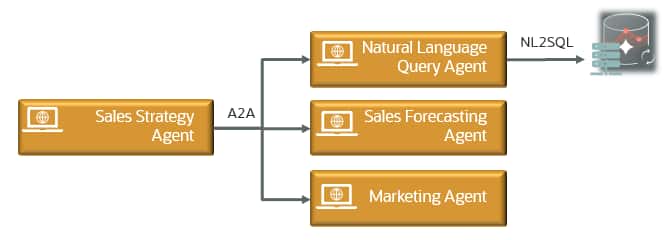
Figure 1: Sales Strategy Agent using A2A to leverage remote agents
What Makes Autonomous AI Database A2A Server Unique
Autonomous AI Database A2A Server brings together agent interoperability and management without introducing new server infrastructure for you to deploy, patch, scale, or secure.
Operation, Architecture, and Integration
- Fully managed, multi-tenant A2A Server: The A2A Server is embedded in Autonomous AI Database Serverless and Dedicated Region deployments for Oracle AI Database 19c and 26ai. Oracle manages availability, lifecycle, and operations so you can focus on building agent experiences, not running agent gateway infrastructure.
- Integration with A2A-compatible clients: You can connect A2A-compatible clients and agent runtimes without deploying a separate server. Examples include Google Gemini Enterprise, Azure AI Foundry, Microsoft Copilot Studio, and custom applications that support the A2A protocol.
- Dynamic agent discovery using the Oracle Select AI Agent framework: A2A clients can discover and invoke agents created using the Oracle Select AI Agent framework supporting interoperability with other agent systems. This makes it easier to build agent teams with specialized roles and make those agents available to approved clients through a standard discovery mechanism.
Security, Governance, and Compliance Controls
- Centralized identity and access management: The A2A Server uses Oracle AI Database Identity, OCI IAM, and external OIDC/OAuth 2.1 integration, with OIDC available, to centralize authentication and authorization across enterprise environments.
- Database-native governance controls: Because the A2A Server is integrated with Autonomous AI Database, agent access can use database-native security and governance controls, including access control list and privilege enforcement, virtual private database policies, logs, and rate limits.
- Multicloud readiness: Availability with ADB@Azure, ADB@GCP, and ADB@AWS helps you extend consistent agent data governance across cloud strategies without fragmenting controls or duplicating infrastructure.
Key Benefits
Autonomous AI Database A2A Server helps you:
- Reduce operational and technical complexity by avoiding separate A2A server deployment and maintenance
- Connect compatible clients to approved agents through standard discovery and invocation patterns
- Govern agent access with centralized, database-native identity, authorization, logging, and policy and enforcement controls
- Extend AI-powered capabilities across teams and environments with consistent enterprise-grade security
How it works
At a high level, you create and manage agents inside Autonomous AI Database using the Oracle Select AI Agent framework. You can group agents into teams, define the tools and tasks they can use, and govern access using your existing database and cloud security model.
The A2A Server exposes approved agents to compatible clients through standard A2A discovery and invocation patterns. Clients can list available agents, retrieve agent cards, and call an approved agent without requiring custom server deployment or bespoke integration logic.
Because the server is built into Autonomous AI Database, identity, privileges, policies, logging, and rate controls remain centralized.
Getting started
Getting started with Autonomous AI Database A2A Server follows the same principle as other in-database AI integration capabilities: define your agents once, govern access centrally, and connect compatible clients.
- Enable your Autonomous AI Database instance as an A2A server.
- Create your agent team(s) using the Select AI Agent framework.
- Configure identity and authorization using Oracle Database Identity.
- Configure authentication for your client according to your organization’s identity model. For example, generate a bearer token using your database credentials.
- Connect an A2A-compatible client as suggested above.
- Use dynamic agent discovery so clients can list available agents, obtain agent cards, and invoke approved agents without custom integration code
Before expanding access to broader teams or user populations, validate alignment with your organization’s AI, identity, and data security policies.
A2A and MCP
A2A focuses on agent-to-agent discovery and invocation, while MCP focuses on connecting AI models and agents to tools – APIs, applications, and data sources. Together, they support complementary parts of an enterprise agent architecture, as depicted in Figure 2.
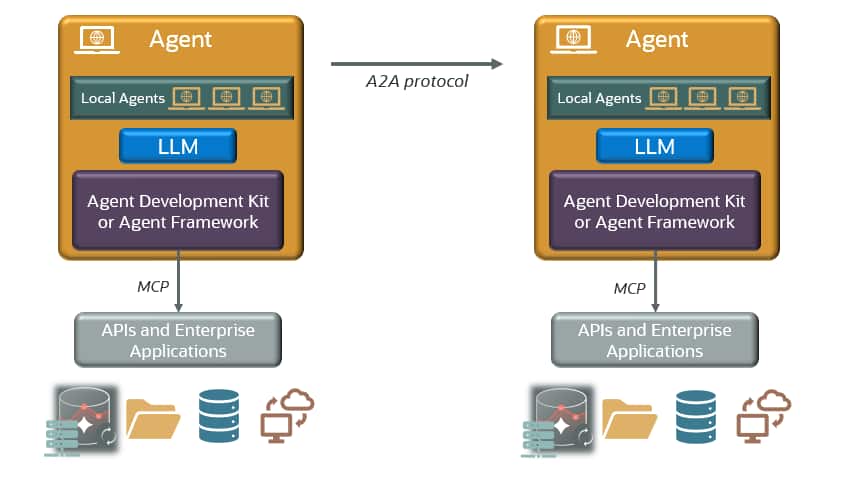
Figure 2: Hypothetical agent interaction using A2A and MCP
Oracle Autonomous AI Database MCP Server complements the A2A Server announced here. While the A2A Server exposes agent teams defined using the Oracle Select AI Agent framework and the A2A protocol, the MCP Server exposes tools defined using the Oracle Select AI Agent framework and the Model Context Protocol (MCP).
Give it a try
Autonomous AI Database A2A Server helps you scale from isolated AI experiments to enterprise-ready multi-agent systems without adding new infrastructure to deploy, patch, and manage.
With built-in multi-tenant management, dynamic agent discovery through the Oracle Select AI Agent framework, and centralized security and logging, you can accelerate agent adoption while maintaining the controls your business requires.
Start by creating an agent with the Oracle Select AI Agent framework, then enable A2A access for an approved client in a development environment. From there, validate identity, authorization, logging, and policy controls before expanding access to broader teams.
Resources
For more information…
- Autonomous AI Database A2A Server
- Autonomous AI Database MCP Server
- Select AI Agent framework
- DBMS_CLOUD_AI package
- DBMS_CLOUD_AI_AGENT package
- Unlocking Data Insights with the Oracle AI Database Agent in Gemini Enterprise – Part 1 and Part 2