


Introduction
AWS Fargate is often positioned as the easiest way to run containers in the cloud. No nodes to manage, no cluster capacity planning, and a “just run your containers” experience. For many teams, especially early on, that promise holds true.
We worked with a customer who had adopted Fargate for exactly those reasons. They weren’t running EKS. They weren’t managing worker nodes. They were simply deploying containerized workloads and focusing on application delivery rather than infrastructure.
The primary driver for change was cost optimization.
As the customer’s environment grew, they began evaluating OCI as part of a broader cost-reduction initiative. Containers were a natural place to start, and that’s when the conversation shifted from “How do we move this?” to “What is the right container platform long-term?”
The move to OCI didn’t invalidate Fargate, but it did force a closer look at its tradeoffs, especially when compared to running full Kubernetes on Oracle Kubernetes Engine (OKE).
What Changed as Cost Became the Priority?
Once cost optimization became a primary objective, the customer began looking more closely at how their container platform behaved at scale.
This wasn’t about dissatisfaction with AWS Fargate. In fact, Fargate continued to do exactly what it was designed to do: abstract infrastructure and simplify operations. However, that abstraction came with tradeoffs. Tradeoffs that became more visible once the focus shifted from speed and simplicity to efficiency, control, and long-term cost optimization.
As part of the evaluation, a few key questions started to surface:
- How do we reduce the cost of always-on container workloads?
- How much are we paying for abstraction versus actual resource usage?
- What options do we have for stateful services and persistent storage?
- How much visibility do we need when troubleshooting production issues?
- What level of control do we want over networking and scaling behavior?
Answering these questions required looking beyond a “serverless containers” model and evaluating what a more traditional Kubernetes platform could offer. Particularly in an environment where container density, storage options, and network control directly impact cost.
This is where OKE entered the discussion.
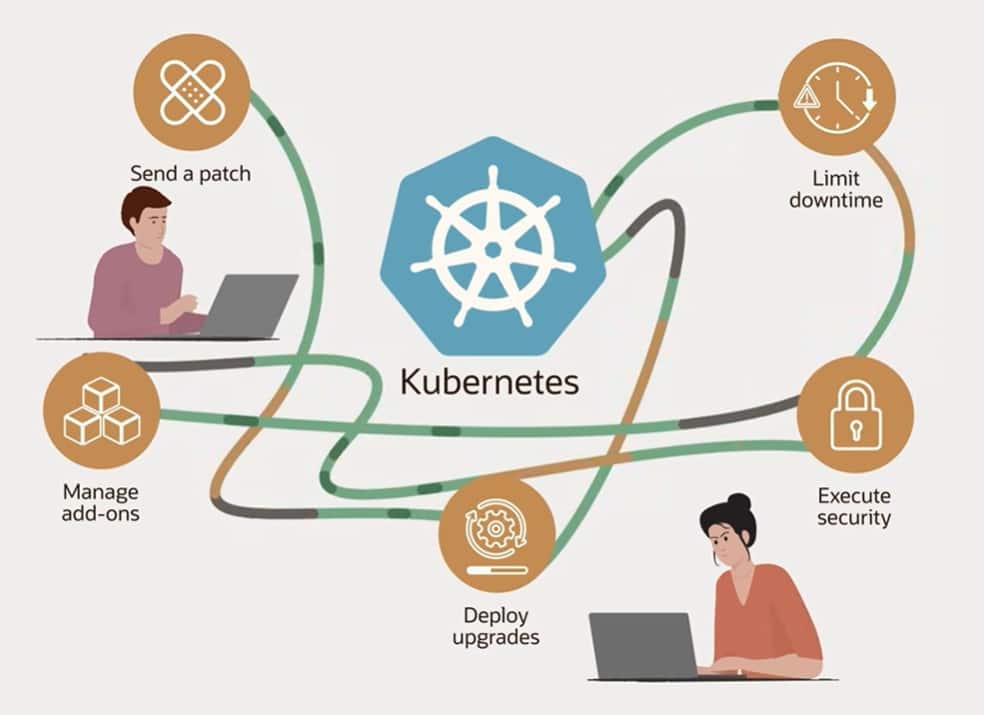
Why the Conversation Shifted to OKE
As the customer compared deployment models, it became clear that OKE aligned more closely with their new priorities.
Running full Kubernetes on OKE introduced slightly more operational responsibility, but it also unlocked:
- Better cost predictability for always-on workloads
- Higher pod density on worker nodes
- More flexible storage options for stateful services
- Greater visibility into resource utilization
- Tighter integration with OCI networking primitives
- Full extensibility to run cloud-native apps or AI workloads on OKE
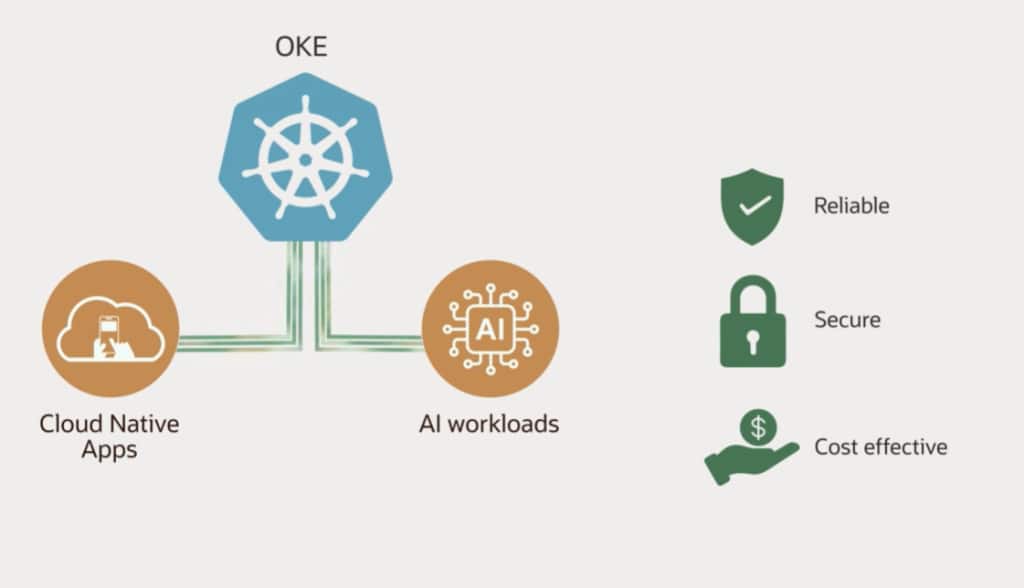
What initially looked like “more infrastructure to manage” ultimately translated into more control over cost and performance.
At that point, the conversation was no longer about whether they could move containers to OCI, it was about which container platform made sense long-term.
Bryan Mahoney, CEO of Chord Commerce, stated:
“Moving from AWS Fargate to OCI OKE is part of a long-term vision. As our environment grows, OKE gives us the cost predictability, operational visibility, platform control, performance value, and excellent customer support we need to scale efficiently over time.”
Conclusion
This wasn’t a story about AWS Fargate failing.
Fargate did exactly what it was designed to do, simplify container operations and remove infrastructure management. But as cost optimization became a priority, the tradeoffs of that abstraction became more significant.
OKE introduced more responsibility, but it also provided:
- Greater cost predictability
- Better storage options
- Deeper observability
- More control over networking and scaling
For this customer, moving to OCI wasn’t just about lowering cloud spend. It was about choosing a container platform that aligned with where their environment was headed, not where it started.