
Cloud architecture diagrams make connected healthcare look orderly. In these representations of reality, devices produce data, a platform collects it, and applications extract insights from it to help clinicians.
As we know, the real world of hospitals and emergency departments is far less accommodating.
A patient monitor may depend on one interface, a laboratory instrument on another. Equipment bought years apart must coexist. Each new digital workflow can bring another computing device, another software configuration, and another maintenance obligation.
In The Innovation Tax, I examined how the cost of moving medical device data can discourage useful applications of it. More favorable data-transfer economics give medical device companies and healthcare organizations greater freedom to decide where their data should go.
But affordable movement solves only part of the problem. Before data can become useful in the cloud, somebody must collect it at the edge.
That part of the architecture has economics of its own.
The cost of connecting
Healthcare organizations rarely get to design their device environments from scratch. They inherit them, expand them, and keep them running while introducing new systems.
The result is a hodgepodge of manufacturers, protocols, interfaces, and equipment generations. Connecting that equipment requires software that understands its output, hardware that accommodates its interfaces, and people who can maintain both.
The patient room adds another complication. Medical device integration, digital signage, dashboards, and virtual observation each have their own computing requirements. Meeting them separately can leave an organization supporting several platforms in the same room.
For medical device manufacturers and software companies, this fragmentation creates unwelcome complexity. Developing an application also becomes an exercise in selecting hardware, arranging connectivity, and establishing remote support.
Some of that work is unavoidable, but repeating it for every solution deployed is a choice.
A smaller foundation with broader uses
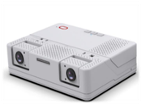
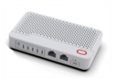
Oracle is exploring an Oracle Cloud Infrastructure Internet of Things Connector architecture intended to provide a common foundation for these workloads.
Its proposed modular design combines compact edge computing with device connectivity. A base configuration is intended to support connectivity and web applications, either independently or within a purpose-built enclosure. Configurable options may support audio and video, environmental sensing, and alternative wireless connections.
The underlying proposition is straightforward: several applications may share a computing foundation even when their accessories and interfaces differ.
The OCI IoT Connector is also intended to support lightweight containerized services and local AI inference. If implemented, this could provide developers a place to run selected workloads near the equipment while using OCI for broader data processing and application services.
The appropriate balance depends on the application. Device interfaces require local handling. Other tasks benefit from cloud resources and access to data from many locations.
Good architecture assigns work accordingly. Buying more infrastructure than the local workload requires merely adds something else to operate.
Connecting equipment to a shared data foundation
Medical device integration illustrates this approach.
In the proposed deployment, software on the IoT Connector receives data output from bedside or laboratory equipment and forwards telemetry to OCI, subject to applicable data access, privacy, and security requirements. The enclosure and peripherals can suit the setting: a touchscreen beside a patient, for example, or a rack-mounted configuration serving laboratory instruments.
The device interface would be handled locally. Data normalization and downstream access could be handled in the cloud.
OCI IoT Platform supports ingestion through protocols including MQTTS and HTTPS. Digital-twin models and adapters map incoming telemetry to consistent representations, with data stored in an included Oracle Autonomous AI Database.
That division of labor matters beyond the initial connection. An engineering team investigating equipment behavior and a software partner developing an application may need different views of the same telemetry. A shared data foundation can support both without requiring each team to establish its own connection to the original equipment.
The integration work can become a shared asset for other applications.
The room around the device
Telemetry is only one part of the healthcare edge.
Digital room signs need computing to display information and interact with accessories. Clinical dashboards need a platform for their web applications. Virtual observation introduces cameras, microphones, and audio output.
The IoT Connector’s configurable design is intended to accommodate these requirements through optional features and connected peripherals. A common platform could therefore support several deployment patterns while allowing each solution to retain its particular purpose.
Environmental sensing broadens the possible applications. Temperature, humidity, lighting, and air quality describe conditions around the equipment and the people using it. With appropriate validation, those measurements could inform facility operations and applications concerned with the care environment.
Audio offers another possibility: voice assistance linked to clinical workflows.
Here, the application does most of the consequential work. It must interpret a request, establish what information the user may access, and determine which actions are permitted. Local computing and microphones provide the foundation. Useful assistance depends on the systems and controls built above them, including application-specific validation and appropriate human oversight.
The arithmetic of a fleet
A successful prototype proves that a connection works. That is only the start. A successful deployment must keep it working.
As installations multiply, routine questions become substantial operational burden. Which software version is running where? Which configuration belongs at each location? How are updates tested, distributed, and checked? Who handles a problem spanning the device, its application, and the cloud?
The IoT Connector strategy envisions centralized and remote device-management capabilities that could help organizations manage software versions, configurations, and updates. These objectives deserve as much attention as the hardware.
Containerized services can help make application deployment more consistent. They still require testing, support, and change processes suited to the environment.
Standardization may help organizations reduce duplicated engineering effort by supporting more consistent deployment procedures and reusable support practices. These potential efficiencies may become more significant when the same foundation serves several applications.
Giving partners more room to build
For medical device manufacturers and independent software vendors, the IoT Connector is intended as a building block around which they develop their own solutions.
They would supply the applications, integrations, and workflow expertise. The modular hardware could also be embedded in enclosures suited to particular products.
This gives the ecosystem a useful organizing principle. Shared infrastructure can absorb common engineering work, potentially allowing developers to devote more resources to develop what distinguishes their offerings.
Healthcare will continue to involve multiple clouds, on-premises systems, and equipment with long service lives. The edge must accommodate that reality. Connecting devices to OCI could help make their data available to a broader application architecture, subject to the appropriate access and governance requirements.
The first blog considered the cost of moving data once it has been collected. The IoT Connector is intended to address the effort required to collect it and sustain those connections.
Both affect how much an organization can afford to do with its devices.
The less effort spent repeatedly assembling and maintaining the same foundations, the more remains for building something useful on them.
To learn more, visit Oracle medtech solutions.
OCI IoT Connector is not intended for patient diagnosis or life-support use. OCI IoT Platform is a general-purpose developer service; customers and partners are responsible for validating their solutions and meeting applicable regulatory requirements. Features described as planned, proposed, or under development may not be generally available and are subject to change.