

Nemours Children’s Health adopts Oracle Fusion Data Intelligence to connect payroll, recruitment, and people performance
Carmen Rooksberry is Assistant Vice President for Business Applications at Nemours Children’s Health, and for her, it’s personal.
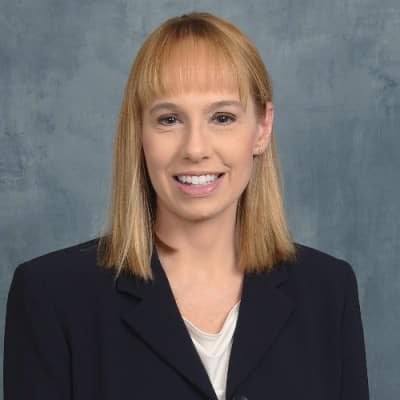
Having both her own child and a sibling receive critical life-saving pediatric care, she’s passionate about her role in making patient care the best it can be. “Everything that we can do from a technology perspective, for the clinician, the associate, the patient, to free them up to take care of our patients and their families. That’s what matters to me. I’ve been the mom, I’ve been the sister. I know what that feels like. Now I’m the associate, and my mission is to help our clinicians and operational leaders take care of those patients.”
Nemours Children’s Health is one of the largest pediatric healthcare systems in the U.S., with more than 10,000 associates caring for more than 550,000 kids a year in two free-standing children’s hospitals in Wilmington, Delaware, and Orlando, Florida, and in 72 primary and specialty care practices.
Beyond clinical care, Nemours focuses on the whole child: emotional well-being, education, family dynamics, and going beyond medicine to keep children healthy. Its kidsheath.org site is one of the most-searched global sources for information on children’s health.
The benefits of moving to Oracle Fusion Cloud Applications
After a career spanning more than 20 years at Nemours, Rooksberry is currently responsible for the entire Oracle Applications Suite and interoperability with the Epic Electronic Medical Record (EMR) system. She also has responsibility for Epic reporting.
Rooksberry started out when the ERP was Lawson, and she was writing reports combining data from Epic and Lawson. Fast forwards 20 years to 2018, and Nemours had Workday for HR and Lawson for Payroll and ERP. That presented some challenges. Rooksberry explains, “You were onboarded in the Workday HR system, and then you had to be moved over to the Lawson payroll so you could get paid appropriately. It was duplicate data entry.”
Nemours decided to consolidate and chose Oracle Fusion Cloud Applications. The challenges Rooksberry faced then were of a different nature. “Right in the middle of implementation, the COVID pandemic hit, so we had to figure out how to do it remotely in conjunction with Oracle and our partner, Alithya. When we’d got through the pandemic—HCM went live in April 2021 and Payroll in 2022—reporting had slipped a little bit, so initially we were data rich but information poor.”
One of the first things they needed was to track people costs. Rooksberry explains, “It’s a primary driver of our expenses. Specifically in nursing, it’s complex juggling shifts and making sure that we have the right skills on the right floor. The higher the skills of the nurses needed, the higher the costs. Our nursing leaders need to know where those costs are. Are they productive or non-productive hours? Are we matching higher skills with the appropriate complex shifts? ”
Increased value from adding reporting and analytics
For analytics and reporting for the new platform, Nemours chose Fusion Data Intelligence (FDI), a family of prebuilt, cloud native analytic applications for Oracle Fusion Cloud Applications. It provides prebuilt insights, including best-practice key metrics and deep analyses, to help unify information and improve decision-making, empowering business users throughout the organization.
The first thing that really impressed Rooksberry about FDI was the tight integration with Oracle Fusion Applications and the built-in security. “Configuring the data pipelines between Fusion Applications and FDI was easy. And I could leverage the security in the Fusion Applications. Before FDI, to do labor reporting we had to extract data from applications and land it somewhere else and manage security outside the system. So I was excited when I realised it was all automated in FDI.”
Giving line managers the insights they need
From the start, Rooksberry and her team’s primary objective was to use FDI to deliver accurate data to line level managers, around 1,000 individuals. “These are the operational leaders who make sure that the clinics have the appropriate throughput of patients, that the staffing is at the right level, and they’re able to meet their budgets. They need access to data quickly to make every decision the right decision. I need to deliver it to them accurately, timely, consistently governed, and trusted. I don’t want to send them to a third-party system for it, and I don’t want lots of clicks to find it.” Rooksberry and her team created a tile called Manager Insight on the launch page of Fusion Applications, which links directly to the reports and dashboards they need to do their job. Rooksberry continued, “We’re trying to make it as easy as possible. If I can take care of them, then they can take care of the patients.”
Understanding workforce value: payroll analytics
Nemours had three priorities for FDI: payroll, goals and performance, and recruitment. They started with payroll. “I saw an easy way to get payroll data. It was well curated and easy to present. Salaries have been increasing steadily post pandemic and finding and recruiting talent is challenging. Staff is our biggest cost, so we need to understand what we’re spending, on which departments—and whether it’s overtime, or shift changes, or other factors that managers use to make decisions. Now that information is updated daily and self-service, so managers are no longer dependent on their finance partners for it. Before FDI, we had pull things out of Oracle Fusion, try to put it in different systems, manipulate it through Excel, produce reports and so on. The ability to turn the FDI pipelines on and make that data available was amazing.”
Enabling better goal and performance tracking
The second priority was to adopt FDI’s Goals and Performance dashboard. Individual’s goals are captured in Oracle Fusion HCM, but it’s difficult for line managers to track progress against those goals. With the FDI dashboard, line managers can see their teams and drill to each employee to see progress, tracked as a percentage against each goal. Managers who have more than one team can use FDI to switch views to look at each team individually.
Improving recruitment processes
The third priority was to provide a Recruitment dashboard. The recruiting team manages job requisitions and applicant pipelines. They need to know the speed of the recruitment process, tracking the time between a requisition being submitted and approved, and from approval to hire. Delays are costly. Rooksberry explained that “when filling a position is delayed, there are costs, like overtime from existing staff to cover the work.”
Rooksberry is particularly interested in recruitment process benchmarks. “Together with our Recruiting AVP, we met with Oracle and saw the benchmarks in FDI. This is on our roadmap, and she’s eager.” Currently Nemours purchases third-party benchmarking data from PwC Saratoga and must figure out how to marry it up with Oracle Fusion HCM data.
Integrating user feedback during the rollout
Nemours started their rollout in phases, initially targeting a group of 30 users in Corporate Finance who were extracting information from third-party systems and manipulating it in Excel. Rooksberry said, “We felt once we could get their buy-in, they would be the early evangelists. When we rolled out to a larger group, we got feedback that it was too hard to find a particular report.” They incorporated that feedback and, before they made FDI available to all 1,000 line managers, created tiles on the Oracle Fusion Applications Manager Insight’s tab to take users directly to their reports.
Working in partnership with Oracle was critical for Rooksberry and her team. “The partnership with Oracle on this platform for me has been amazing. I have been blown away about the support, and the ability for Oracle to listen, respond and help us through challenges has been amazing. We wouldn’t be where we are without that partnership.”
Guided analytics and the benefit of AI
Having FDI makes it much easier for Nemours to take advantage of AI as new capabilities are added to the platform. “I want the platform to do the analysis for users, drawing things to their attention.” Rooksberry gave an example from Accounts Payable: “Hey, I noticed this bill was paid within the last 60 days for last four years, but it didn’t get paid this year. You might want to look at that.” She expanded, “With AI models we will help line level managers do their jobs more efficiently, removing mundane administrative tasks.”
What’s next?
Rooksberry highlighted the need to continue working on tighter integration between the applications and analytics. “I don’t see them as separate platforms. I see them as tightly integrated at the foundation. Users should never need to go somewhere else for answers, or to have to go and ask somebody else for them.” That mindset is driving Nemours’ direction, including adopting Oracle People Leader Workbench, a comprehensive new tool that all people leaders, managers, HR, and finance partners can use to collaborate on making mission-critical decisions every day.
Learn More
Learn more about Nemours, and you can always ask questions in the Oracle Analytics and AI Community.