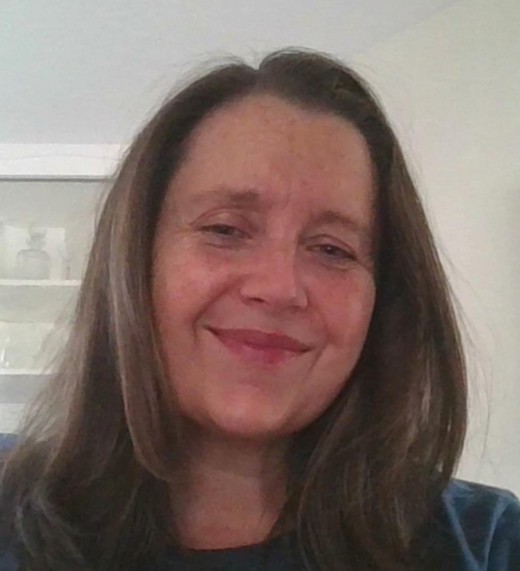
In the last few months, we’ve had the pleasure of talking with Edelweiss Kammermann, Associate Vice President of AI & ML at IT Convergence—known to nearly everyone as “Edel”—to hear her thoughts on analytics and AI.
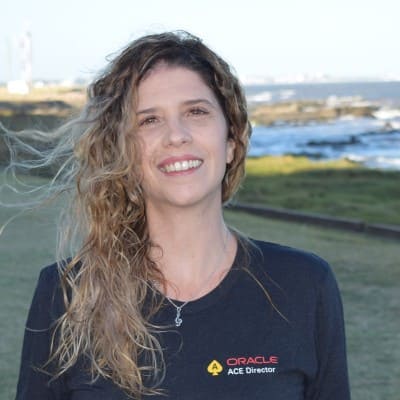
She’s spent more than 25 years working with Oracle technologies and analytics as an active practitioner. From her home in Uruguay, she shared her perspective on the journey from on-premises reporting to cloud platforms, what changes with AI…and what doesn’t.
Good Data: the North Star
“The foundation is still data. In any AI project. I always mention that having the right data is the most critical thing—and it’s what will consume the most time. Data is your bricks, your foundation. If the data isn’t good, if it’s not clean, if there’s no governance around it, then instead of better decisions, you get more noise—faster. You end up with people debating numbers, delaying decisions because they don’t know what they can trust. But when clients trust their data, there’s less friction, and they feel confident moving forward.”
She pointed out that this is nothing new—it’s always been about getting the fundamentals right: curating datasets, improving metadata, documenting columns, including comment tables, creating shared definitions for KPIs. Her take is that AI is making it fashionable to focus on the basics, and that’s a good thing.
Caring and curiosity
Edel jokes that her analytics journey began “last century,” when she was working with Oracle Discoverer, Oracle Forms, Oracle Reports, and Oracle Designer in the late 1990s. She was driven by her interest in technology and the desire to solve real problems. Analytics was the perfect fit.
“One of the things that truly drives me is helping people. That’s what attracted me to analytics—it was very, very easy to see how to help people. Even back when I worked with Oracle Discoverer, it was clear that people needed to make decisions, needed to understand what happens with their data, and they didn’t know how. That’s why I started down this path and kept going – to bring the right information to people to help them make the right decisions
“The other thing that motivates me is learning new technologies. I’m a self-learner who likes to research, to learn new things, to innovate every day. Right now it’s unbelievable—every single week something new appears. You have to have this passion to learn new stuff, to gain new skills, to learn new technology, to stay completely up to date. It’s also why I present at conferences, because sharing knowledge is actually one of the best ways to learn—for the people there, and for me. It doesn’t matter how much you know about a topic—someone is going to ask a question that’s going to make you say ‘OK, I hadn’t thought about it that way before, let me think about that.’ And that’s going to help you see a new way to solve a problem the next time.”
[Editor’s note: you can see Edel in action at numerous Oracle User Group meetings and industry conferences—check her LinkedIn page to see where she’ll be next.]
Growing the Analytics practice at IT Convergence
IT Convergence has a long history of delivering solutions for Oracle customers. When Edel joined, there was a small analytics team in place, and she saw an opportunity to grow the team and its scope to help customers take advantage of new analytics capabilities. Today she manages a global team of 20.
“When I joined ITC 10 years ago, the team was working on support for Oracle Business Intelligence and Oracle BI Applications. I expanded our scope to include project delivery as well, and our technology footprint, to include Oracle Data Integrator, the newest version of BI Apps, and all the Oracle Analytics and Integration Cloud Services, as well as other products in the market. It was a huge change for the group. Then seven years ago, we started working with AI and ML and I built out that practice from scratch.
“Today we have clients around the world, and I lead a global team with people in Argentina, Mexico, Costa Rica, India, and the US. We work well together because we genuinely care about each other and share the same goals. Even spread across time zones, if someone hits a wall on a client problem, everyone steps in to help solve it.
Something I really value is the freedom I have. Honestly, that’s priceless. I define the strategy and how we’re going to do the work. I keep my leadership informed, of course—and because our clients are consistently successful we’re successful, and they trust us to define the path. That’s really encouraged us to grow professionally, and to grow the practice”
Above and beyond
As the team’s scope grew and use cases became more advanced—forecasting, segmentation, anomaly detection, optimization—they learned different ways to show customers the value of analytics platforms and encourage them to move beyond using Excel as a front-end to massive data extracts.
“What I always tell clients is: please, don’t download to Excel. You have a powerful data visualization platform, Oracle Analytics Cloud, Oracle Analytics Server, with so much you can do with it. Let’s build it there. So I ask them to show me what they’re doing in Excel. We always build the exact thing they want but we also build another workbook with more modern data visualizations following best practices in OAC to show them what’s actually possible. Having all the data in a spreadsheet feels safe, but it ends up working against you, because no one can find a pattern in millions of rows
The same thing happens with dashboards—people try to put every KPI on a single canvas.
Then they end up with a huge dashboard, kind of a monster, that is hard to look at, hard to maintain, and has performance issues. They’re squinting at it, wondering what the visualizations are telling them, and that doesn’t help them. That’s why we always start by asking our clients ‘what do you want to achieve? What is the problem that you want to resolve? What is the information that you want to see? Who is the audience for this dashboard?’ Once we know that, we can develop something genuinely useful.”
Learn More
You can learn more about IT Convergence and Edelweiss, and ask her questions in the Oracle Analytics and AI Community.