

Oracle AI Data Platform (AIDP) lets you ask in English and find answers supported by documents written in other languages. This article shows how to build and evaluate a multilingual knowledge base using Tamil, Spanish, and Japanese sources, without adding English translations to the ingested collection. You will learn how to verify the evidence behind each answer and check whether the response acknowledges missing information.
Using 12 fictional workplace procedures and eight test questions, we trace English questions to original-language passages and the resulting English answers. The same evaluation method can help you assess your own multilingual documents.
Design a collection that tests meaning
Our collection contained 12 short, fictional workplace procedures: four each in Tamil, Spanish, and Japanese. Six documents supplied answers to six fixed questions; six others covered related procedures. A question about extending a camera loan therefore had to distinguish the extension rule from instructions for collecting the same equipment.
Each target fact appeared only in its original language document. We kept English translations and the answer key outside the ingested folder and used neutral filenames such as doc-09.txt. These choices let us check whether an English question found the required fact in its source language.
We selected MULTILINGUAL_E5_SMALL during Knowledgebase creation, added the source folder, and completed ingestion. This is one of the embedding choices documented in the AIDP knowledge-base guide.
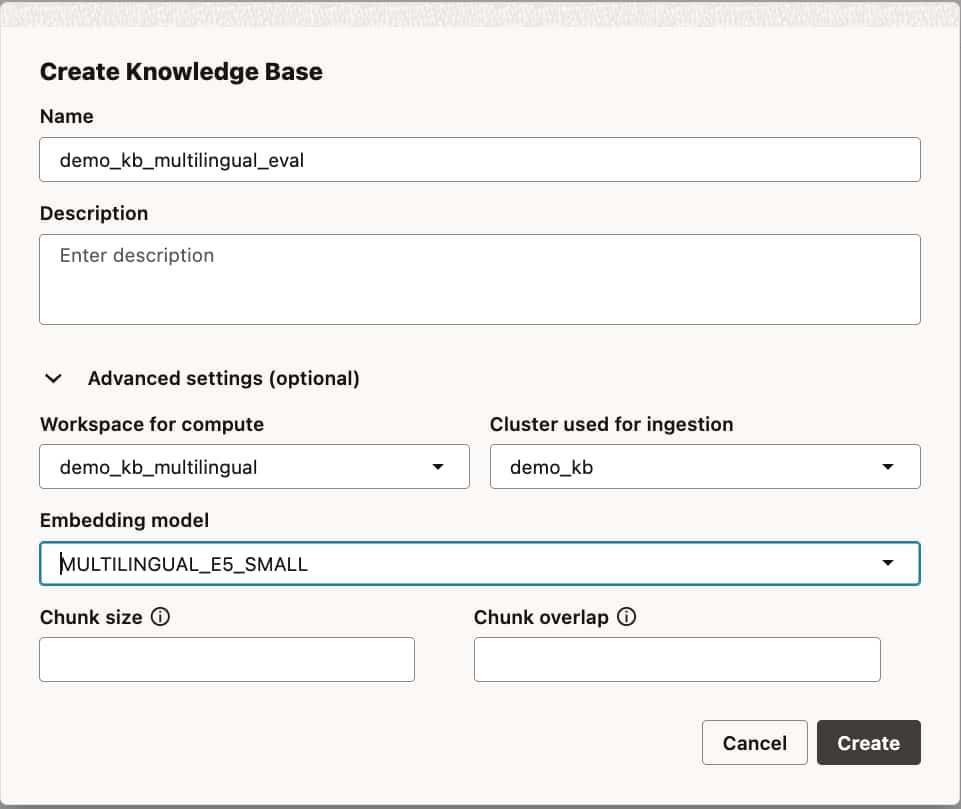
Figure 1. Select MULTILINGUAL_E5_SMALL in the Create Knowledge Base dialog for the multilingual evaluation.
Check the source passage and the answer
We connected a retrieval-augmented generation (RAG) tool to the evaluation knowledge base and set its retrieval limit to 5. With AI compute attached, we submitted the fixed English questions directly through the tool’s Test tab, following the independent testing workflow in About Agent Tools.
The Test output displayed retrieved passages and an English answer from the configured response synthesizer. We checked them separately: did a passage supply the requested fact, and did the answer preserve its timing, conditions, and exceptions? These observations concern direct RAG-tool tests; a full agent conversation was outside this experiment.
For “What must I do to extend a camera loan?”, the Japanese procedure in doc-09.txt appeared first (Figure 2).
The Japanese passage required equipment-desk confirmation on the day before the scheduled return; sending a request alone did not confirm the extension. The English answer preserved both conditions. A Spanish camera-collection instruction also appeared. Although it concerned the same equipment, it answered a different question. The evidence must support the action the user asked about.
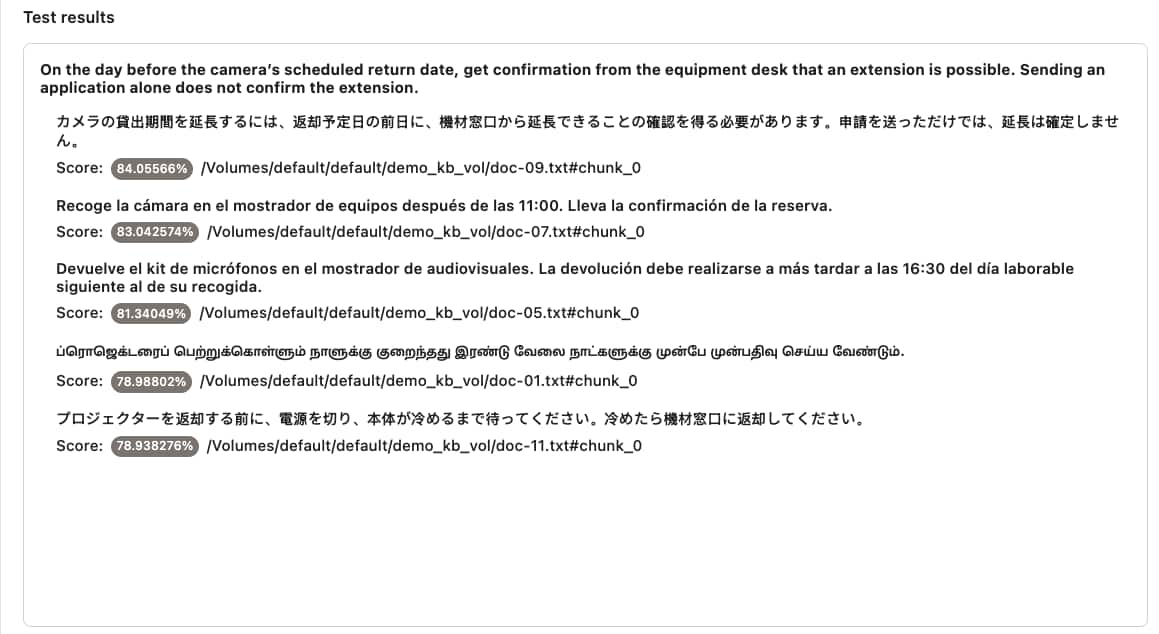
Figure 2. The Japanese camera-extension passage appears first, followed by other retrieved passages. The English answer preserves the required timing and confirmation.
Verify the facts in every answer
For all six answerable questions, the expected source appeared first among five displayed passages. Each English answer preserved the requested facts. The table records the deadlines, locations, and conditions checked against the source documents.
| Source language | Question topic | Expected source | Answer details checked |
| Tamil | Projector reservation | doc-01.txt | At least two working days before collection |
| Tamil | Training-room access card | doc-02.txt | Learning-centre service desk, after 09:00; bring booking confirmation |
| Spanish | Microphone-kit return | doc-05.txt | Audiovisual counter, by 16:30 on the next working day after collection |
| Spanish | Design-room cancellation | doc-06.txt | At least six hours before the reserved start |
| Japanese | Camera-loan extension | doc-09.txt | Equipment-desk confirmation the day before return; a request alone is insufficient |
| Japanese | Webinar-booth assistance | doc-10.txt | White call button beside the inside door handle |
Test questions with missing information
We then tested two distinct gaps. The projector late-fee question concerned equipment already covered by the collection but requested an undocumented fact. Train-ticket reimbursement asked about a process outside the collection. Both tests returned five passages, and both responses stated:
The provided context does not have sufficient information to answer this question.
For the late-fee question, the first passage explained how to return a projector but specified no fee (Figure 3). A procedure about the right equipment still lacked the requested fact. The two responses illustrate why finding passages and having enough evidence to answer are separate checks.
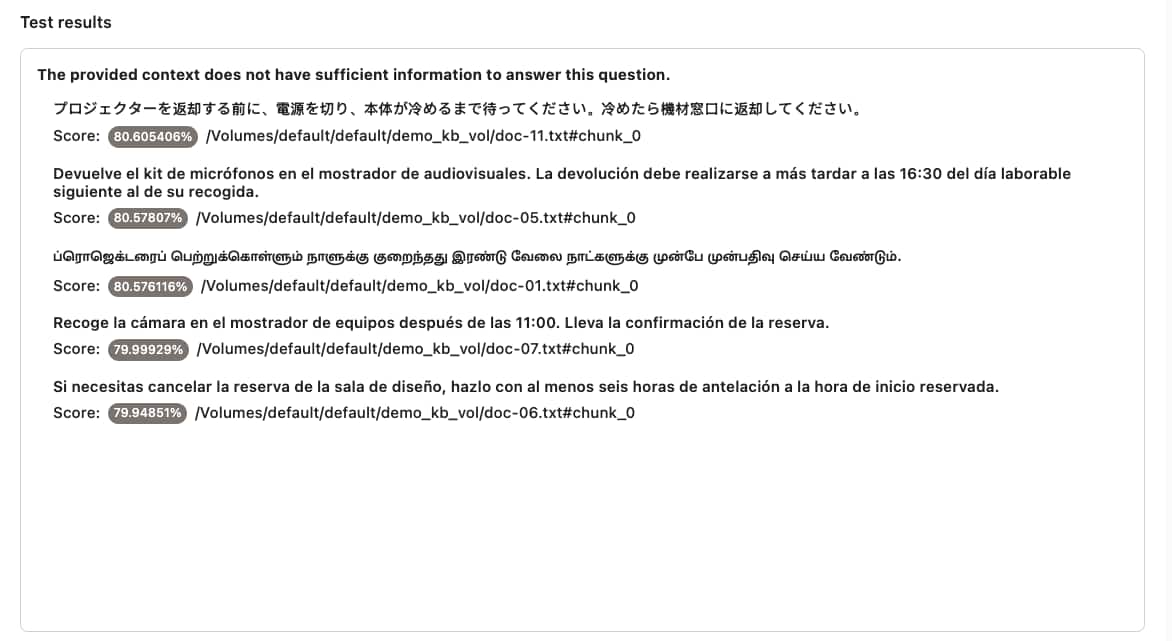
Figure 3. The projector-return passage contains no late fee. The response acknowledges insufficient information while still displaying five passages.
The takeaway
Oracle AI Data Platform connected English questions to supporting Tamil, Spanish, and Japanese passages in this 12-document demonstration. Six answers preserved the requested facts, and two responses acknowledged missing information. Apply the same evaluation pattern to your content: define expected evidence, include related alternatives, record the configuration, and check passages and answers separately. Broader language and workload performance requires additional testing.