

When customers run VMware environments on OCI through Oracle Cloud VMware Solution (OCVS), storage is a critical piece of the puzzle.
OCVS customers first relied on dense compute shapes with local NVMe storage to build vSAN datastores. As the service matured, Standard shapes with OCI Block Volumes quickly became the popular choice, giving customers the flexibility to scale storage independently from compute. With multiple-cluster support, administrators could attach Block Volumes at cluster creation and scale environments to as many as 960 ESXi hosts per SDDC.
This combination of Standard shapes and multi-cluster support unlocked massive scale and flexibility—but also introduced new challenges. Operators now had to manage Block Volume attachments across every cluster, often through manual processes. Admins typically attached volumes to each compute instance before configuring VMFS datastores in vCenter, then tracked relationships through spreadsheets or naming conventions. If a datastore went offline or a Block Volume was deleted, troubleshooting became unnecessarily difficult.
Starting October 2025, we’re addressing this challenge with Datastore Management for OCVS. While this feature benefits all OCVS environments, it is especially impactful for customers using Standard shapes backed by OCI Block Volumes.
What is Datastore Management?
Datastore Management simplifies how Block Volumes are managed across all ESXi hosts in an OCVS SDDC cluster. Instead of attaching and tracking volumes manually, customers can now use two new OCI resource types:
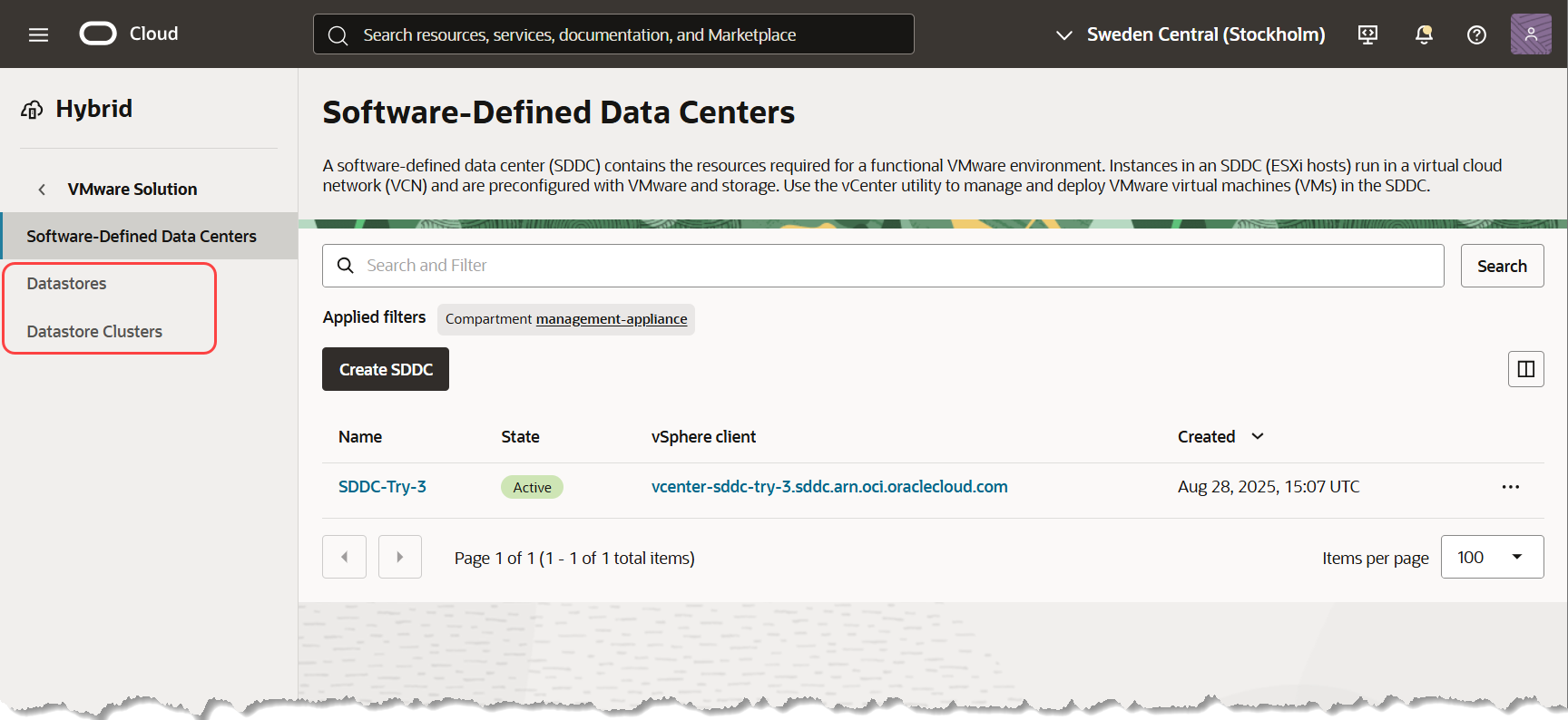
- OCI Datastore – Represents a single Block Volume, typically mapped as a VMFS datastore in vCenter.
- OCI Datastore Cluster – A collection of OCI Datastores attached to a vSphere Cluster in OCI, automating Block Volume management across all ESXi hosts.
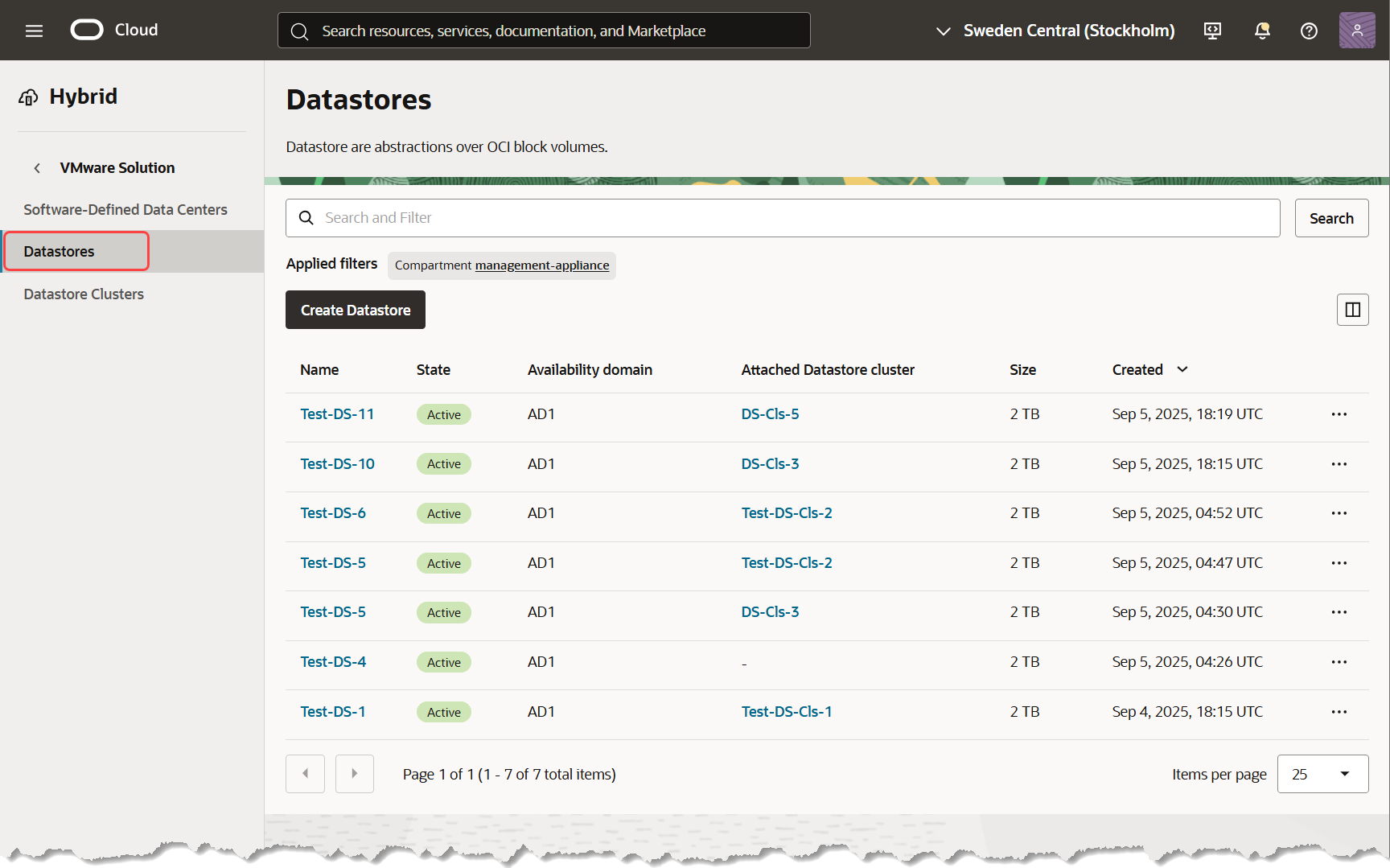
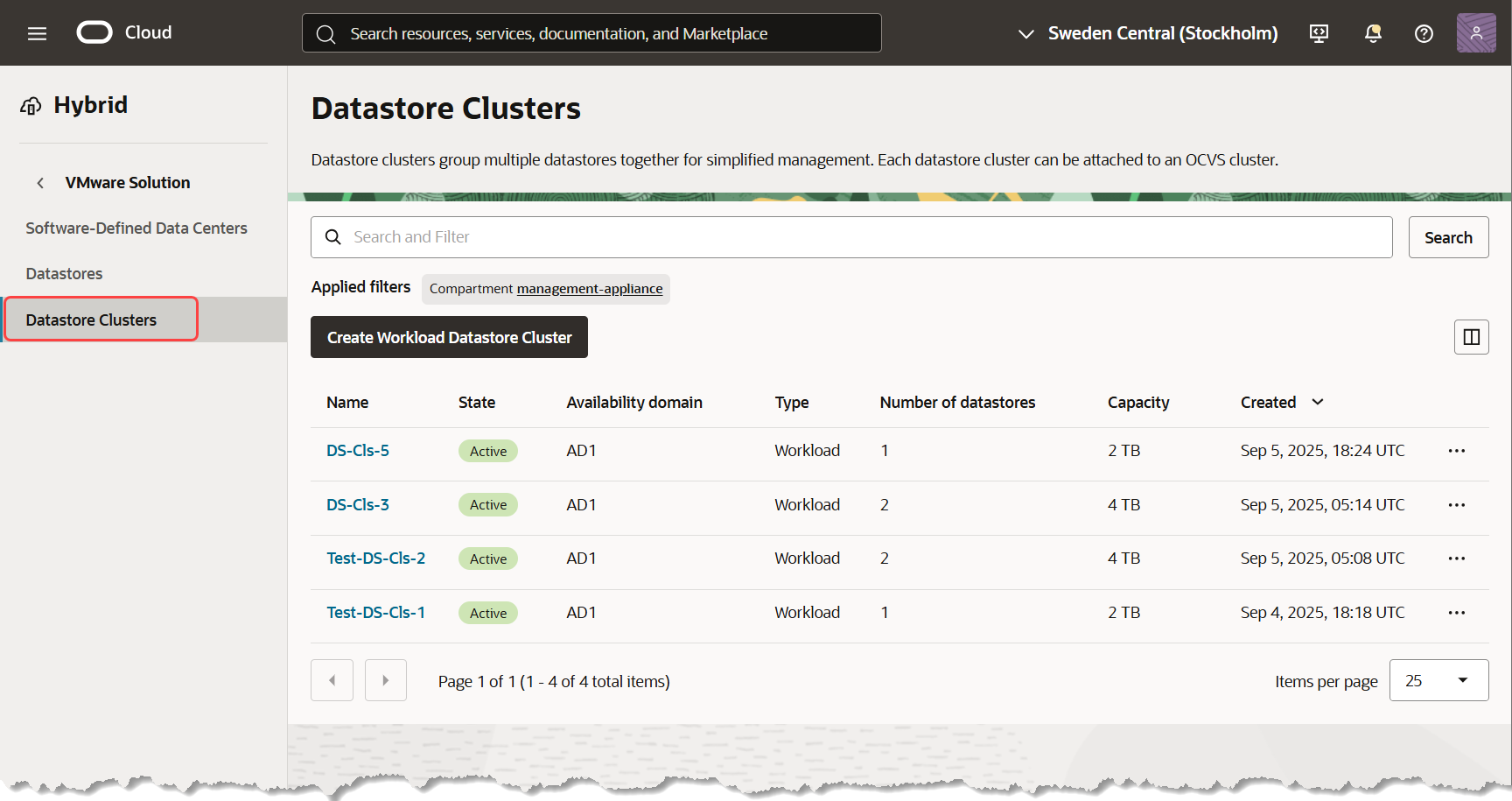
With these constructs, OCI mirrors the vCenter storage model: each OCI Datastore maps to a vCenter Datastore, and each OCI Datastore Cluster maps to a vCenter Datastore Cluster. This alignment reduces complexity and provides a consistent storage structure.
Why this matters
Datastore Management was designed to reduce operational overhead at scale. Key benefits include:
- Clear visibility – OCI directly tracks which Block Volumes map to which datastores.
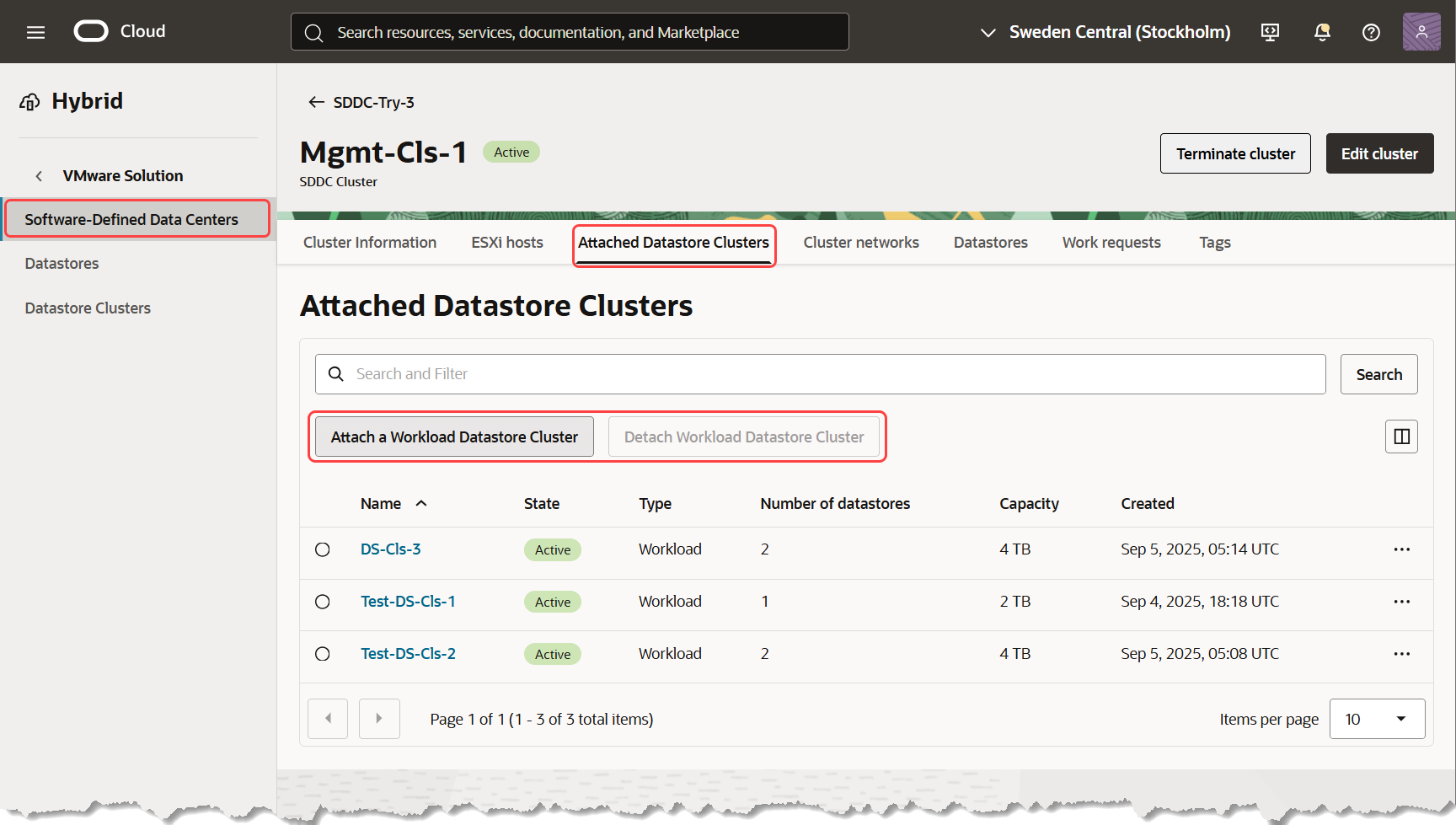
- Cluster-aware operations – Attach or detach once at the cluster level; all ESXi hosts stay in sync.
- Built-in safeguards – Ensure in-use storage cannot be accidentally detached.
- Smarter provisioning – Define datastore clusters at SDDC creation or scale out later as day-2 operations.
- Instance type support – Works with both Standard and Dense shapes supported by OCVS.
Current State of Correlation
Because OCVS is customer-managed, OCI does not have direct access to vCenter once provisioned. This means Datastore Clusters in OCI are not automatically synchronized with those in vCenter. To keep environments aligned, administrators should follow a same-name convention.
For example:
- If you rename a datastore in vCenter, update the corresponding name in OCI.
- If you detach a datastore cluster in vCenter, also detach it in OCI.
This simple practice ensures consistency across both platforms.
What about existing environments?
Customers who have already attached Block Volumes manually can bring those volumes under Datastore Management, as long as they follow naming and clustering rules. This allows adoption of the new model without reconfiguring existing workloads.
Extending Datastore Management
Datastore Management makes datastore relationships a first-class concept in OCI, laying the groundwork for deeper VMware integration.
To maintain OCVS’s customer-controlled model, Datastore Management itself will never directly sync with vCenter. However, Oracle is also introducing the Management Appliance for OCVS in limited availability. This optional feature enables synchronization between OCI and vSphere components. Together with Datastore Management, it delivers an end-to-end experience for configuring Block Volumes as VMFS datastores in vCenter—while still leaving customers in control of opting in.
Get started
Datastore Management for OCVS will be available in all regions starting September 2025. To learn more and explore configuration steps, visit the official documentation: