
In August 2019, Syncious joined Oracle for Startups, taking advantage of free cloud credits and expert mentorship from the Oracle Cloud Infrastructure Product Management team. The goal of Oracle for Startups is to create mutually beneficial partnerships by connecting enterprise companies with the innovative technology solutions of startups built on secure, scalable Oracle Cloud Infrastructure. Through this collaboration, startups like Syncious can accelerate growth and sell into Oracle’s global customer base. Syncious is a Silver level member of the Oracle PartnerNetwork (OPN).
Syncious, through its SyncHPC platform, offers on-demand access to high performance computing (HPC) in the cloud for compute-intensive workloads such as engineering simulations. SyncHPC, with its highly scalable architecture, provides an easy-to-use portal for creating an HPC cluster when it’s needed, deploying applications on the cloud, running their workloads, and then decommissioning the cluster when the job is finished. SyncHPC is also designed to meet enterprise-class security needs. The SyncHPC platform and its software development process have received an SSAE 18 SOC 2 report for security, availability, and confidentiality. SyncHPC is also recommended for an ISO 27001:2013 certificate on information security management systems.
Syncious has customers in manufacturing, oil and gas, bioinformatics, and multimedia.
SyncHPC Integration with Oracle Cloud Infrastructure
Customers can configure their compute cluster by choosing the appropriate compute shapes for the head node and compute nodes available on Oracle Cloud Infrastructure. After the cluster is configured, administrators can then deploy it along with applications.
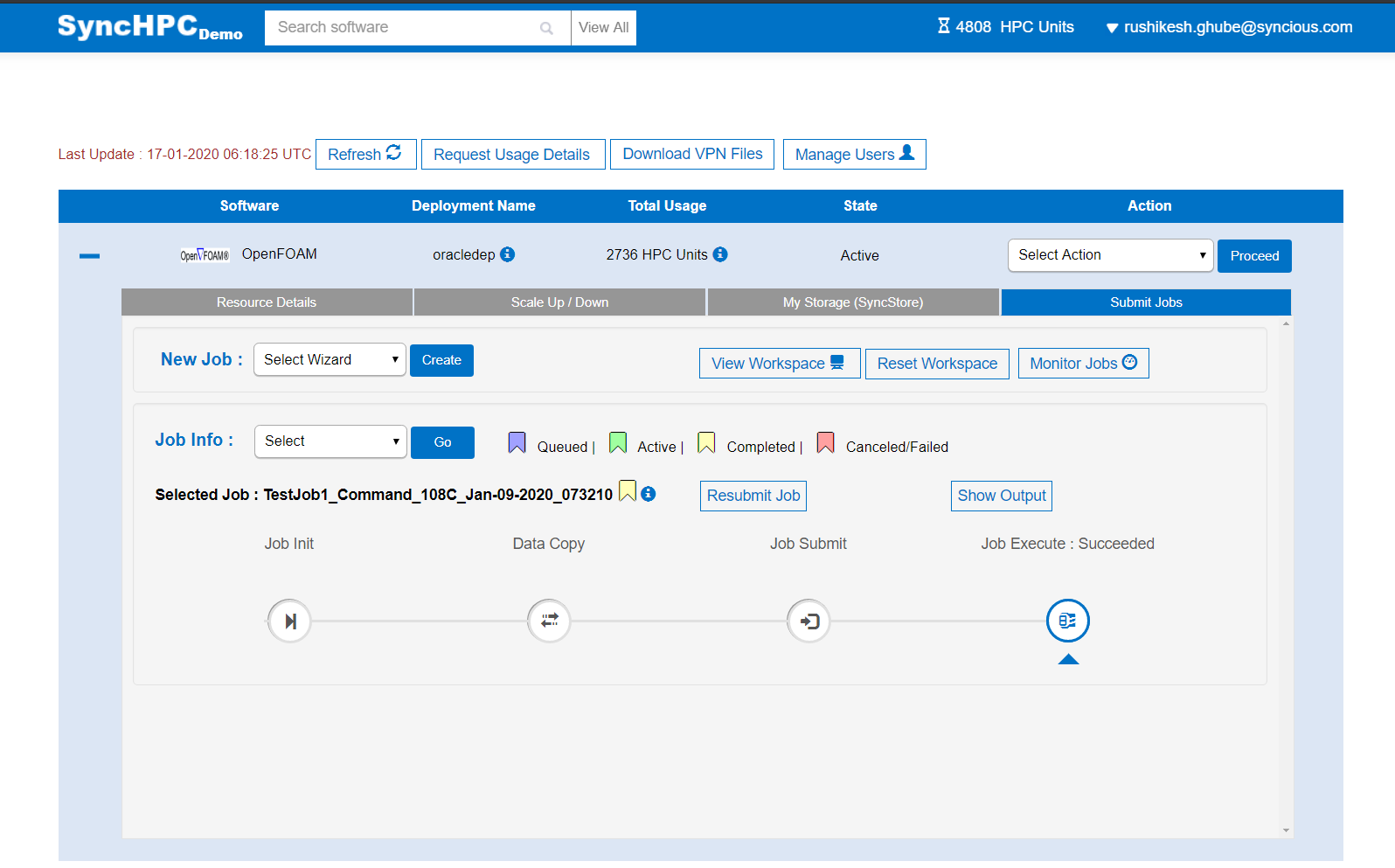
Figure 1: Interface for Submitting a Job to HPC Resources in Oracle Cloud Infrastructure
Customers can also set their clusters for autoscaling to accommodate increasing workloads. While deploying clusters, SyncHPC also installs SyncStore, a file transfer utility to which customers can transfer their input files. When submitting a job, customers select the job parameters and submit their workload. After the workload has completed, result files are returned to SyncStore and can be used for post processing through remote visualization. At any time, customers can scale their cluster to the appropriate size based on the workload.
SyncHPC integration with Oracle Cloud Infrastructure is currently available to all customers globally.
Oracle Cloud Infrastructure provides remote direct memory access (RDMA)-enabled cluster networking and bare metal HPC instances, and now combines its proven HPC instance with a low-latency network that can scale your workload to thousands of cores. The compute shape has 36 cores from two 3.7-GHz Intel® Xeon® Gold 6154 processors, 384-GB RAM, and 6.4-TB NVME local storage. Customers can also bring their own Oracle Cloud Infrastructure tenancy and use the SyncHPC platform to automate their HPC deployments.
Sign up for 24 free hours on a 208-core cluster or learn more about Oracle Cloud Infrastructure’s HPC solutions. For more examples of how Oracle Cloud Infrastructure outperforms the competition, follow #LetsProveIt on Twitter.