
Bringing trusted analytical context into the flow of work
A procurement manager spots a late delivery in an operational application. The immediate issue is clear. The business decision is harder: Is this an isolated delay or part of a worsening pattern? Which suppliers need attention, and what is the appropriate next step?
The information may already exist, but using it often means leaving the workflow, finding the right analysis, and bringing the findings back to the task. Connecting analytical context with the decision can reduce that friction.
Business questions require business meaning
A transaction can show what happened in a specific business event. Deciding how to respond often requires a broader view: how performance has changed, which measures matter, and how the issue relates to other business activity.
One late delivery, for example, may need routine follow-up. A sustained decline in a supplier’s on-time delivery performance may warrant a wider review. Distinguishing the two requires historical context and consistent definitions of performance.
Oracle Fusion Data Intelligence (FDI) provides that foundation through curated Fusion data, prebuilt business models, consistentbusiness metrics, and packaged analytics. Shared definitions help users interpret results consistently, while historical context helps them distinguish an exception from a trend.
The opportunity is to bring that understanding into the workflow where the decision happens.
Connect analytical intelligence with the Fusion workflow
Within the broader Fusion AI Agent portfolio, FDI-powered Fusion AI Agents are designed to bring relevant FDI intelligence into supported Oracle Fusion Applications workflows. They help users understand a situation, make an informed decision, and, where supported, determine and take an appropriate supported next step.
The model has three distinct roles:
- Fusion Applications provide the workflow: the business process and operational context in which the user works.
- Oracle Fusion Data Intelligence provides the analytical foundation: curated data, business definitions, metrics, and historical context.
- The agent connects the two: bringing relevant intelligence into the workflow to support the user’s decision.
For a procurement manager, this means moving beyond the status of an individual order to the supplier performance context needed to decide whether it deserves attention.
FDI supports these specific agent experiences; it is not a dependency of every Fusion AI Agent.
Keep each agent grounded in its scope
FDI supports analysis across applicable business domains, but each FDI-powered agent uses the data, measures, and business relationships relevant to its purpose. The breadth of FDI does not mean every agent can answer every business question.
An agent focused on supplier performance, for example, should be understood in terms of the supplier questions and measures it supports – not assumed to explain every related finance or supply chain issue.
Actions follow the same principle. An agent’s ability to support an appropriate next step depends on its capabilities, the workflow, and the user’s permissions. Required approvals and controls still apply, and decisions requiring human authority remain with the responsible person.
Clear scope makes each agent easier to explain, test, manage, and use.
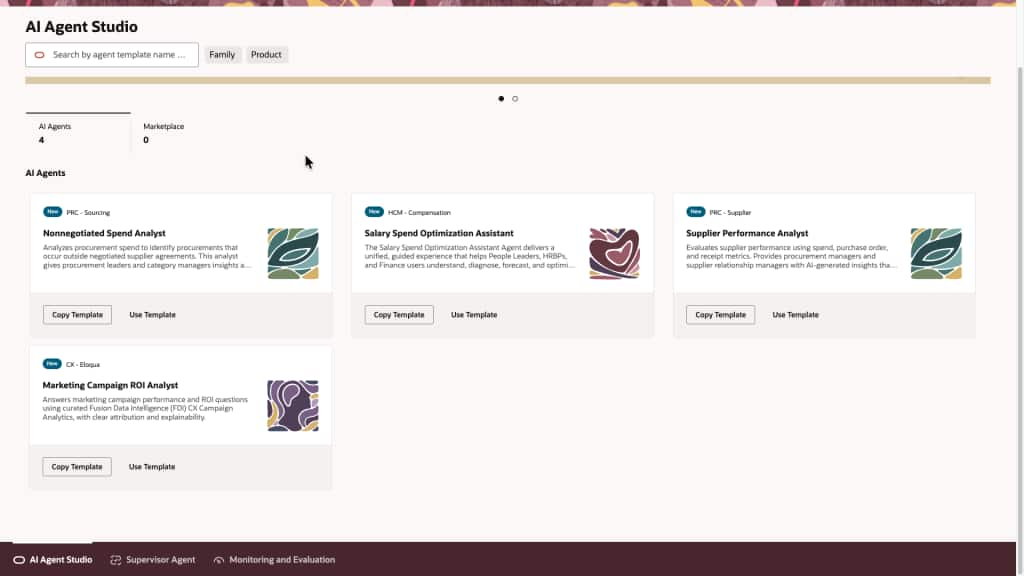
From supplier issue to informed decision
Consider a procurement user asking, “Which suppliers need my attention?”
A list of suppliers is only a starting point. The user needs to understand what changed, why it matters, and what evidence supports a closer look.
As an illustration, one supplier may have a single late delivery while another has shown declining delivery performance over several periods. That distinction helps the user prioritize a supplier review over routine follow-up.
Within a supported Fusion workflow, an FDI-powered agent can bring relevant performance measures, trends, and supporting evidence into that assessment. The user can review the findings, decide which suppliers warrant attention, and determine the appropriate next step within the available workflow and permissions.
The value is a shorter path from spotting an issue to understanding its significance and deciding how to respond.
Analytics and agents remain complementary
Dashboards, analysts, business intelligence tools, and specialist analytical environments remain essential for monitoring performance, exploring data, and investigating questions beyond an individual agent’s scope.
A procurement analyst might use a dashboard to compare supplier performance across categories and periods. A procurement manager handling an exception needs a more focused answer: Does this supplier’s performance warrant attention now?
FDI-powered Fusion AI Agents are designed to support that recurring decision within the business workflow. Deeper investigation can continue in the appropriate analytical environment.
Asking questions directly of trusted FDI data supports exploration and analysis. An FDI-powered Fusion AI Agent applies relevant analytical context to a specific business task and, where supported, helps the user determine and take an appropriate supported next step.
Bring analytical context into the flow of work
Look for the moments when Fusion users must leave a task to understand an issue before they can act. A late delivery that needs performance context is one example: the transaction identifies the immediate problem, while analysis helps establish its significance.
These are the moments where FDI-powered Fusion AI Agents can help – connecting trusted Fusion data, consistent metrics, and relevant insights with the decision at hand.
Explore where FDI-powered Fusion AI Agents can help your teams move from business questions to trusted insight and an appropriate supported next step within the flow of work.
Additional Resources
Try FDI for free – Get your free trial
What is Oracle FDI? – Watch Video
Unlock the next era of AI-powered analytics – Watch Replay
Oracle Analytics & Fusion Data Intelligence Quick How-To-Tutorials – Start today