

Vertice has been an award-winning Oracle Analytics and Data Integration partner since it was founded 16 years ago. The organization is currently in the Early Adopters Program for Oracle AI Data Platform (AIDP), Oracle’s newly launched solution that combines infrastructure, built-in Generative AI frameworks, and zero-movement multisource data management to accelerate AI adoption at scale.
We had the opportunity to talk to Tony Cassidy, CEO and founder, and David Heraty, Senior Commercial Director, to capture their views on the evolution of the analytics market, how AI will impact it, and the role of AIDP. Here’s what they had to say.
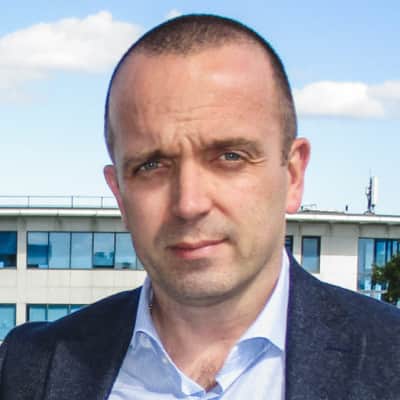

Data will always be the foundation, even more so with AI
Tony: “Since we began 16 years ago, we’ve been a data powered services company on Oracle. Data integration, data warehouse, data lakes, data quality, data governance, and data security. Whether we’re providing advisory services, expert services or resulting managed services, it’s all related to Customer Data Solutions. In this next technology evolution, we must help customers get valuable outputs from AI initiatives. Even though nowadays customers are more mature about data and analytics, it’s still a big leap. It’s one thing to experiment with generative AI technologies like Chat GPT and Microsoft Copilot, but to get value at an enterprise level you need to deal with the data optimally. Lots of data for enrichment and value. And the pipelines that deliver that data. With AI, and Oracle’s new AI Data Platform, we have seen technology mature to enable customers to take advantage of these very large data sets in good time to value.”
David: “It’s very easy to get caught up in the hype, all the new terminology, and all the technical advancements being made around agentic and generative AI. That was true of analytics too, when it was new. But now, as then, it always comes back to the data. Back in the early days of analytics, when we showed customers the latest new capabilities of Oracle’s BI tools, the savvy ones always asked the right question ‘well, that is amazing, but how do I get the data into a state to take advantage of it’? And that’s something we bring into our culture and team at Vertice—we’re data experts who are customer and solution centric, so we can have meaningful conversations about getting data in order, and provide successful solutions through our services and our depth of expertise.”
The shift to cloud computing accelerates innovation with analytics and AI
David: “Since analytics moved to cloud, it’s so much easier to innovate. Back when we used OBIEE on premises you had to set up a laptop, spin up an OBIEE instance, get the cogs turning and wait for it to come on. And only then go and find some data to connect to. Now, in minutes you can log into a cloud console, turn on an AI service, load some data into object storage, and start investigating the data, perhaps using natural language and conversational interfaces. The speed in which you can do that now is so much faster. It helps democratise analytics. It’s now much more quickly and easily available to more people.”
From AI innovation to deployment at scale—the right foundation
Tony: “To try to take advantage of AI, there is a danger that organizations will hire data scientists who have solid, viable ideas, who will get busy delivering a load of use cases, but who may not necessarily know what it will take for deployment at scale in production. The use cases, some of which will be brilliant, can end up gathering dust like jam jars on a shelf.
“With Oracle AI Data Platform, you can take those jam jars off the shelf, because you have a platform where they can be managed as demonstrators, within the infrastructure, in effect creating an Innovation Library. If they are then determined as strong potential value to the business, Vertice can help deploy them as a deliverable on AI Data Platform at enterprise scale. The known secret to success in AI is building the foundation right from the start. Doing that is fundamental to the success we bring our customers in using AI Data Platform, which helps them attain their needed outcomes from AI in short time to value. As ever, helping customers with this is a very big part of where we see Vertice’s value-add in the AI market.”
Organizing for AI stability
Tony: “So you have the right platform, you’re savvy about data—that’s a step forward, but you still need solution engineers to take care of the data pipelines, you need a team with excellent data analytics knowledge. When organizations have that, when they’re able to control all the innovations and mechanisms for managing data, they have a great chance at delivering AI successfully and to scale. The thing with those teams is that they tend not to be very stable at the minute, because people who understand how to work with data are very valuable and we see them moving around a lot. When they go, their skills go with them, leaving a void. That needs to change, and having a clearer career path for data experts will help. In the meantime, having a data-savvy partner like Vertice helps with knowledge transfer and provides some stability, as well as know-how.”
From theory to practice—AI in clinical research
Tony: “We find that clinicians, particularly those who work on clinical trials, are extremely data-savvy. I learned this many years ago working on a project with UK Health Service, which gave me a little early insight. I was amazed by the quality of the data standards used in healthcare. Clinicians do tend to understand the importance of good quality data more than most, actually. So when we got our hands on Oracle AIDP, it was no accident that we sought to work first with University College Dublin Clinical Research Centre (UCD CRC).
“We look forward to our collaboration with UCD going on for quite a while. We’re currently in discussion about helping establish programs to fund PhD students to work on AI demos and pilots for multiple clinical research use cases. We want to act as advisors, helping UCD CRC take advantage of AIDP to manage the AI components the students develop, ready to be scaled up for large scale deployment. It’s a potential opportunity to have a strong repeatable model, in healthcare and clinical research, underpinned with AIDP. Our strategy includes a focus on Oracle healthcare and life sciences for AI, and AIDP enables us to do that.”
Practical takeaways for enterprise leaders
David: “AI is great, but you still need to have a well-defined business problem that you’re looking to solve. If you don’t have a specific ROI you’re trying to achieve in your organization, a project is likely to fail because there’s nothing to measure against, nothing to say you were successful, so it’s very easy to waste time and money, unless guided by experience and expertise.”
Tony: “If there’s one thread that ties the narrative together, it’s this: AI’s promise is real, but it is not self-executing. The organizations that win won’t be the ones with the most prototypes. They’ll be the ones that can consistently turn prototypes into governed, scalable capabilities—moving from ‘jam jars’ to outcomes, with optimal control on data and risk minimisation, and with good time to value realization.”
How you can learn more
Find out more about about Vertice, Oracle AI Data Platform, and the UCD CRC story on the Vertice website and in UCD’s AI World Oracle TV segment. You can also always ask questions in the Oracle Analytics Community.