



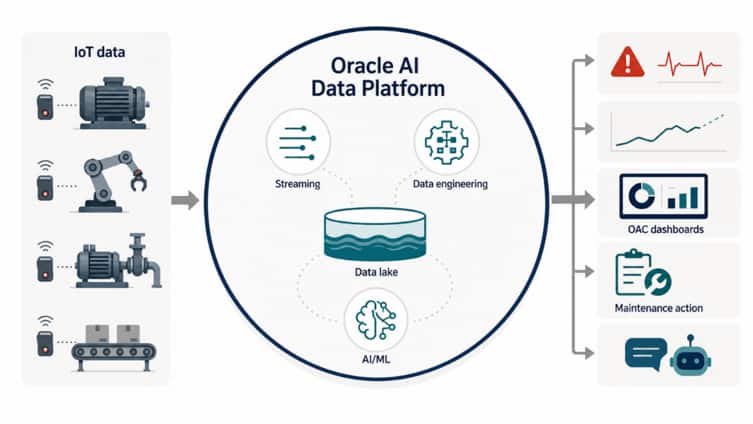
Figure 1. A connected data foundation connects industrial sensor signals with analytics, alerts, and maintenance action.
The maintenance challenge
Industrial manufacturers operate highly connected production lines where small changes in temperature, line speed, coating thickness, vibration, or other process signals can influence product quality, equipment reliability, and production efficiency.
The challenge for operations leaders is not the availability of data. Modern manufacturing systems continuously generate telemetry, but that information often remains fragmented across machines, historians, quality systems, maintenance tools, and reporting layers. When these signals are reviewed manually or through isolated dashboards, teams can spend more time finding issues than acting on them.
This blog, written for operations and maintenance leaders, outlines how Oracle Cloud Infrastructure (OCI), OCI AI Data Platform, analytics, artificial intelligence, and machine learning can help manufacturers move from reactive monitoring toward predictive maintenance.
Core Oracle services and their roles
Oracle AI Data Platform: Provides the connected data foundation for industrial IoT workloads by bringing together ingestion, processing, storage, analytics, and AI. It helps convert raw equipment telemetry into curated data that can support anomaly detection, forecasting, historical analysis, and operational reporting.
Oracle Cloud Infrastructure Streaming: Receives continuous sensor and equipment events from production environments. In this implementation, Spark publishes events to OCI Streaming through its Apache Kafka-compatible endpoint, providing the streaming layer for moving high-volume telemetry into downstream processing and analytics workflows.
Spark-based data processing on OCI: Validates, enriches, transforms, and prepares incoming sensor data for analysis. This processing layer can help standardize timestamps, units, sensor measurements, and other operational attributes before the data is used by dashboards or machine-learning models.
Oracle Analytics Cloud: Presents sensor trends, anomaly indicators, forecast information, and maintenance-related data through interactive dashboards and analytical views. It can help operations and maintenance teams review equipment conditions and investigate potential issues using a shared operational view.
Oracle Fusion Data Intelligence: Can bring relevant maintenance history and work-order information together with operational and analytical data. In the predictive-maintenance scenario, it can help teams compare anomaly patterns with maintenance context and support more informed maintenance planning and prioritization.
Solution at a glance
Data source: Production-line sensors and connected equipment.
Streaming service: OCI Streaming receives continuous sensor events published through its Apache Kafka-compatible endpoint.
Spark processing: Spark validates, enriches, and prepares telemetry.
Storage: Oracle Cloud Infrastructure Object Storage and managed data-lake layers retain operational and historical data.
Model output: Anomaly indicators and maintenance forecasts.
Dashboard and action: Oracle Analytics Cloud dashboards, alerts, and maintenance workflows.
Architecture and data foundation
From operational signals to predictive insights with Oracle AI Data Platform
Oracle AI Data Platform helps bring industrial IoT data into a unified architecture where streaming sensor signals can be captured, processed, stored, analyzed, and reused across multiple use cases. In a manufacturing environment, equipment continuously generates telemetry from production lines, quality systems, maintenance systems, and connected sensors. Without a connected data platform, these signals can remain isolated. Oracle AI Data Platform helps address this by creating a common foundation where operational data can move from raw machine events into curated data products that support analytics and AI.
For this IoT solution, Oracle AI Data Platform acts as the backbone that connects the production environment with cloud-based data processing and business intelligence.
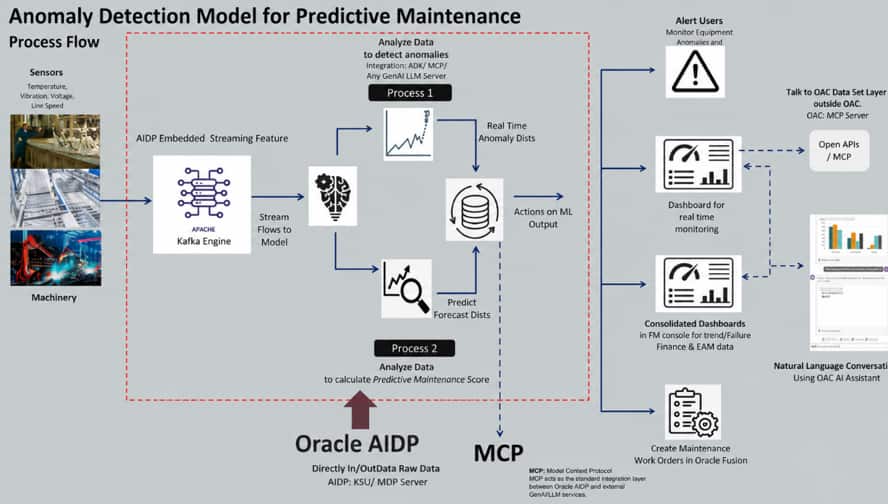
From IoT Signals to Action with AIDP
Predictive maintenance depends on reliable data before it depends on machine learning. Oracle AI Data Platform supports the data engineering layer that prepares fast-moving sensor data for downstream analytics.
Sensor events can be generated or prepared with Spark and published to OCI Streaming through its Apache Kafka-compatible endpoint, then processed using Spark-based patterns, validated, enriched, and stored in durable data layers. This helps convert raw equipment readings into structured data that can be used for dashboards, anomaly detection, forecasting, and historical analysis.
This foundation is important because manufacturing teams need confidence that the insights they see are based on appropriately prepared, timely, and consistent data. Oracle AI Data Platform helps create that foundation by connecting ingestion, processing, storage, and analytics in one architecture.
With Oracle AI Data Platform, this architecture can help manufacturers create a reusable IoT data foundation, limit fragmented reporting, support timely operational monitoring, and prepare historical data for analytics and machine learning workloads.
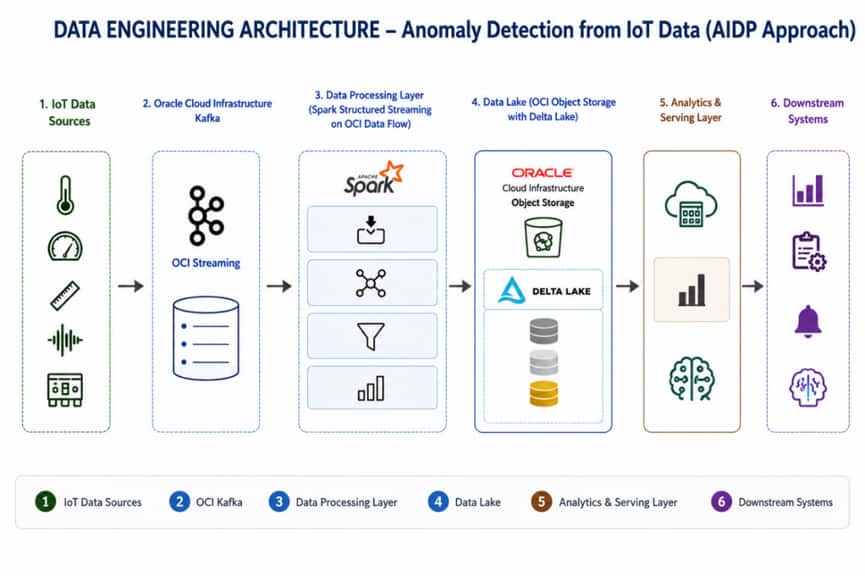
Figure 2. The reference architecture prepares sensor events with Spark, stores curated data, and serves analytics and downstream systems.
Detecting anomalies and forecasting risk
Oracle AI Data Platform for anomaly detection and forecasting
Once the IoT data foundation is in place, Oracle AI Data Platform helps enable machine intelligence on top of operational data.
Anomaly detection helps identify unusual equipment behavior by analyzing important production signals such as temperature, line speed, thickness, and other process measurements. Instead of depending only on manual review or fixed thresholds, the solution can highlight patterns that may require attention.
Forecasting adds another layer of value by helping teams understand how key operating signals may behave in the future. This can give maintenance and operations teams more time to plan before a potential issue becomes a production disruption.
The key point is that Oracle AI Data Platform helps connect the data pipeline with the intelligence layer. It can help manufacturers move from simply observing equipment data to identifying unusual patterns and assessing potential future conditions.
These capabilities can help teams identify potential risks earlier, reduce reliance on manual monitoring, prioritize maintenance attention, and create a clearer path from monitoring to action.
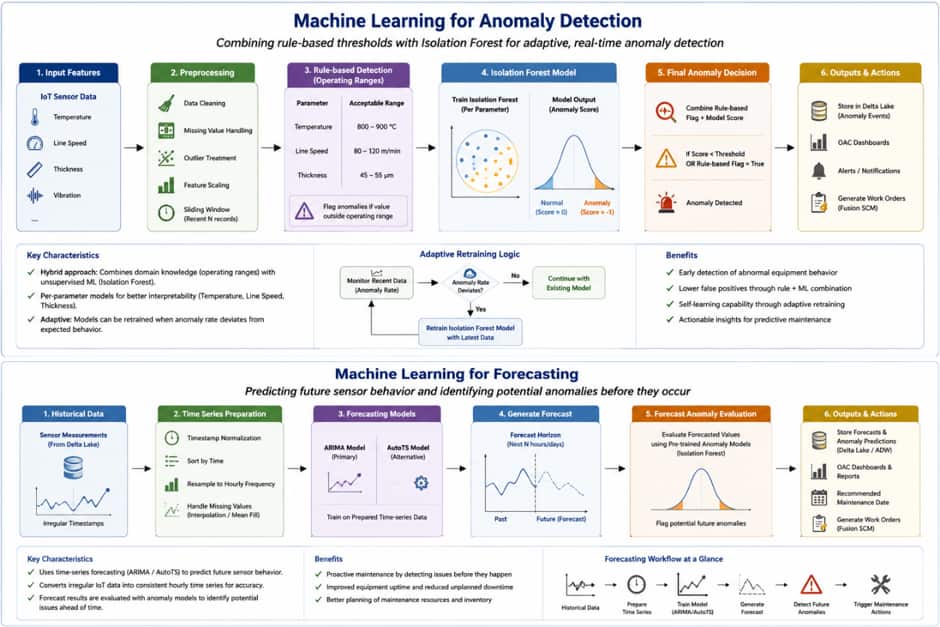
Figure 3. Anomaly Detection and Forecasting for Predictive Maintenance Turning insight into maintenance action
How alerts can support operational response ?
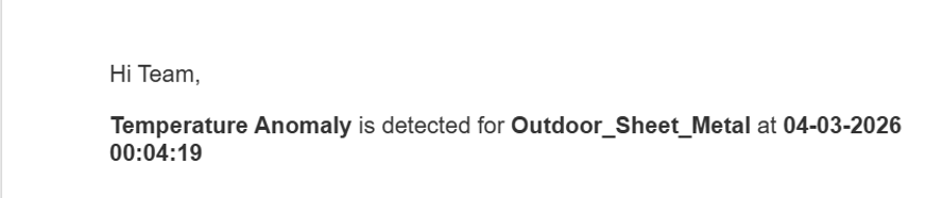
Figure 4. Example of anomaly alert routed for operational review.
When an unusual equipment pattern is detected, the solution can notify the right operations or maintenance teams so they can review the condition. For example, an alert can indicate the affected parameter, the related asset or production context, and the timestamp of the detected event.
These notifications should be treated as decision-support signals, not automatic proof of equipment failure. The response team can use the alert as a starting point to validate the condition, compare it with dashboard trends, and decide whether further investigation or maintenance action is required.
This alerting layer can help reduce reliance on manual monitoring by connecting anomaly results with the teams responsible for operational response.
Predictive maintenance from monitoring to action
The high-level workflow moves through four stages: monitor operating signals, identify abnormal behavior, forecast future conditions, and support maintenance planning. This progression keeps the focus on operational decision-making rather than on individual technical components.
For example, a production team may observe that a critical signal is trending away from expected behavior. With anomaly detection and forecasting connected to dashboards, the team can assess whether the shift appears isolated, recurring, or likely to continue. That context can help maintenance planners decide when to investigate, schedule work, or adjust production oversight.
Fusion Data Intelligence for predictive maintenance and enterprise insights
Oracle Fusion Data Intelligence (FDI) provides analytics for Oracle Fusion Cloud Applications and can be extended with external data. In this predictive-maintenance scenario, FDI can help bring maintenance history and work-order information together with relevant operational data for dashboard analysis.
By combining operational context with AI and machine-learning outputs, teams can use dashboards to identify equipment with higher anomaly rates, compare predicted and scheduled maintenance dates, and review asset-performance trends. These insights can help teams prioritize maintenance decisions and evaluate actions intended to support efforts to limit unplanned downtime and improve operational efficiency.
Oracle Analytics Cloud for predictive and operational insights
Oracle Analytics Cloud turns model outputs and curated IoT data into business-ready insight. Dashboards can bring together sensor trends, anomaly indicators, forecasted behavior, maintenance dates, and work-order readiness so teams can review operational health in one place.
Table 1. Dashboard views can help teams connect operational signals with review and maintenance planning.
| Dashboard view | Focus area | Potential value |
| Sensor trends | Line speed, temperature, thickness, and related process signals | Operational visibility |
| Anomaly view | Unusual behavior and potential issue indicators | Earlier visibility into potential risks |
| Forecast view | Expected future trends and maintenance planning signals | Supports proactive planning |
| Work-order view | Maintenance readiness and action tracking | Decision support |
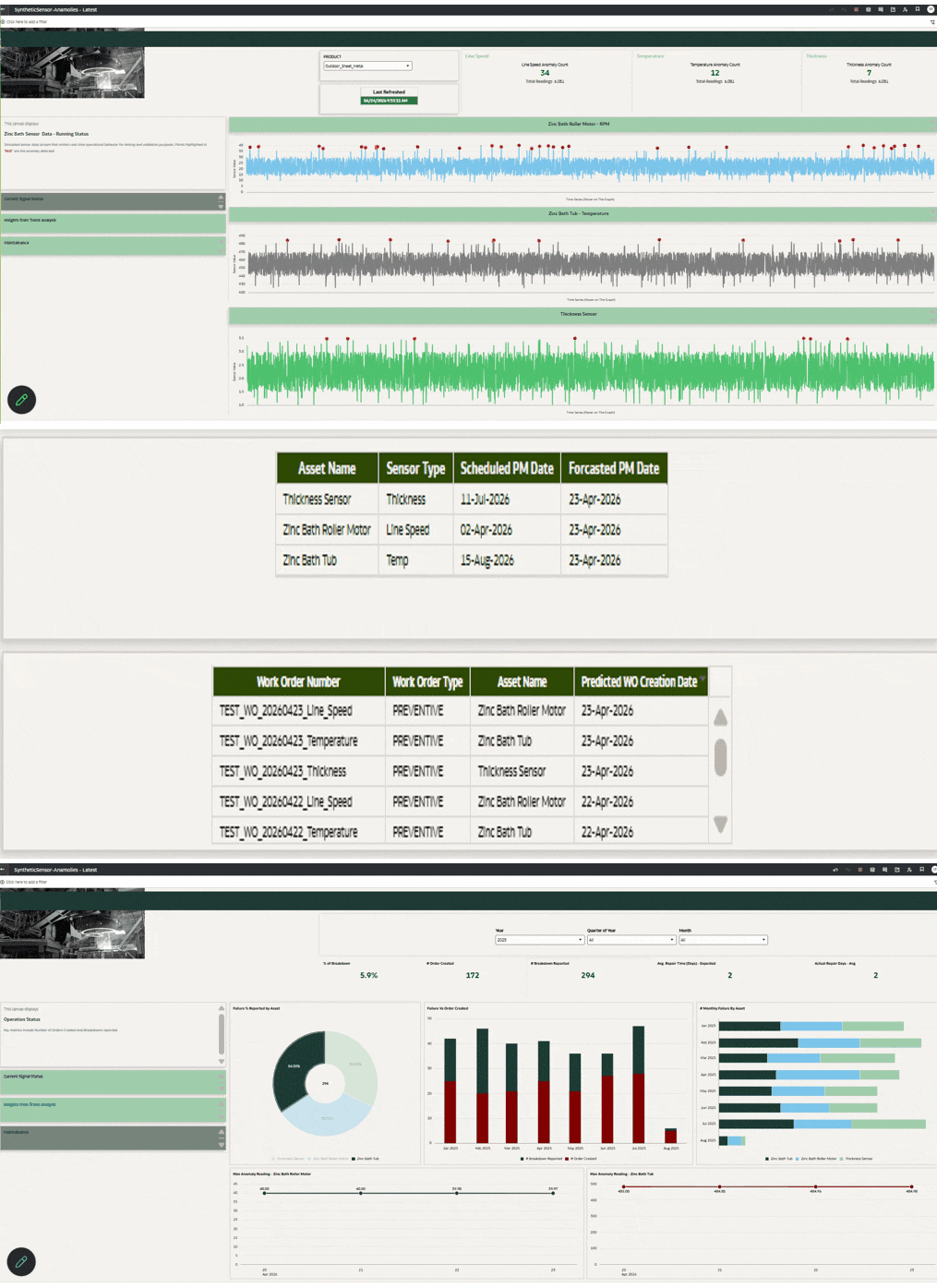
Figure 5: Dashboards combine sensor trends, anomaly insights, maintenance forecasts, and work-order actions for operational monitoring.
AI-driven reporting for decision support
Beyond dashboards, the same curated data foundation can support AI-enabled reporting and guided analysis. Business users can ask questions about operational patterns, explore potential causes, and share insights across teams, which can help reduce reliance on separate reporting cycles.
The goal is to make predictive maintenance insight part of everyday operations. When analytics, anomaly detection, forecasting, and enterprise workflows are connected, teams can make more timely decisions with a shared understanding of equipment health.
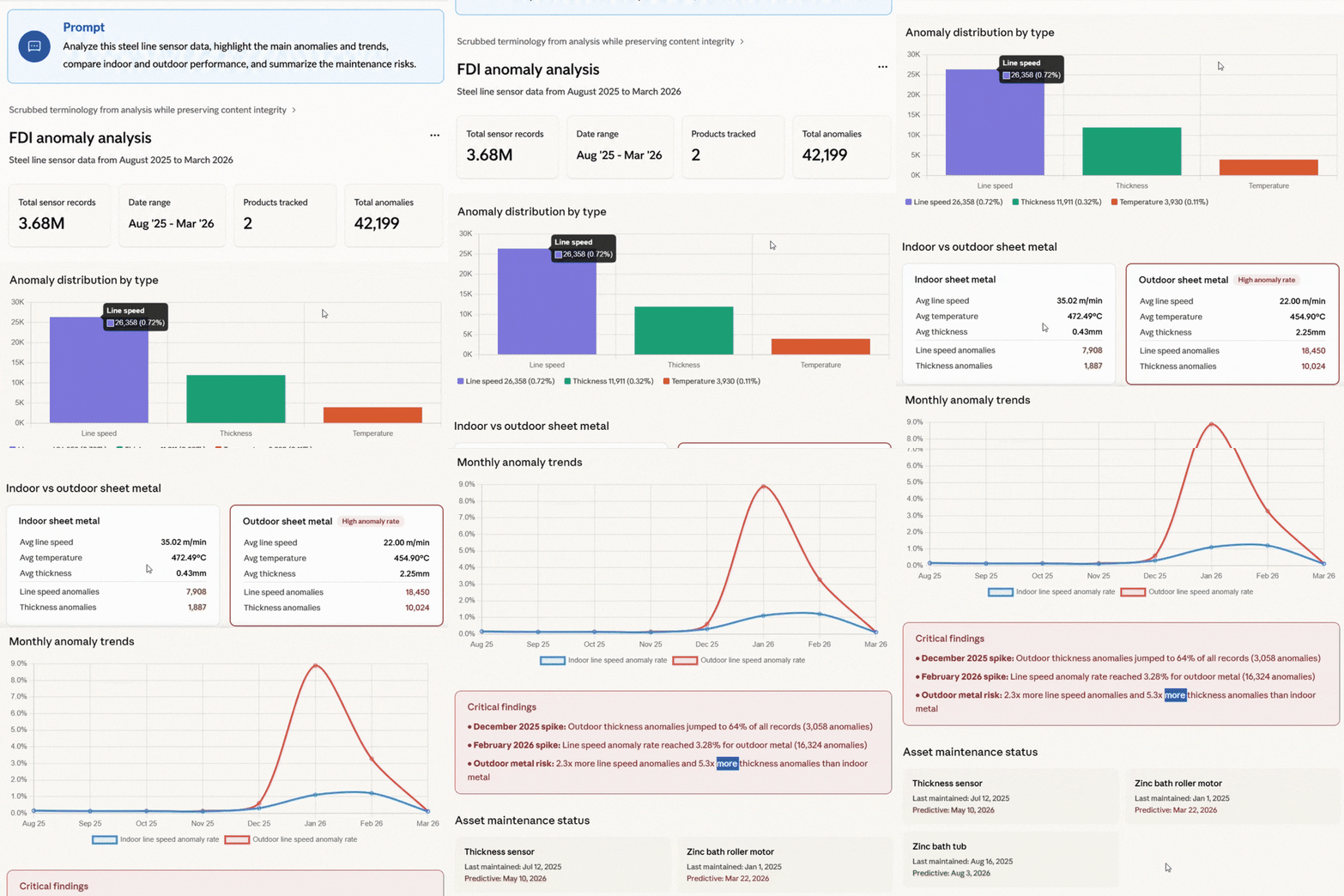
Figure 6. Natural-language analysis can summarize anomaly patterns and maintenance risks from potential analytics data.
Oracle Analytics Cloud data models can be accessed through supported MCP clients, enabling natural-language and developer workflows against OAC data and functions.
Together, these capabilities can help unify operational visibility, help teams identify potential issues earlier, support predictive analysis and AI-enabled decision support, and support collaboration between production and maintenance teams.
Design considerations
Data quality: Define expected ranges, timestamp and unit conventions, missing-data rules, and sensor-calibration checks before telemetry reaches analytics or models.
Alert ownership: Assign an accountable operations or maintenance team, severity criteria, notification channels, and escalation paths for each alert type.
Model validation and drift monitoring: Validate models against representative operating conditions, track false positives and false negatives, monitor feature and performance drift, and define retraining and rollback criteria.
IAM and data-access controls: Depending on the architecture and applicable requirements, organizations can consider least-privilege access, appropriate OCI IAM policies, compartment boundaries, encryption, network controls, and audit logging.
Human review: Treat alerts and model outputs as decision-support signals. Define how teams verify alerts, record decisions, create or defer work orders, and review outcomes before operational action is taken.
Related documentation
OCI Streaming with Apache Kafka overview
Oracle AI Data Platform documentation
Oracle Analytics Cloud documentation
Oracle Fusion Data Intelligence documentation
Conclusion and next step
Industrial IoT data creates value when it helps teams act earlier. Built on OCI, this high-level approach can help transform continuous equipment signals into curated data, predictive insight, and operational intelligence.
By using Spark Structured Streaming to publish sensor events to OCI Streaming through the Kafka-compatible API, and combining that streaming layer with managed data processing, anomaly detection, forecasting, Oracle Analytics Cloud dashboards, and AI-assisted reporting, manufacturers can create a practical foundation for predictive maintenance. Together, these capabilities can help create a path toward less unplanned downtime, improved operational reliability, stronger product-quality oversight, and more proactive decision-making across connected operations.
Next step: Explore the official Oracle AI Data Platform documentation, OCI Streaming overview, Oracle Fusion Data Intelligence documentation, and Oracle Analytics Cloud documentation to validate the data pipeline, access controls, model-monitoring approach, and operational-response workflow for your environment. If you plan to evaluate MCP, review the Oracle Analytics Cloud MCP tools (Preview) documentation before testing.