
How Oracle and Wild Bio connect plant science and technology to progress climate action
What if the crops that feed us could also help address climate change? That possibility is at the heart of Oracle’s recently announced partnership with Wild Bio to advance more resilient, productive crops and explore their carbon-removal potential. Behind the ambition is an important practical question: how do we measure, report, and verify (MRV) that climate benefit?
Wild Bio is a biotechnology company leveraging AI to study and enhance naturally occurring genetic traits that improve crop yields, withstand tougher conditions, and contribute to additional atmospheric carbon removal. Wild Bio’s ongoing field research examines how effective these crops are at permanently capturing more atmospheric carbon through their roots and how Oracle cloud is helping.
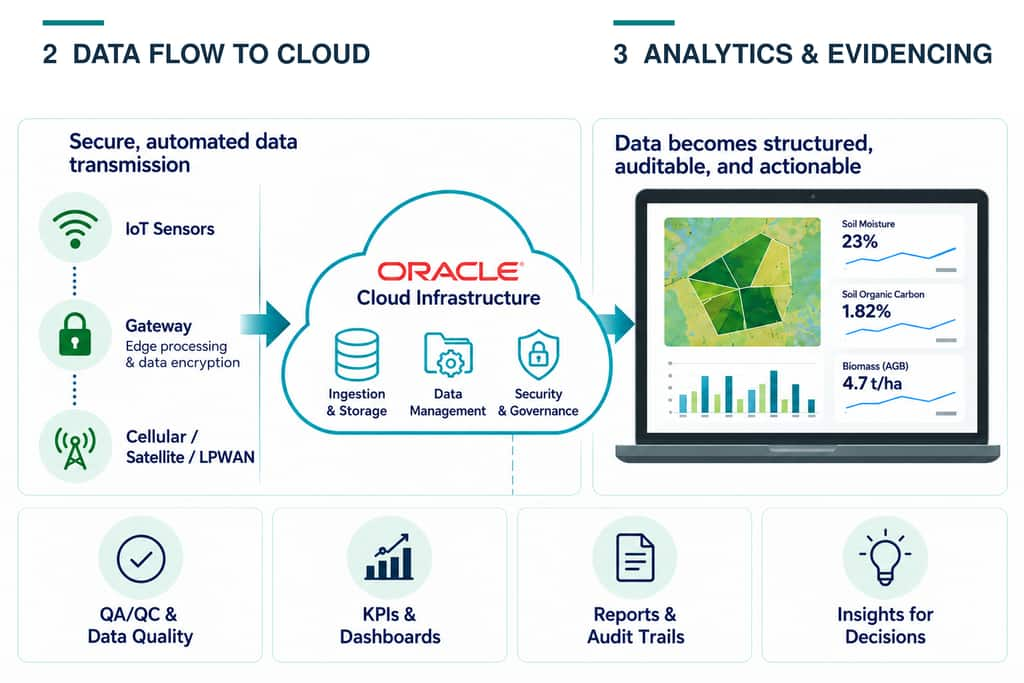
Oracle cloud, AI, and analytics will help aggregate and analyze massive amounts of data to determine whether a credible carbon removal claim can be made. This collaboration also explores how technology could improve the efficiency, accuracy, and resulting cost of MRV required to bring credible, agricultural-based carbon removal pathways to market.
Why removals matter now
Oracle is committed to achieving net-zero emissions across our value chain by 2050. High-quality carbon removal credits can help address residual, hard-to-abate emissions after deep direct reductions, but we must start maturing those technologies now. Scientific testing, measurement design, and developing a dependable supply take time. Supporting promising approaches today can help expand the availability of credible carbon removal options in the future.
The Exponential Roadmap Initiative reinforces the need to scale carbon removal alongside sustained emissions reductions. Doing so will require investment in technologies, infrastructure, and supply needed to expand high-quality removals over time. Cutting emissions earlier also limits the buildup of greenhouse gases in the atmosphere and the warming they cause over time, making early action especially valuable.
The importance of measurement, reporting, and verification (MRV)
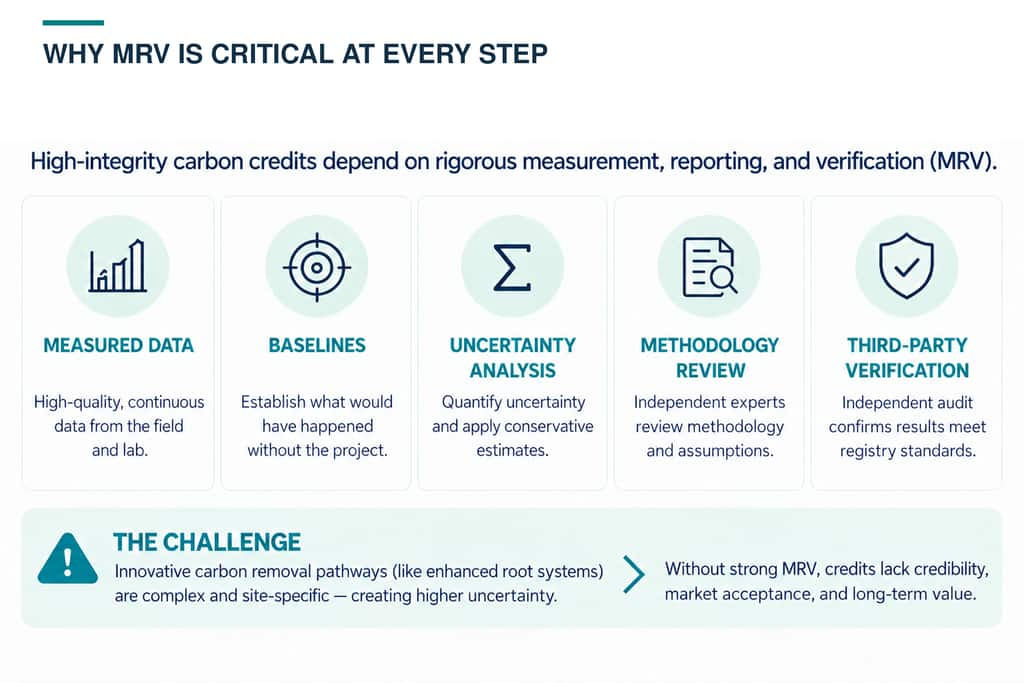
MRV provides the basis for determining how much carbon was removed and permanently stored in the soil, giving developers, independent reviewers, and buyers a common standard for evaluating carbon-removal claims. Producing that evidence consistently requires time, expertise, equipment, and investment.
The carbon removal credit lifecycle can vary by technology, but it typically follows six stages:
- Design and validation. Define the methodology, baseline, and monitoring plan;
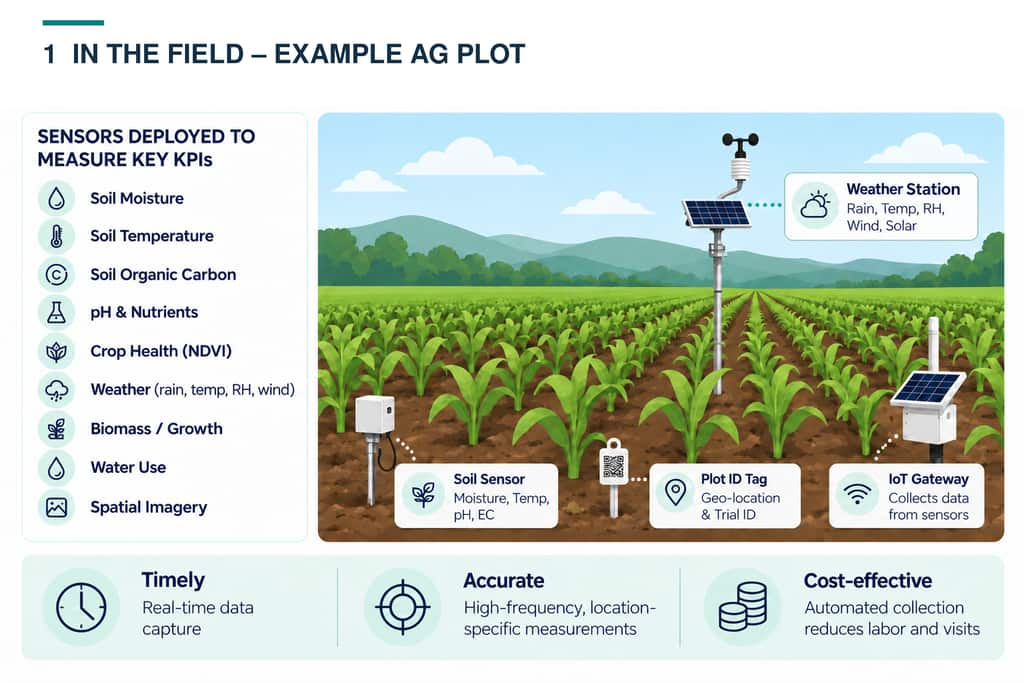
- Monitoring and measurement. Collect data over the required period to assess removals, associated emissions, and storage.
- Reporting. Calculate net removals and document the evidence, assumptions, and uncertainty.
- Independent verification. Have a third party assess the reported results.
- Review and issuance. An accredited registry reviews the results and issues uniquely identified credits that can be transferred.
- Retirement. Removes a credit from circulation once it is used, helping prevent double-counting.
Measurement shapes the project from the outset and continues through successive monitoring periods. Early design planning helps ensure that essential evidence is collected when it is available. Reporting makes the measurements, assumptions, and calculation open to examination for independent verification
Helping startups and new removal pathways earn market confidence
Early-stage carbon removal companies face a difficult commercial challenge: they need credible evidence to attract buyers and investment but producing that evidence requires funding. Small teams must run trials, collect and analyze samples, build data systems, and navigate MRV requirements while continuing to develop the underlying science. For a startup, making MRV more efficient can free up valuable resources for research and development. One of the objectives of Oracle’s work with Wild Bio is to help make MRV faster, less labor-intensive, and more cost-effective at scale.
A 2024 study from the Grantham Research Institute found that MRV can account for 12% to 23% of average cost of a carbon removal credit. While there are significant variances depending on the type of carbon removal and verification standard, these results help illustrate the impact MRV cost has on commercializing carbon removals and the opportunity for technology to improve efficiency and lower cost. Large technology companies are well positioned to help address these barriers through cloud infrastructure, connected devices, databases, analytics, and AI.
This is where Oracle’s capabilities are well-poised to support this scientific work. Connected data systems can reduce repeated manual entry, reconcile field and laboratory records, and help prepare consistent reporting. Automated checks can catch missing data or inconsistent observations. Analytics and AI can help researchers compare records across sites and seasons to identify patterns or prioritize further investigation. These capabilities all help improve accuracy and transparency of MRV results to earn trust with consumers and third-party registries.
Leveraging technology to support sustainability solutions
Data management and analytics challenges are not unique to carbon removal. Many sustainability solutions rely on fragmented data sets, manual reporting, and information collected in different formats, frequencies, and levels of traceability. Consistent, well-managed data is essential to measuring and verifying environmental outcomes.
Oracle’s technology portfolio is well suited to address these challenges through IoT connectivity, secure data storage, and integrated AI-assisted analytics.
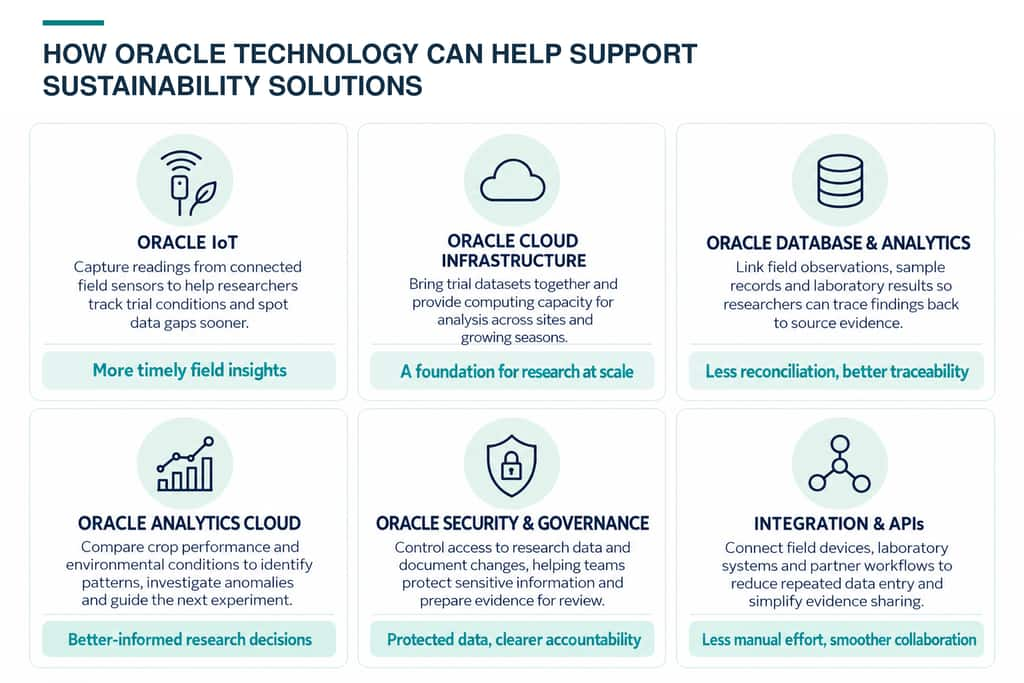
These capabilities have applications across industries: combining meter and production data to understand energy use in manufacturing, connecting water measurements to operational decisions, tracking materials through reuse and recycling, or bringing supplier and business data together for emissions reporting. The environmental questions vary, but each depends on reliable data to make informed decisions.
Our work with Wild Bio puts this broader opportunity into practice at the research stage. The ambition outlined in our partnership announcement requires evidence that can withstand scrutiny, and Oracle technology can help researchers build that evidence. More broadly, the work shows how we can help sustainability innovators move from promising ideas to results that others can understand, evaluate, and build upon.
To learn more, read the partnership announcement, explore the research in our ongoing Wild Bio video series, and discover how Oracle technology supports sustainability solutions.