
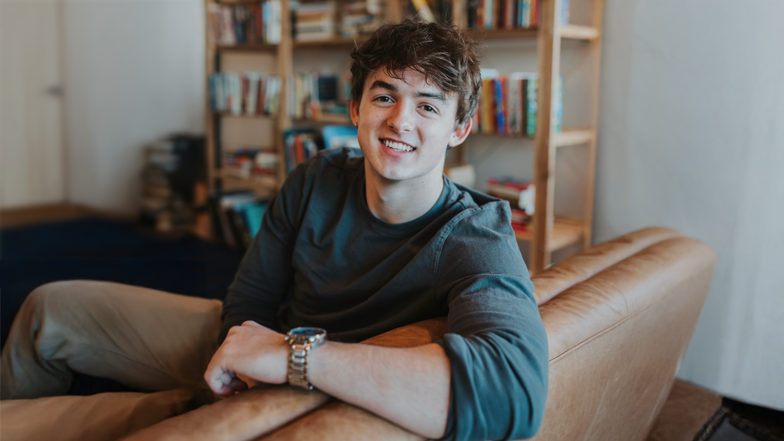
In 2014, when Oracle began building a home for Design Tech High School (d.tech) on our Redwood Shores campus, we asked ourselves what young people would need to thrive, not just for the next four years of high school, but for the next forty years—in a future we could only imagine. The answer lay in design thinking, futures thinking, and a deep trust in students’ curiosity and desire to make the world better. Help young people develop the skills to solve complex problems, and they will do more than prepare for the future — they will shape it. A decade later, that belief is walking our halls at Oracle.
Jackson Lawrence arrived at d.tech as a freshman with a laptop and more ideas than the school day could hold. Today, he is a software engineer at Oracle working on the frontier of AI — a field that didn’t even exist in its current form when he enrolled at d.tech, and one for which, it turns out, his education prepared him almost perfectly. We sat down with Jackson to trace his journey, and to ask what the rest of us might learn from it.
Let’s start at the beginning. How did you find your way to d.tech?
I grew up in San Mateo, right near Design Tech High School at Oracle. I actually learned about the school from a neighbor. I’d always been interested in technology, and I started out building programs for video games I liked, then got really into web development and design. What I didn’t know was how to turn that passion into a career. That’s where d.tech came in, in a way a traditional school never could have.
What made the experience different?
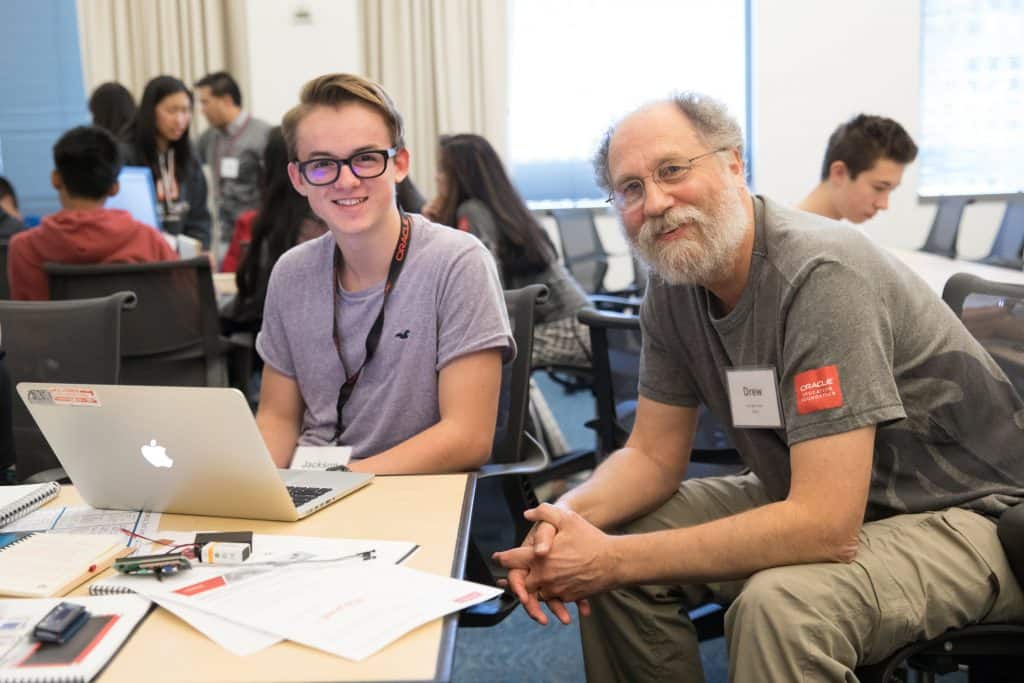
Honestly? I was probably a handful for my teachers. I was always pitching something different; instead of a standard presentation, I’d ask to build a website. And so many of my teachers leaned into it. They saw a student who wanted to go off the beaten path, and they supported that. I always appreciated how our teachers treated us with real respect and elevated our ideas — something that’s very hard to find in a traditional school.
Also, we started in a warehouse, before moving to Oracle’s campus when the beautiful school building was finished, and that gave d.tech this tight-knit, almost startup feel. The culture among students and staff made you comfortable raising your hand and saying, “I want to do this.” I was hesitant at first, but over time my confidence grew. By junior and senior year, I was pitching and leading some very large projects.
Tell us about one of these projects.
COVID hit in March of my junior year, and my entire senior year was online. One of my good friends and I decided to build our own live-streaming platform to reconnect our isolated community. We called it KoiStream, because koi fish are a big thing at d.tech. They grow to the size of their pond, and d.tech always puts students in a bigger pond, again and again.
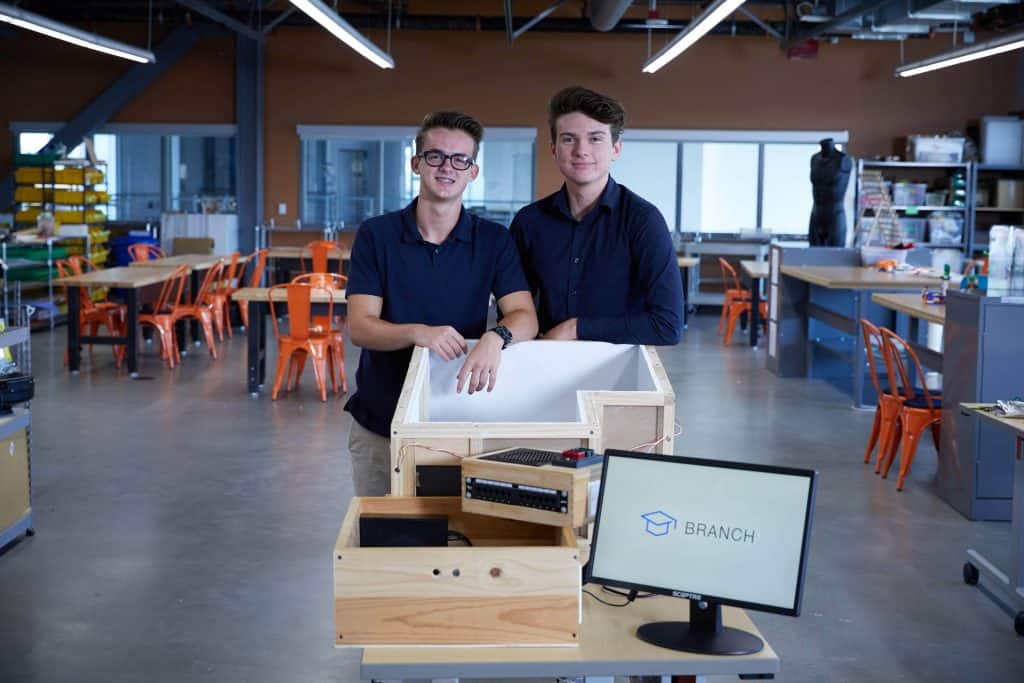
After we got KoiStream operational, over the summer, we pitched the idea of building an actual broadcasting studio at school: video switching, audio, cameras, the works. The school approved it and funded it. I vividly remember cutting a hole in the wall when the principal walked by and asked, “Do you know what you’re doing?” I said, “Yeah, I’ve got this.” No other school would ever let a student explore a passion that hands-on — fishing cables through walls, building a server rack. We formed a team of ten students and ran weekly live broadcasts all through senior year, including an awards show for the whole school at the end of 2020. And, the studio is still there for students to use today.
Oracle was part of your education long before you were an employee. What did that look like?
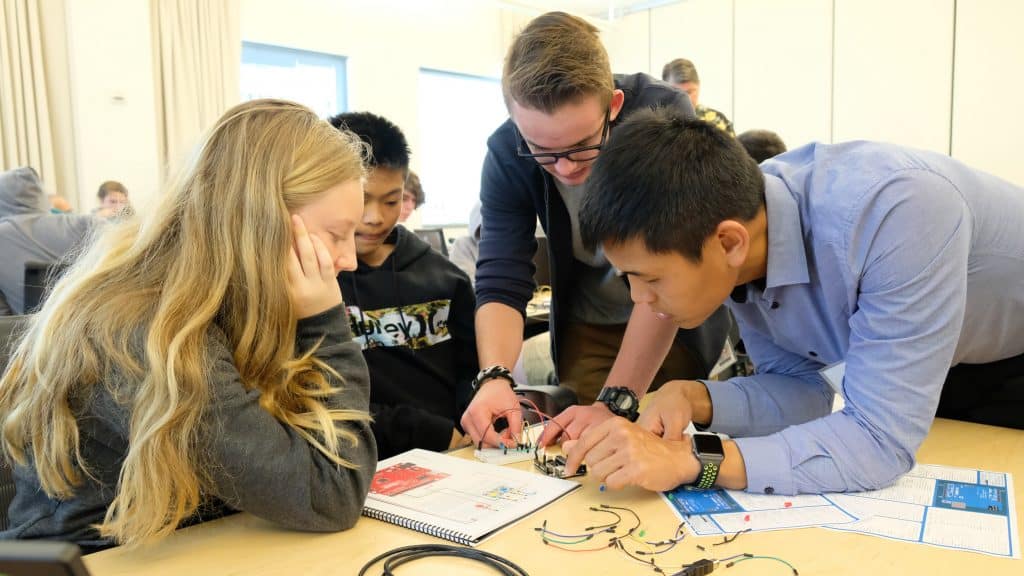
Oracle was a huge part of my time at d.tech. I took an Oracle class basically every single intersession, spending countless hours at the Oracle Conference Center with the Oracle Education Foundation team who teach the classes and Oracle employees who volunteered their time to coach us. Getting to interact with people who were decades into their careers, one-on-one, for weeks — that was really something special.
They also let us learn by doing. They supplied hardware for circuit board and wiring classes, and I remember burning out multiple circuit boards as I tried to learn. They’d just hand me another one and say, “Here you go.” As a high school student, being allowed to fail and try again like that was instrumental.
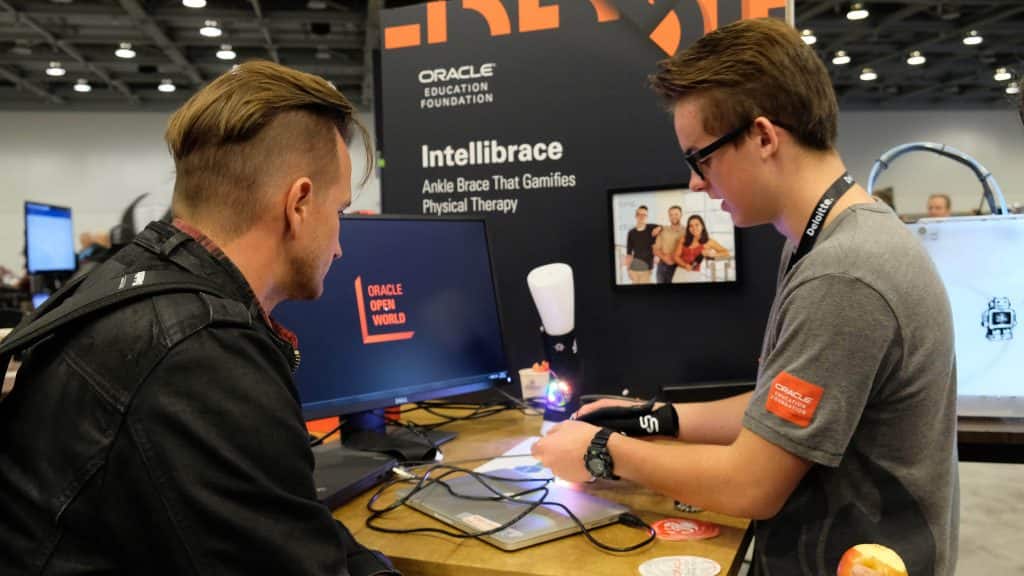
And then, there was Oracle’s big annual conference. It’s called AI World now, but it was called OpenWorld then. I attended and presented projects there twice as a d.tech student. As a freshman, I presented a wearable technology—a physical therapy ankle tracker—to crowds of executives, like a scene out of Shark Tank. I was even on a podcast. The second time, I built a smart-school prototype that enhanced safety during emergencies and streamlined the overall classroom flow. I spent long nights over the summer building a physical classroom prototype with automated locks, blinds, lights, a projector, and so much more. That kind of exposure to industry professionals, that early, builds confidence and teaches you how to communicate your ideas to people outside the classroom.
So how did you find your way back?
After graduating from d.tech, I went to Northeastern in Boston for a combined degree in computer science and business. When I started looking for internships, Oracle was a place I kept coming back to. I already knew what the company was about, and I’d learned from so many of its people.
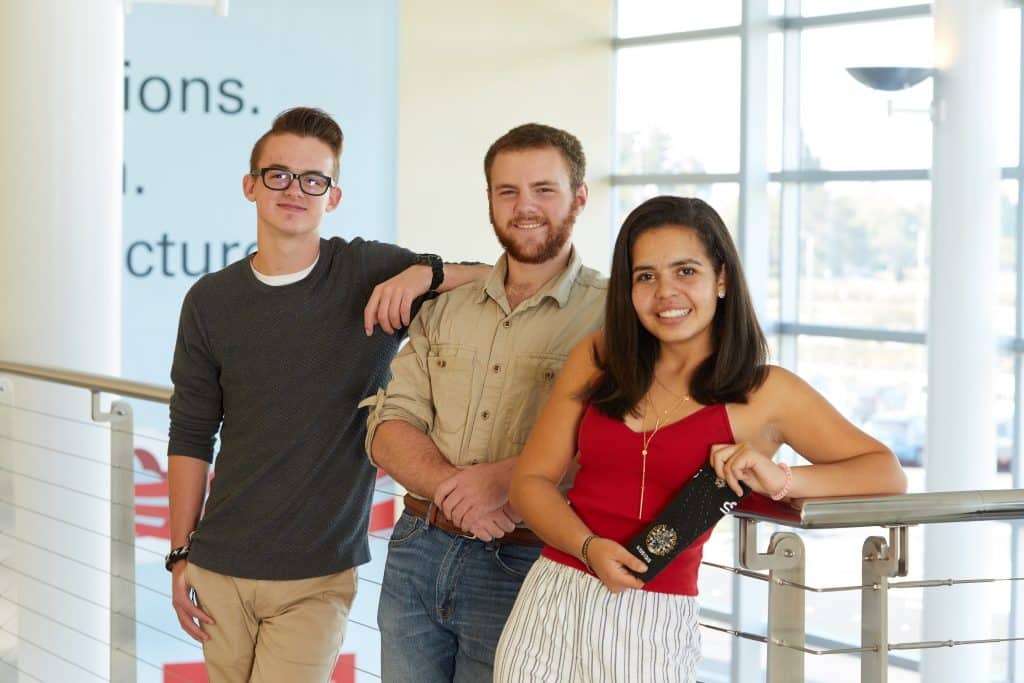
My first internship was with Oracle Health, work on AI, the year after the Cerner acquisition. When migration work paused internships on those teams, my return offer landed in limbo — and the amazing people at the Oracle Education Foundation helped me look for teams that were still taking interns. That’s how I found my current team, working on emerging AI capabilities and Oracle’s chatbots. I interned there, got a return offer, and said yes almost immediately. I just completed my first full-time year, doing work I genuinely enjoy with an awesome team.
Since returning to Oracle as an employee, I’ve also been able to volunteer with the Oracle Education Foundation, coaching d.tech students in a game design class during intersession. Seeing students sit where I once sat, looking up to Oracle coaches the way I once did, was a true full-circle moment for me. It made me appreciate how much those experiences shaped me—and how meaningful it is to help create that same opportunity for the next group of students.
You’re now working in AI at a moment of enormous change. Do the skills you built at d.tech still serve you?
One hundred percent — and I have to come back to the design thinking process here. As a high schooler, you’re asking, “What is this framework they keep teaching us?” Then you get into the real world and realize how useful design thinking is. So much of AI work is iterative: you empathize with the user, define the problem, generate ideas, prototype solutions, test, and iterate. That’s exactly how you work with these new tools. Being able to lay that design thinking framework over a completely new way of working is huge — and it’s not something you’d learn at most high schools.
The d.tech model also teaches you to be flexible. A lot of the technical skills I spent years building have changed with AI. You have to be someone who can say, “Okay, the technology is different now,” and adjust accordingly. Design Tech High School is constantly evolving and changing, just like the technology around it, so you build that muscle early.
What impact do you hope to make?
I just love building useful products that solve real problems for people. Unlike traditional development, being closer to the user as a developer lets me be intentional about the things I build — understanding what people actually need and shaping a solution around that. That user-centric mindset comes straight from design thinking: you don’t have to stay in one domain. Bring the framework, learn the space, and solve the problem in front of you. As AI and large language models expand, I also want to grow my skills in security, because protecting the information that goes in and out of these tools is critical.
What’s your advice for current d.tech students?
Take advantage of everything the school and its surroundings offer. Four times a year, intersession lets you step away from core academics for two weeks and explore something you’re curious about: meditation, rock climbing, Oracle classes. Choose a passion and go explore it. And, if the offering you want doesn’t exist, propose it — they’ll take you seriously. Learning to navigate that process, to advocate for what you want, is its own education. That open communication between students and staff is rare. Be part of it.
And, take at least one Oracle Education Foundation class. At least one.
And for young people who don’t have access to a school like d.tech?
You can absolutely still do all of this. I worked on plenty of passion projects outside of school — I even co-founded a startup for a while. A lot of schools put enormous weight on AP classes and test scores, and academics matter. But knock down those core academics and pursue a project on the side, something connected to the career you’re curious about. Too many people I met in college focused purely on the academic checklist and never explored a passion beyond it — they regretted it.
The tools available today are extraordinary. The internet supercharged my learning as a student; AI can supercharge yours. It’s just another learning tool — one that lets you build something tangible faster than ever. There has truly never been a better time to start.