

So you want to move your Siebel CRM to a Kubernetes-orchestrated application deployment in a cloud native ecosystem — what’s the easiest way to do this?
You can simplify the transformation of your Siebel CRM deployment into a Kubernetes-orchestrated platform using Siebel Cloud Manager (SCM).
SCM is a platform for deploying and managing Siebel CRM on Kubernetes clusters – on cloud or in your data center. It is built on modern cloud native tooling such as Terraform, Ansible, and so on. It supports OCI and hybrid environments and brings along GitOps-based automation, scaling, observability (metrics monitoring and log analytics), and CI/CD support.
You can deploy Siebel CRM containers using SCM on a variety of platforms, such as:
- Cloud Native Computing Foundation (CNCF) compliant Kubernetes cluster, including:
- Oracle Kubernetes Engine (OKE) on Oracle Cloud
- Oracle Cloud Native Environment (OCNE) in the cloud
- Red Hat OpenShift, and so on
- Oracle Compute Cloud@Customer (OC3) in your own data center.
Moving Siebel CRM to a Kubernetes cluster: Why should you?
Operating Siebel CRM on a Kubernetes cluster offers scalability, flexibility, and operational efficiency. Kubernetes, as a container orchestration platform, enables organizations to manage, scale, and maintain complex application deployments. This helps streamline Siebel CRM operations, reduce operational costs, seamlessly scale and improve performance.
The business benefits of using SCM for your Siebel CRM cloud native deployment:
- Modern observability:
- Enable your administrators with real-time insights into the performance and health of Siebel CRM applications through integration with best-of-breed metrics monitoring and log analytics applications.
- Leverage dashboards, reports and alerts based on various metrics to proactively respond to issues, eliminate business disruptions, and improve customer satisfaction.
- Optimization and scaling:
- Harness the runtime infrastructure optimization and scaling capabilities of Kubernetes – use the best technology that runs the web-scale applications.
- Safeguard your investment in Siebel CRM:
- Move to a cloud native deployment with all your customizations and continue to use all existing Siebel CRM functionality. Preserve and maximize the value of your Siebel CRM investments – modernize your platform for the future.
- Continuous Deployment using GitOps:
- Manage Siebel CRM deployments on Kubernetes using declarative GitOps, allowing seamless Continuous Deployment of artifacts on a base (greenfield) or customized Siebel CRM image (“Lift-and-Shift”).
- Accelerate innovation through agility:
- Embrace high-speed development and rapid feature delivery through robust deployment pipeline, enabling your Siebel CRM to quickly adapt to ever-evolving business requirements and market conditions.
- Cloud native skillset:
- Utilize standard cloud native skills, with minimal expertise required for containers and Kubernetes deployments.
- Deployment flexibility:
- Take advantage of deployment flexibility across platforms, deployment paths, and infrastructure provisioning options.
- Minimize CAPEX:
- Simplify the transition of your Siebel CRM to a cloud native deployment, in the cloud or in your data center, with all customizations intact. Achieve this within days, with minimal business disruption, saving time and costs while delivering rapid ROI.
- Avoid the need for capital investment in building and maintaining your own tools or services for orchestrating a containerized Siebel CRM deployment. This helps prevent the accumulation of technical debt that your organization would need to manage.
- Managing security vulnerabilities:
- Avoid the significant responsibility of managing security vulnerabilities – backed by Oracle.
- Avoid vendor lock-in:
- Trust Oracle-supported standard solution for cloud native deployments. You are no longer tied into relying on bespoke solutions.
Try out Siebel Cloud Manager today
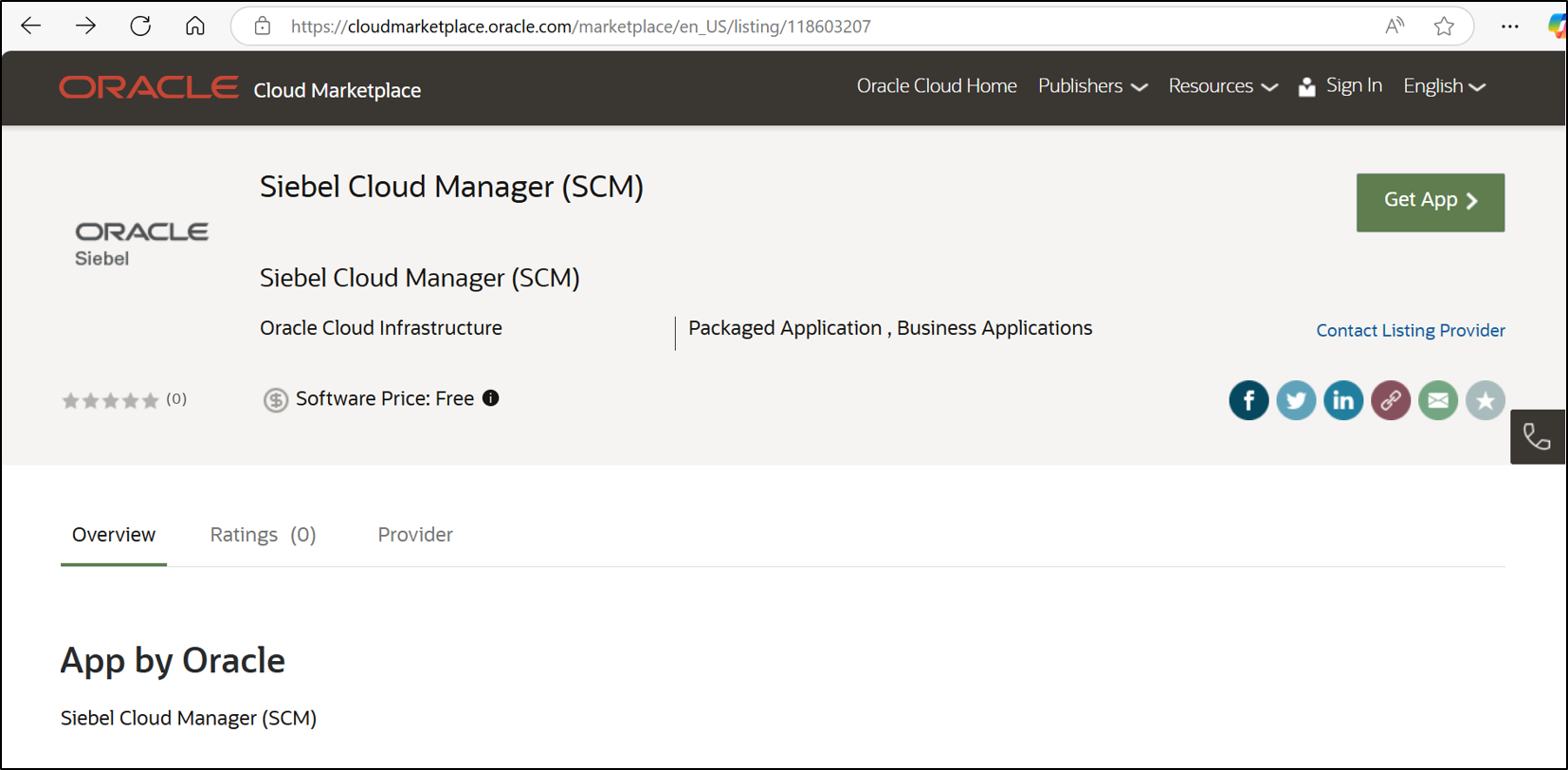
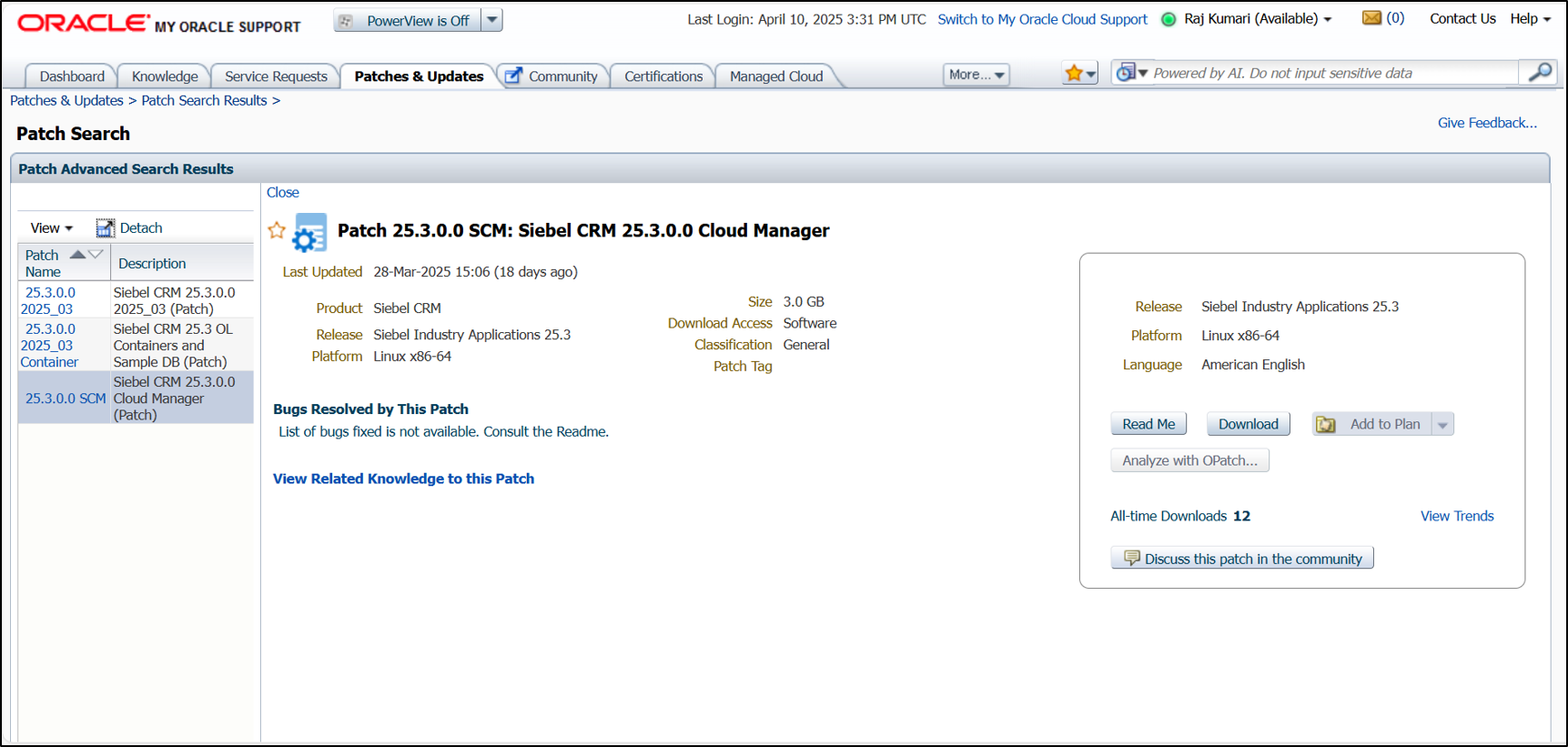
SCM is readily available on Oracle Cloud Marketplace and on My Oracle Support, making it effortless to download and deploy on OCI, or in your own data center on OC3, or any other standards-compliant cloud platform. Try it now and see for yourself how easily you can move your Siebel CRM deployment to a Kubernetes-orchestrated, cloud native ecosystem.
To learn more about SCM, refer:
- SCM documentation Deploying Siebel CRM Containers on Kubernetes using Siebel Cloud Manager
- Cloud Customer Connect session Optimizing Your On-Prem to OCI Migration using Siebel Cloud Manager