
Creating lifetime loyalty is the holy grail of customer experience and marketing. Increasing revenue, profitability and brand advocacy. Yet achieving this across all customer channels, for B2B and B2C markets in any industry is difficult.
A decade ago, transactional loyalty programs were the primary method for businesses to foster and measure customer loyalty. Behavioral loyalty is increasingly important, fueled by social media, mobile app engagement, website activity, and participation in polls and surveys.
Social media platforms allow customers to share opinions and reviews, directly impacting brand image. To encourage positive advocacy, companies are increasingly rewarding members for social interactions, integrating these activities into loyalty programs.
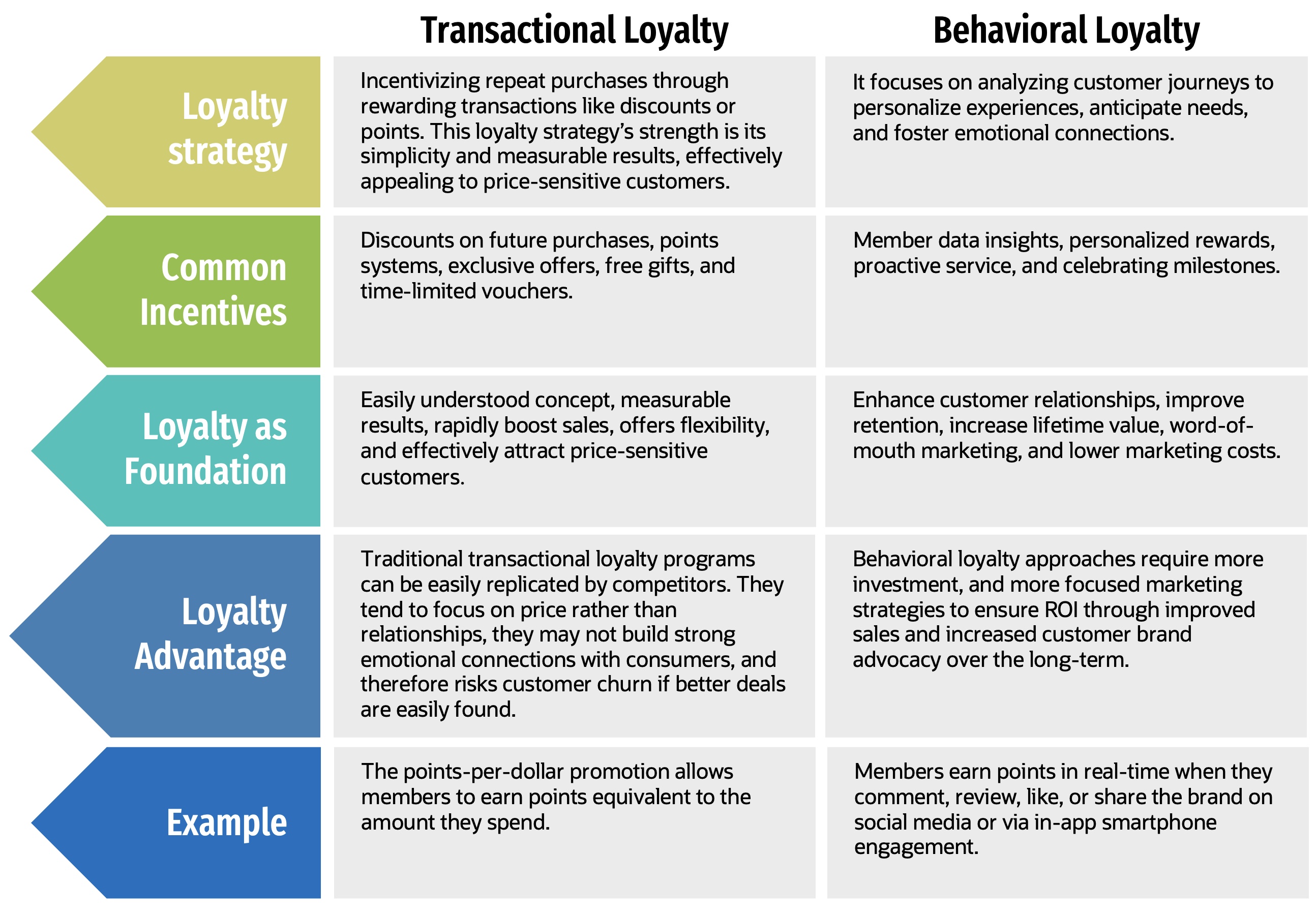
As businesses embrace both transactional and behavioral loyalty, determining the most effective approach for member retention and engagement with loyalty promotions becomes crucial.Each model offers unique strengths and weaknesses, with the optimal choice depending on the specific business and its objectives.
In this blog, we will explore how the transactional and behavioral loyalty models offer distinct approaches to customer retention and help you choose the best model for your business.
Achieving Loyalty Excellence
Siebel Loyalty leads the loyalty market for nearly three decades, excelling in traditional, transactional loyalty programs at scale. This bulletproof solution is proven by 100s of leading global brands using Siebel Loyalty for their loyalty schemes today.
Combing Siebel Loyalty with the behavioral loyalty functionality allows organizations to achieve loyalty excellence, expanding their loyalty strategies to reach customers in the right place at the right time and with emotional connection.
Siebel Loyalty leverages member activity context, using loyalty promotions to handle criteria checks and point rewards. These member activities can be captured externally and then pushed to Siebel Loyalty for validation and reward.
Loyalty strategies directly impact your customer engagement and growth. To know where to start and how to move from marketing objectives to customer engagement needs, we have seen the following trends within our Loyalty customer base:
- Transactional Loyalty – Best suited for businesses with price-sensitive customers, those seeking quick sales increases, or those in highly competitive markets. Examples include retail, food and beverage, travel & hospitality, FMCG, and e-commerce.
- Behavioural Loyalty – Ideal for businesses prioritizing long-term relationships, those with unique offerings, or those in industries with high customer lifetime value. Examples include luxury goods and services, healthcare, financial services, experiences & events, and technology & software.
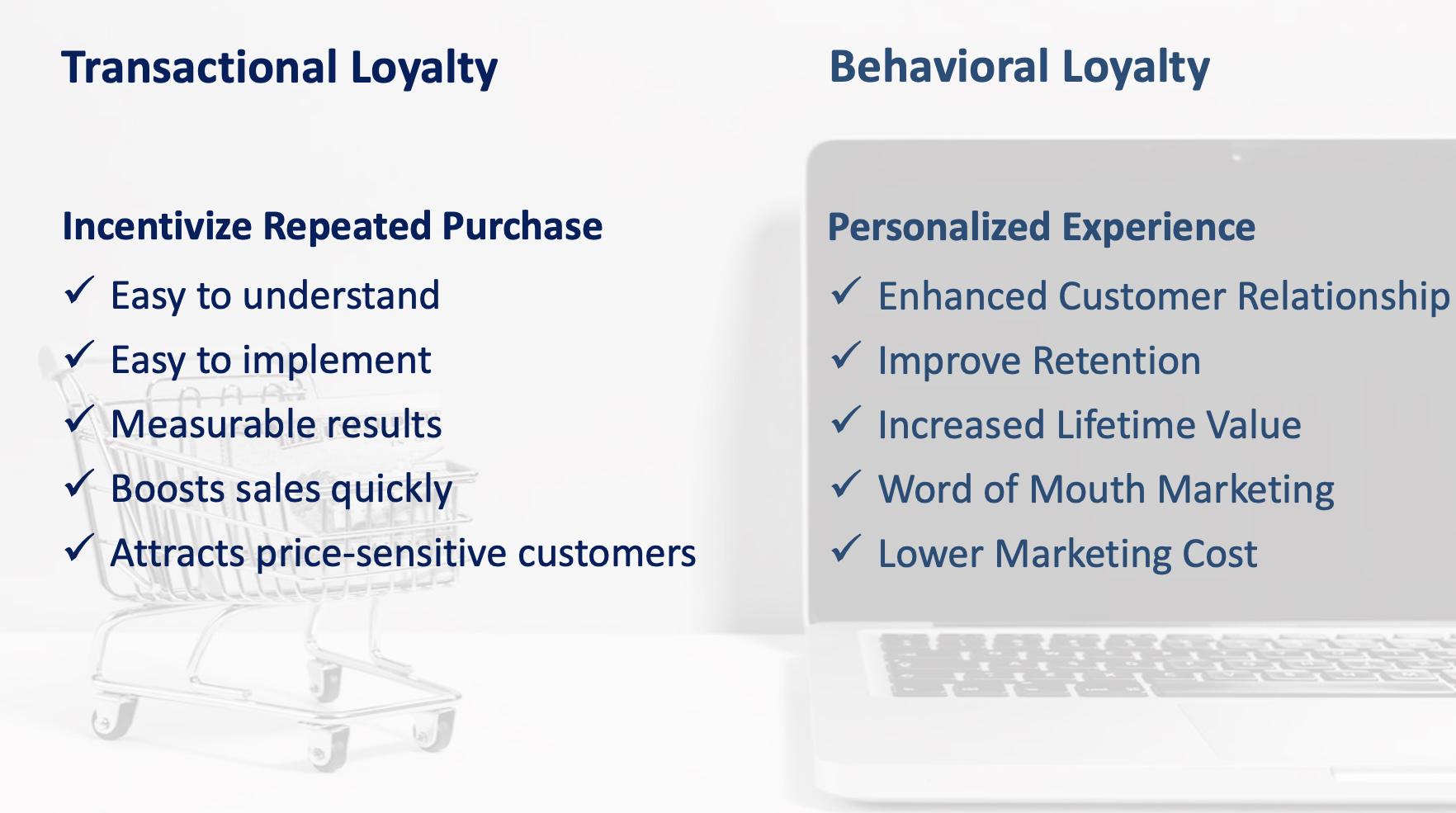
In conclusion, the most successful loyalty programs combine both transactional and behavioral strategies. By rewarding purchases and personalizing communication, businesses can create deeper connections with customers. Transactional loyalty programs are the most common across industries, but it is important to understand if transactional loyalty alone is enough to align with your business objectives, audience, and resources, considering industry trends, customer preferences, and the competition.
Royal Caribbean Group is a great example of a successful loyalty program. It combines transactional loyalty by offering benefits like free shipping and exclusive deals, while also fostering behavioral loyalty through personalized recommendations and content.
Perhaps you have already implemented a successful Siebel Loyalty program for your business? If so, we would love to hear your story.
Is your business looking to improve brand advocacy and engage with customers in meaningful ways? Are you experiencing difficulties with your existing Loyalty solutions that don’t perform or scale adequately? If this sounds familiar, please reach out to us to discuss how Siebel Loyalty can help you.