
A successful out-of-place recovery depends on preparation and recovery drills that are completed long before an actual outage. The destination needs the recovery metadata, security material, access, and tested procedures required to configure the destination and confidently recover your database.
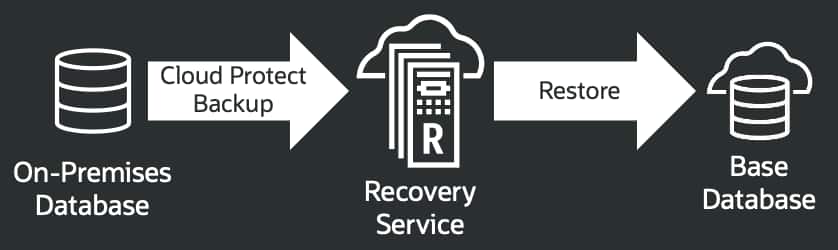
This blog explains how to prepare for and recover an on-premises Oracle Database to a new OCI Base Database system after an on-premises outage, but the concept works would also apply to Exadata Database Service in OCI. It focuses on recovery metadata, point-in-time RMAN recovery through Recovery Service, bottleneck analysis, and rehearsal.
Prepare recovery metadata before an outage
An out-of-place recovery needs more than backup pieces. Information and files must be collected from the source to recover to a new destination environment. The Oracle Recovery MCP server can be used to guide your collection process.
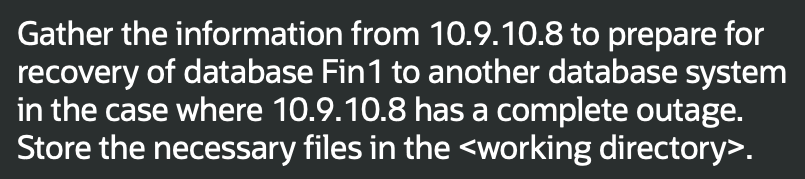
Examples of information and files to capture and protect before an outage include:
- TDE wallet files and the Oracle Database password file
- DBID, DB unique name, database version, and incarnation
- Network and Oracle Net details
- Storage and ASM configuration
- A usable initialization parameter file and control file
- Recovery Service connection metadata required to generate the RMAN environment
Do not store plaintext host or database credentials in prompts, scripts, or recovery packages. Retrieve wallets and password material through your company’s approved secrets-management or encrypted-storage process. Create and validate the package during normal operations, refresh it as the database changes, and make it available to the incident team through controlled access.
Recover out of place to OCI
During a complete on-premises outage, a new OCI Base Database system can serve as a recovery destination. The following high-level workflow reflects the controls used in a tested point-in-time recovery runbook:
- Confirm the approved recovery point before changing the target. Use
rcv show restore_rangeto verify that the available restore range includes the requested recovery time. - Validate the destination identity, ASM capacity, and network isolation. If the destination host already contains a database, obtain explicit authorization and verify its identity before any deletion.
- Securely stage the recovery package, including the TDE wallet, Oracle Database password file, recovery metadata, and OCI authentication material. Verify the integrity of all staged artifacts before use.
- Install SQLcl, configure Recovery Service authentication, and use rcv configure rman_env to generate the documented RMAN environment.
- Source the generated RMAN environment and validate the Recovery Service catalog connection before starting the restore.
- Start the auxiliary database in NOMOUNT with the source identity and destination-specific Oracle Managed Files, ASM, and wallet configuration.
- Use RMAN through the Recovery Service catalog to restore the control file, restore and recover the database to the approved time, then open it with RESETLOGS.
- Validate the recovered database, PDBs, wallet, recovery state, and datafile status. Keep application traffic isolated until the application owner accepts the recovered point and approves cutover.
OCI systems use Coordinated Universal Time (UTC), while the on-premises system may use a different local time zone. Convert the approved on-premises recovery time to UTC using the offset in effect on the recovery date. Stop if the restore-range output does not explicitly include the UTC point in time required. Do not use the destination host’s current time as the recovery point.
Be sure to test this workflow in your environment since database size, network throughput, backup layout, target storage performance, and redo volume will materially affect a real recovery.
The OCI database system can serve as a temporary operating location for application workloads while the on-premises infrastructure is rebuilt. After the on-premises infrastructure is ready, an organization can plan a controlled move back, such as a Data Guard-based migration.
Tune your recovery configuration
AI can also be used to identify a backup or recovery bottleneck. For example, in figure 4, the AI prompt is asking if more RMAN channels would make a restore faster.
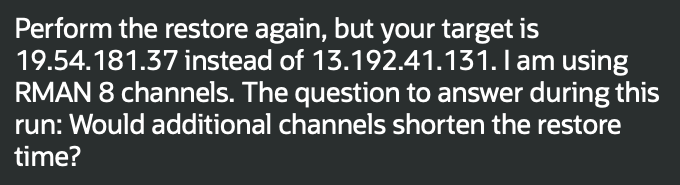
Figure 4 – AI prompt to monitor RMAN channel usage
AI can now help measure channel activity, recovery progress, CPU, network capacity, and target-storage latency. In figure 5, AI analysis of the observed metrics indicates that additional channels would not materially reduce recovery time because destination write latency and ordered redo apply were the limiting factors. Improve target-storage throughput before increasing the channel count.
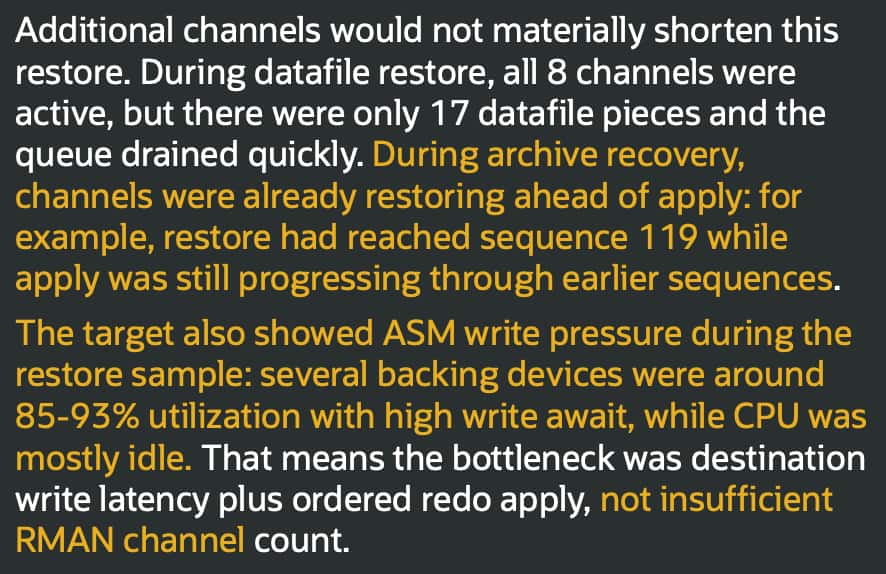
Figure 5 – Results from AI analysis of RMAN activity and bottleneck
Test the scenarios that matter to your estate
Data Guard physical standby, non-CDB-to-PDB, cross-version, cross-platform, and RAC recovery scenarios require a controlled rehearsal specific to each configuration, database version, storage design, and operational requirements. Don’t expect a workflow tested for one configuration to work universally across all scenarios and environments. AI can help collect configuration details and prepare a reviewable checklist, but it should not select a recovery path or execute commands for these scenarios without qualified human review and an approved test.
Make recovery rehearsal a normal operating practice
A recovery workflow is only credible when it has been rehearsed. Cloud Protect and Autonomous Recovery Service provide the protection foundation, but recovery still depends on sound design, secure access, accurate documentation, and regular tests.
Be sure to run an out-of-place recovery rehearsal for a representative on-premises database. Validate the recovery package, the target landing zone, network paths, wallet handling, RMAN workflow, and post-restore checks. Then record the observed recovery time and the constraints discovered. That is how a backup strategy becomes a recovery capability.
Summary
Cloud Protect and Recovery Service provide the protection foundation, but successful out-of-place recovery also depends on preparation, secure access, accurate recovery metadata, and tested procedures. Capture and protect the required recovery artifacts before an outage, confirm that the requested recovery time is available, validate the results, and use AI to help identify performance bottlenecks. This blog completes the two-part series by applying the recovery-ready backup strategy from the first blog to a tested recovery workflow.
Learn more
Oracle Database Autonomous Recovery Service documentation
https://docs.oracle.com/en-us/iaas/recovery-service/doc/index.html
Cloud Protect documentation
https://docs.oracle.com/en-us/iaas/recovery-service/doc/add-premises-database-recovery-service-using-cloud-protect.html
Recovery Service MCP server
https://github.com/oracle/mcp/tree/main/src/oci-recovery-mcp-server
AskTOM session includes an example of AI-assisted Cloud Protect configuration and recovery
https://youtu.be/eFiVlqFKtkM