
A practical guide to adaptive agent orchestration in Oracle AI Database
and Oracle Autonomous AI Database
A customer messages support: “Check why my payment failed, update my billing account if needed, and send me a confirmation.” A fixed, step-by-step workflow will run all three steps in order every time – even when there was no failed payment, even when the update fails, and even when the workflow really needs to stop and ask a question first.
That is the problem with fixed pipelines: real requests do not follow one path. Oracle Select AI Agent Framework already lets you build agent teams for workflows you can fully plan in advance. A Supervisor Agent adds dynamic orchestration to workflows that cannot be fully planned.
A Supervisor Agent receives the request, decides which specialist to call, waits for the result, and decides what happens next – at runtime, not in a hardcoded sequence. It is the difference between a workflow that follows a script and one that reasons its way through the request in front of it.
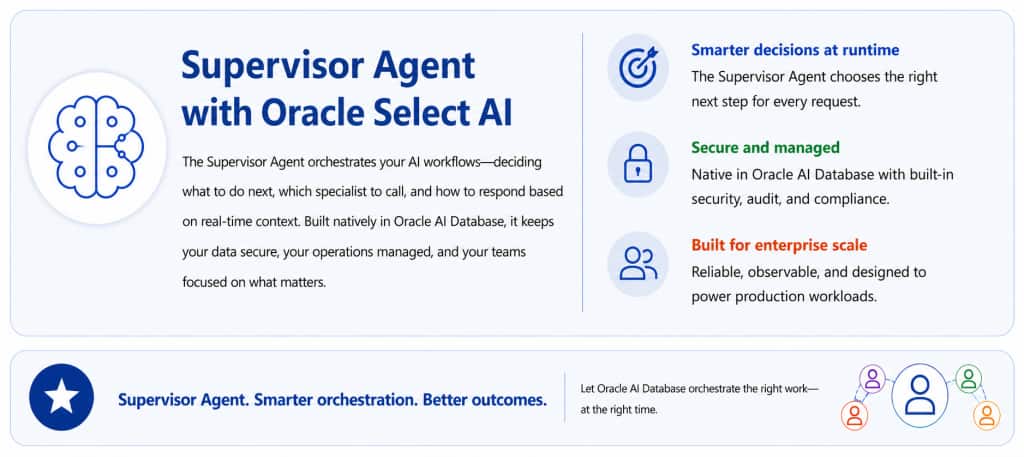
Sequential teams vs. Supervisor Agent teams
Sequential teams are best when the workflow is known ahead of time. Supervisor Agent teams are best when the next step depends on the request, the result of a previous step, or a human decision.
Both patterns are first-class capabilities in Oracle Select AI Agent Framework, and each is designed for different types of workloads. A sequential team performs a predefined series of worker agent-task pairs in a fixed order, making it ideal for deterministic processes such as extract, transform, validate, and summarize. When every request follows the same path, a sequential workflow is simple, predictable, and efficient.
Adding a supervisor agent introduces intelligent runtime orchestration. Rather than performing every worker in sequence, the supervisor agent evaluates the user’s request, delegates work only to the specialists that are needed, reviews the results, and decides what should happen next. It can skip unnecessary steps, ask for human confirmation before sensitive actions, and combine the results from multiple workers into a single, coherent response.
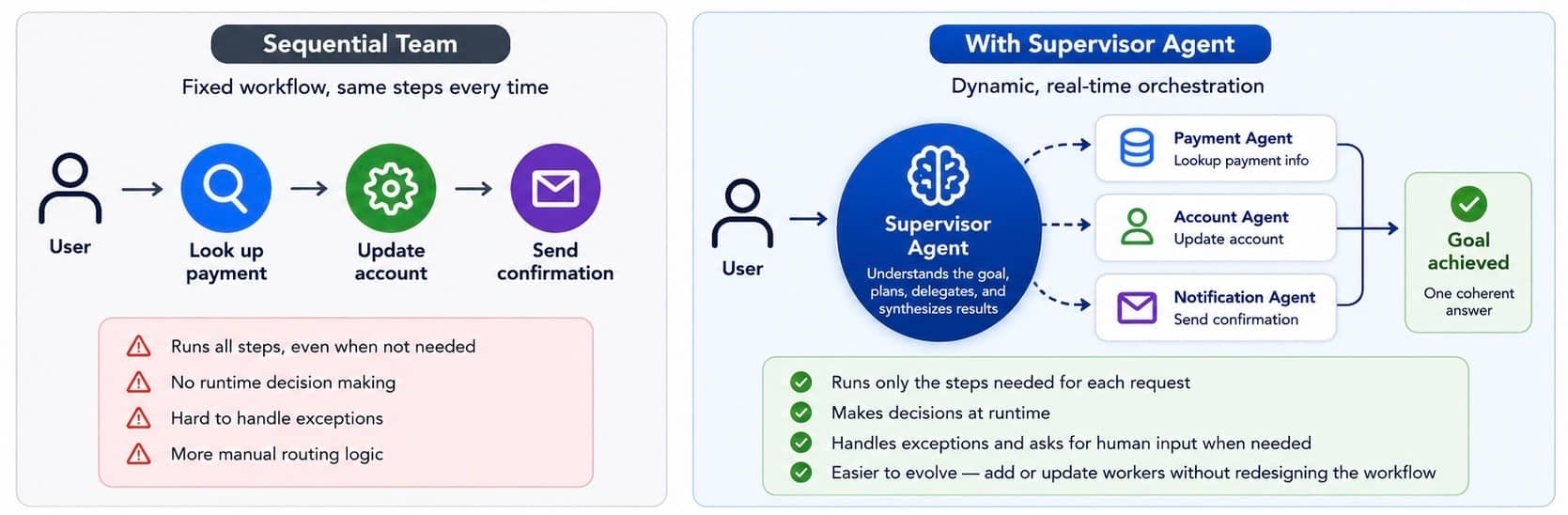
Figure 1: Runtime orchestration with a supervisor agent: it can route to payment, account, notification, or summary workers only when they are needed.
The comparison below illustrates the difference. Sequential teams always follow a predefined workflow, while Supervisor Agent teams adapt dynamically as the conversation unfolds—helping to simplify routing logic while helping to improve flexibility, governance, and maintainability.
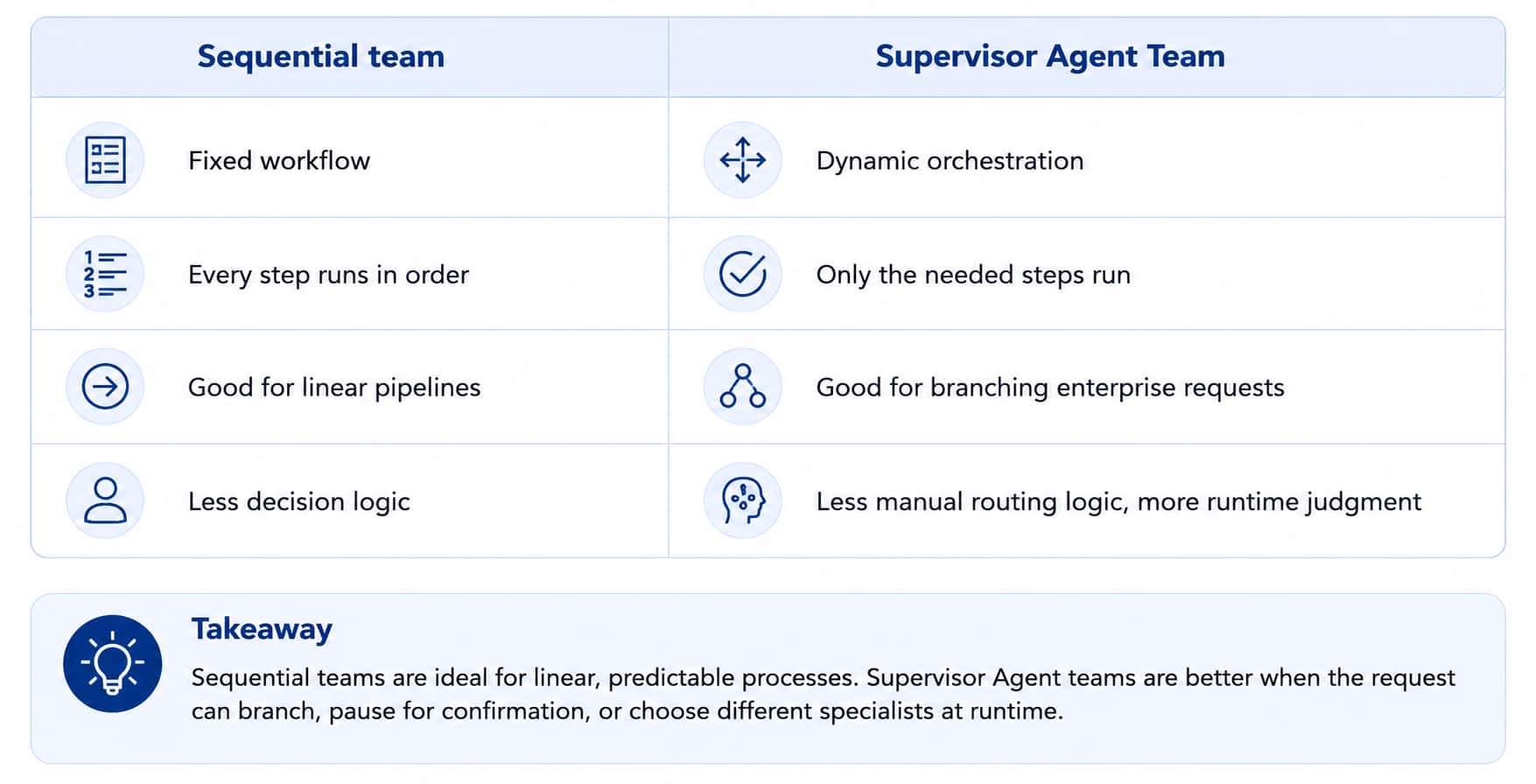
Table 1: Comparing sequential team and supervisor agent team
Why supervisor agents?
• Adaptive orchestration – the supervisor evaluates each request at runtime, so you do not hardcode every branch.
• Specialization – worker agents stay focused on bounded responsibilities such as payment lookup, account updates, retrieval, SQL analysis, validation, or notification delivery.
• Less manual routing logic – you define the workers and the supervisor role; the supervisor handles planning, delegation, and synthesis.
• Easier team evolution – you can add, remove, or update worker agent-task pairs without redesigning the whole orchestration.
• Context isolation – workers run in separate execution contexts, which helps control context growth in the supervisor thread.
• Auditability – delegations are recorded in task history tables so you can review which worker agent-task pairs were called and why.
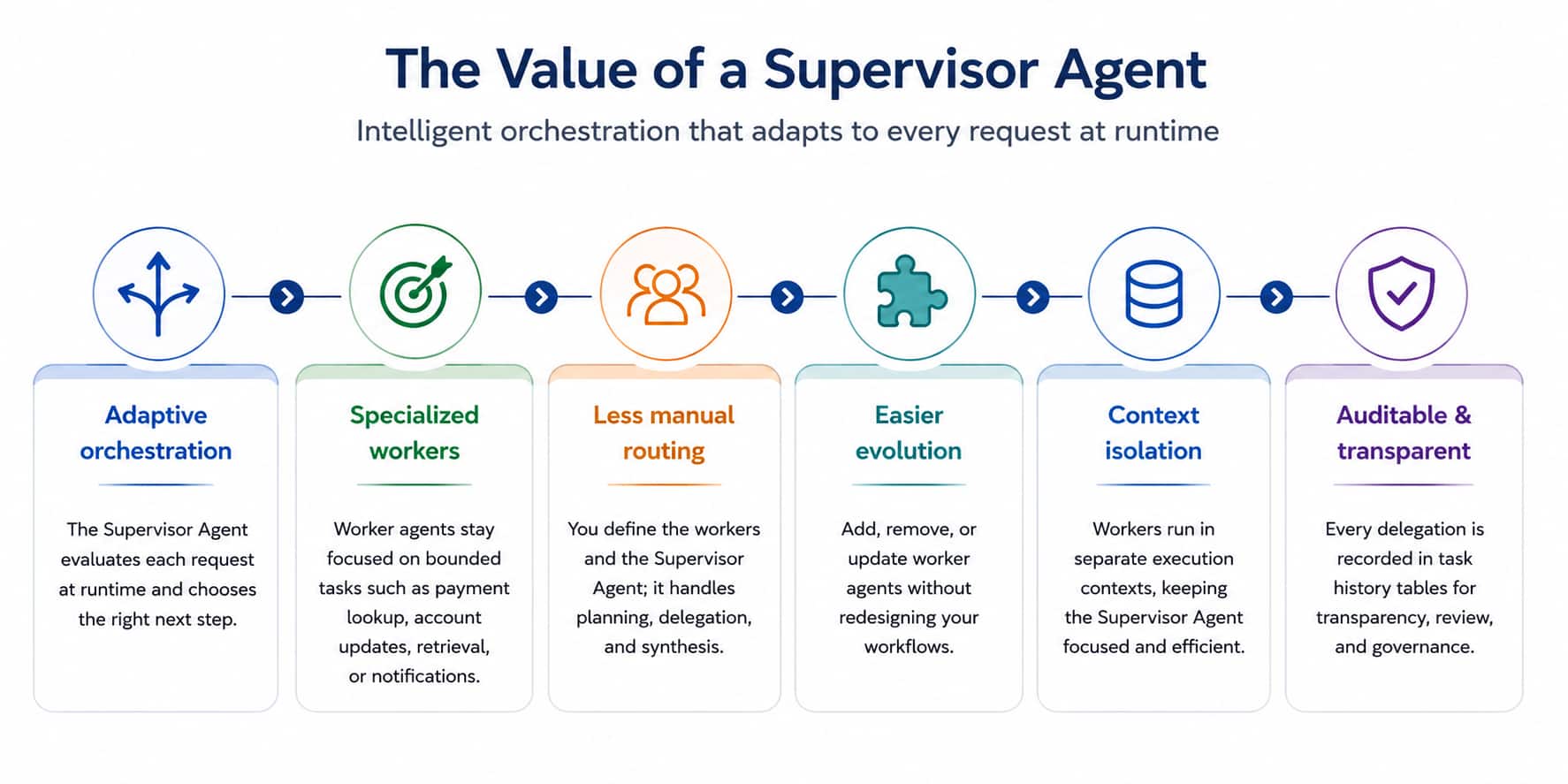
Figure 2: Benefits of Supervisor Agent with Oracle Select AI
How a Select AI Supervisor Agent team runs
A Supervisor Agent is an orchestration agent in Oracle Select AI Agent Framework. It receives the initial prompt, controls the overall workflow for a Supervisor Agent team, and delegates focused subtasks to configured worker agent-task pairs.
At each reasoning step, the supervisor can delegate to a worker when it needs specialized information or capabilities, ask for human input when clarification is required, or produce the final answer when it has enough information to complete the request.
When the supervisor delegates, it prepares a self-contained description of the subtask. Because the worker has no knowledge of the broader supervisor conversation, the handoff must include the context the worker needs. The worker then runs independently with its own tools and task instructions.
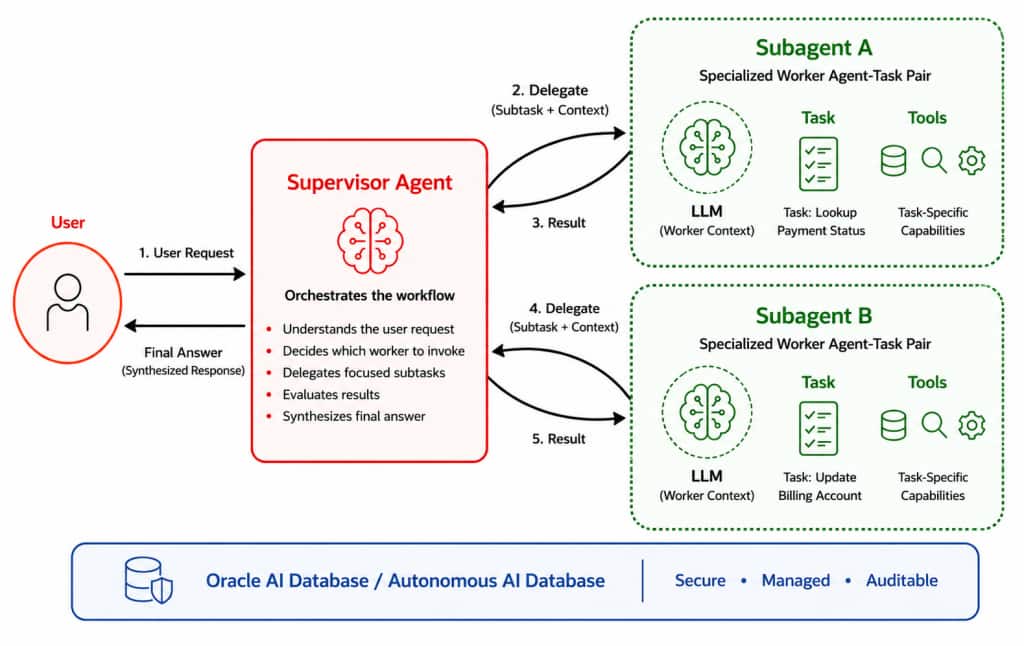
Figure 3: The architecture diagram shows a user request flowing into the supervisor, which delegates subtasks to specialized workers and then synthesizes the final response.
A worker can complete the task and return a result, or it can ask for human input when it reaches a decision point that requires clarification. The supervisor resumes with the worker result as new context and decides whether another delegation is needed.
Try it in three lines
Once a supervisor and its worker agents are defined, running the team looks like this:
EXEC DBMS_CLOUD_AI_AGENT.SET_TEAM('CUSTOMER_SUPPORT');
SELECT AI AGENT my username is john_smith, I want to update my billing address to 11th Ave, Austin, TX 78701;
SELECT AI AGENT please check my payments on Jan 11 2026;
SELECT AI AGENT yes send the email;
Three different intents, one conversation – the supervisor routes each request to the right specialist, waits for confirmation where needed, and assembles the final answer.
From Sequential Workflows to Dynamic Orchestration
The ReAct pattern gives a single agent a reasoning-and-action loop: reason, act by calling a tool, observe the result, repeat until it can answer. Supervisor Agent teams apply the same loop one level up – the supervisor’s actions are delegations to worker agent-task pairs rather than tool calls.
ReAct helps an agent decide which tool to use next. Supervisor orchestration helps an agent decide which worker agent-task pair to use next. That distinction matters for enterprise workflows: tools are good for discrete actions; worker agents can encapsulate a whole role, with their own tools, reasoning loop, and task-specific execution context.
Example: customer service orchestration
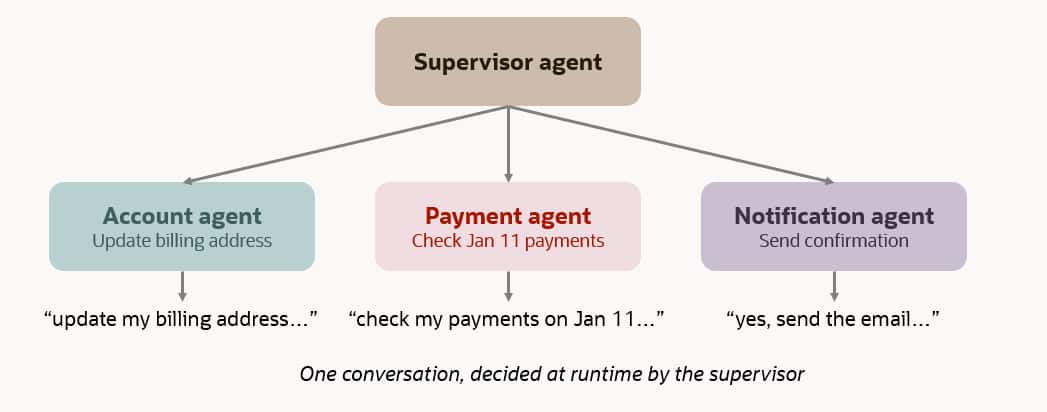
Figure 4: Example flow of customer service orchestration with a supervisor agent
A supervised customer service team might include these worker agent-task pairs:
• ACCOUNT_AGENT / ACCOUNT_MANAGEMENT_TASK
• PAYMENT_AGENT / PAYMENT_MANAGEMENT_TASK
• NOTIFICATION_AGENT / SEND_STATEMENT_TASK
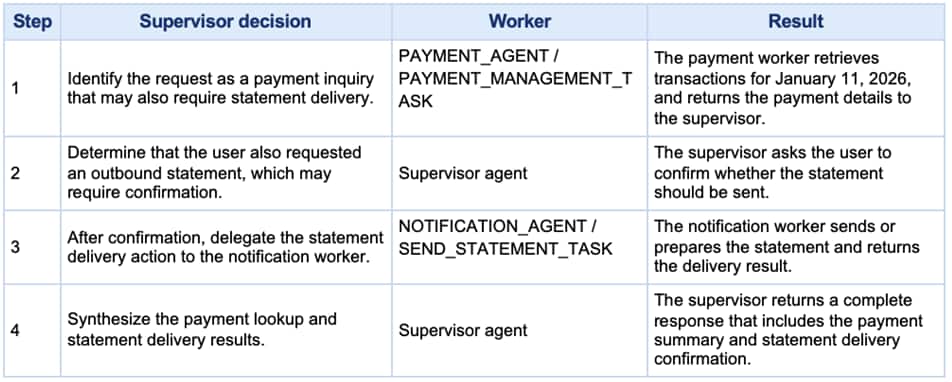
A customer asks: “Please check my payments on January 11, 2026, and send me a statement.”
The supervisor does not need to run every available task in a fixed sequence. It can first route the request to the payment worker to retrieve the relevant transactions. After reviewing the payment result and confirming that the user wants a statement sent, the supervisor can delegate the delivery step to the notification worker. The supervisor then combines the payment details and delivery confirmation into a final response.
Example: conversational analytics over enterprise data
A business analyst asks, “Why did renewals decline last quarter, and what should we do about it?” A supervised analytics team might include a SQL analysis agent-task pair that uses Oracle Select AI to query structured data, a retrieval agent-task pair that summarizes related sales notes or customer feedback, a diagnostic agent-task pair that identifies patterns by segment, region, or product, and a recommendation agent-task pair that proposes next steps.
A fixed sequential team could run all of these in order. A Supervisor Agent team can choose a more adaptive path: it may start with SQL analysis, then delegate retrieval only if the decline appears concentrated in one region, and then call diagnostics only if a pricing change turns up. The final response combines quantitative findings, supporting context, and recommended actions.
Define and run a Supervisor Agent team
The supervisor capability builds on DBMS_CLOUD_AI_AGENT. Assume the worker agents and tasks already exist, such as ACCOUNT_AGENT / ACCOUNT_MANAGEMENT_TASK and PAYMENT_AGENT / PAYMENT_MANAGEMENT_TASK.
Create the Supervisor Agent by setting the supervisor attribute to true:
BEGIN
 DBMS_CLOUD_AI_AGENT.CREATE_AGENT(
   agent_name => 'ORCHESTRATOR_AGENT',
   attributes => '{
     "profile_name": "my_ai_profile",
     "role": "Coordinate customer support requests across account and payment specialists.",
     "supervisor": true
   }',
   description => 'Supervisor agent for customer support workflows'
 );
END;
Then define the Supervisor Agent team. The agents list contains the worker agent-task pairs available for delegation, while supervisor_agent identifies the orchestrator. The process attribute remains part of the team definition.
BEGIN
 DBMS_CLOUD_AI_AGENT.CREATE_TEAM(
   team_name => 'CUSTOMER_SUPPORT',
   attributes => '{
     "process": "sequential",
     "supervisor_agent": "ORCHESTRATOR_AGENT",
     "agents": [
       {"name": "ACCOUNT_AGENT", "task": "ACCOUNT_MANAGEMENT_TASK"},
       {"name": "PAYMENT_AGENT", "task": "PAYMENT_MANAGEMENT_TASK"},
       {"name": "NOTIFICATION_AGENT", "task": "SEND_STATEMENT_TASK"}
     ]
   }',
   description => 'A Supervisor Agent team with an orchestrator delegating to specialists'
 );
END;
In this example, process remains part of the team definition. The supervisor still follows a delegate-wait-resume pattern, but the worker agent-task pairs are not hardcoded into a fixed business sequence. The supervisor decides which worker to use next based on the request and intermediate results.
After creating the team, set it as the active team and run a multi-turn conversation through Oracle Select AI:
EXEC DBMS_CLOUD_AI_AGENT.SET_TEAM('CUSTOMER_SUPPORT');
SELECT AI AGENT my user name is john_smith, I want to update my billing address to 11th Ave, Austin, TX 78701;
SELECT AI AGENT please check my payments on Jan 11 2026;
SELECT AI AGENT yes send the email;
In this flow, the supervisor can delegate the address update to the account worker, delegate the payment query to the payment worker, wait when confirmation is required, and then resume after the notification action completes. After the run, task history tables provide traceability into which worker agent-task pairs were called and what results contributed to the final response.
Security and governance
Supervisor Agent teams run within the Oracle Select AI Agent Framework security model. DBMS_CLOUD_AI_AGENT is an invoker’s rights package, so APIs run as the current invoker. The invoker needs the required privileges, including access to credential objects used to communicate with AI providers, vector store providers, or external services. SQL translation runs in the invoker schema, and external access requires credentials.
This is valuable because supervised workflows often combine read-only diagnostics with business actions such as account updates or notifications. Each delegated task still operates under the database security and privilege model, which helps keep agentic execution aligned with enterprise governance requirements in Oracle AI Database and Oracle Autonomous AI Database.
Designing Supervisor Agent teams
- Let the supervisor orchestrate, not own every capability. Its role is to understand the request, choose the right worker, pass the right context, evaluate returned results, and decide when the workflow is complete.
- Keep worker agent-task pairs focused, with just the tools each task needs. Focused workers are easier to test, govern, and improve.
- Make handoffs self-contained. Since workers operate in isolated contexts, the supervisor needs to provide the information required to complete the delegated task, and worker outputs should be clear enough for the supervisor to evaluate safely.
- Use task history to improve your design. Review where the supervisor delegates, where it asks for help, and where worker results need clearer structure.
- Start with workflows where the benefits of dynamic orchestration are clear. Supervisor agents are most useful when the right path depends on the request, intermediate results, or human input.
When sequential teams are still simpler
Supervisor Agent teams and sequential teams are complementary patterns. Use a sequential team when every request follows the same known steps and the path does not depend on intermediate results. Sequential teams are easier to reason about for linear pipelines such as extract, transform, validate, and summarize.
Use a Supervisor Agent team when the path needs to adapt. This is the better fit when the workflow may branch, skip steps, ask for human input, or call different specialists based on what is discovered during execution.
Ready to build with supervisor agents?
Supervisor agents add intelligent runtime orchestration to Oracle Select AI Agent Framework. Existing agent teams are ideal for workflows where the sequence of agent-task pairs is known in advance. Supervisor Agent teams are designed for workflows where the next step depends on the request, intermediate results, or human input.
By adding a supervisor agent, you can build adaptive multi-agent workflows in Oracle AI Database and Oracle Autonomous AI Database without redesigning your existing worker agents. The supervisor agent evaluates each request, delegates work to the right specialists, and synthesizes the results into a single, coherent response—all while operating within Oracle’s security, governance, and auditing model.
For developers, this means less manual routing logic and simpler application code. For data engineers, it helps keep worker agents modular, reusable, and easier to maintain. For business users, it delivers more natural, conversational interactions over enterprise data and business processes.
Whether you’re building customer support, enterprise analytics, financial operations, or internal assistants, the supervisor agent lets Oracle AI Database determine the right sequence of work at runtime while keeping your data secure, inside the database.
If you’ve already built Oracle Select AI agents, you’re only a few lines of PL/SQL away from adding dynamic orchestration.
Resources
- Multi-Agent Pattern for AI Agents
- Supervisor Agent Pattern
- How to Use Select AI Supervisor Agent Teams
- Example: Build and Run a Customer Support Supervisor Team
- Oracle Select AI
- Oracle Select AI Agent Framework
Create a Select AI Supervisor Agent in your Oracle Autonomous AI Database today!