
As we all know, AI is changing how applications are built. Developers, business analysts, and line-of-business teams are clearly using AI to accelerate application development, with or without IT involvement.
For enterprises, however, speed is only part of the equation. Business-critical applications must also be secure, governed, auditable, maintainable, and integrated with established data, development, and deployment processes.
This raises an important question:
How do we empower business users and developers to build AI-generated applications while maintaining security, data access controls, and operational governance?
At Oracle, we believe the answer isn’t simply to generate more code. It’s to rethink what AI should generate in the first place.
Today, I’m excited to announce that Oracle APEX AI Application Generator is now available in OCI on Autonomous AI Database Serverless, as part of Oracle APEX 26.1. It represents a new approach to designing, building, and maintaining enterprise applications with AI.
At its core is APEXlang, a new Application Definition Language (ADL) that enables AI agents to generate complete, data-centric applications. Instead of thousands of lines of source code, applications are abstracted as structured application definitions. Oracle APEX then compiles and executes those definitions within its managed runtime.
Oracle APEX has helped organizations build millions of secure, data-centric enterprise applications on Oracle AI Database for more than 20 years. With Oracle APEX 26.1, we’re extending that foundation into the AI era while preserving the governance, security, reliability, and maintainability enterprises depend on.
Introducing APEXlang
APEXlang represents the complete definition of an Oracle APEX application. Pages, navigation, forms, reports, dashboards, and business logic are expressed in a structured, human-readable, declarative format that can be generated, reviewed, version-controlled, and managed like other enterprise development artifacts. This means AI generates the intent and structure of the application—not thousands of lines of implementation code that organizations must independently secure and maintain.
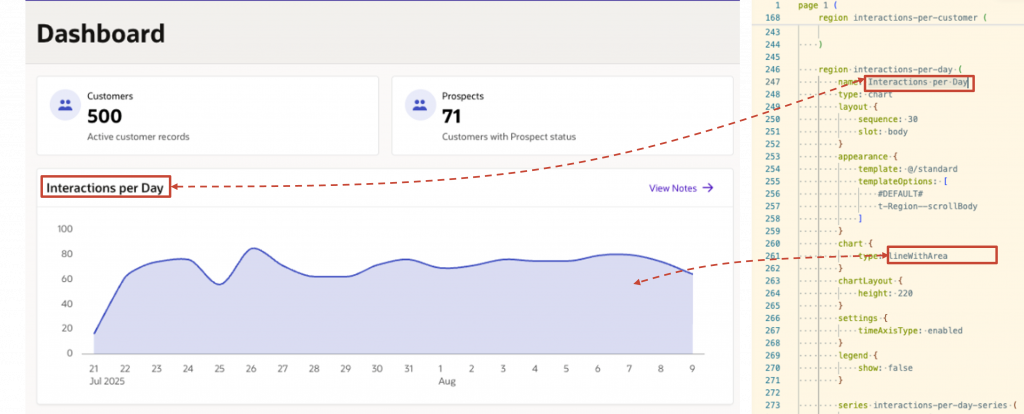
Figure 1: APEXlang and application example
A useful analogy is SQL. Developers use SQL to describe what they want to do with data, while Oracle AI Database determines how to execute those operations.
APEXlang applies the same philosophy to applications. Instead of generating implementation code, AI agents generate an application definition. Oracle APEX handles its execution within a managed runtime, allowing the platform to continue enforcing consistency, and operational best practices. Apps also inherit the foundational data-layer security offered by Oracle AI Database, and can easily take advantage of capabilities like Deep Data Security.
A Different Model for AI-Assisted App Development
Most AI-assisted development follows a familiar pattern: a developer writes a prompt, AI generates source code, and the developer is responsible for reviewing, securing, testing, deploying, and maintaining that code.
Oracle APEX takes a different approach: AI doesn’t generate implementation code, it generates an abstracted application definition executed by a managed runtime.
In this way, AI is responsible for the generation of the application definition, but not the application runtime execution. Organizations gain the productivity of AI while continuing to rely on the proven, at scale capabilities of Oracle APEX and Oracle AI Database—platforms already trusted to run mission-critical enterprise workloads around the world.
Because APEXlang is declarative and constrained by a defined grammar, AI generates fewer low-level implementation details, helping reduce the attack surface while allowing the platform to enforce guardrails consistently.
Also, APEXlang is a documented domain-specific language with a published grammar, and AI agents operate within well-defined boundaries rather than generating unrestricted implementation code. Definitions remain abstracted, readable, and suitable for source control, code review, transport between environments, rollback, and standard artifact-based lifecycle source-control.
Multiple Ways to Build Apps, Designed for AI Workflows
APEXlang is publicly documented, with a published grammar, examples, and public skills that enable leading AI models to be natively trained on APEXlang generation.
One Application Definition. Multiple Development Experiences.
There are three ways to develop an application with Oracle APEX:
- Low code, AI-assisted App Builder
Develop in an AI enabled application builder with drag-n-drop, point-n-click, wizards, AI assistance, and visual representations of application components.
- Using the native AI agent
Leverage the industry’s best and most capable AI coding agents, such as Codex, to perform spec-to-app and incremental vibe-style application generation. This is particularly important as it allows organizations to immediately leverage new AI agents.
- Using VS Code with extensions
Leverage the Oracle SQL Developer for VS Code Extension to perform generative development as well as code-reviews, diffs, and merges. This is the best way to see what AI changed. Because the generated application definition is text-based and human-readable, developers can inspect, diff, review, and approve what AI changed before those changes are deployed.
See how the different options compare:
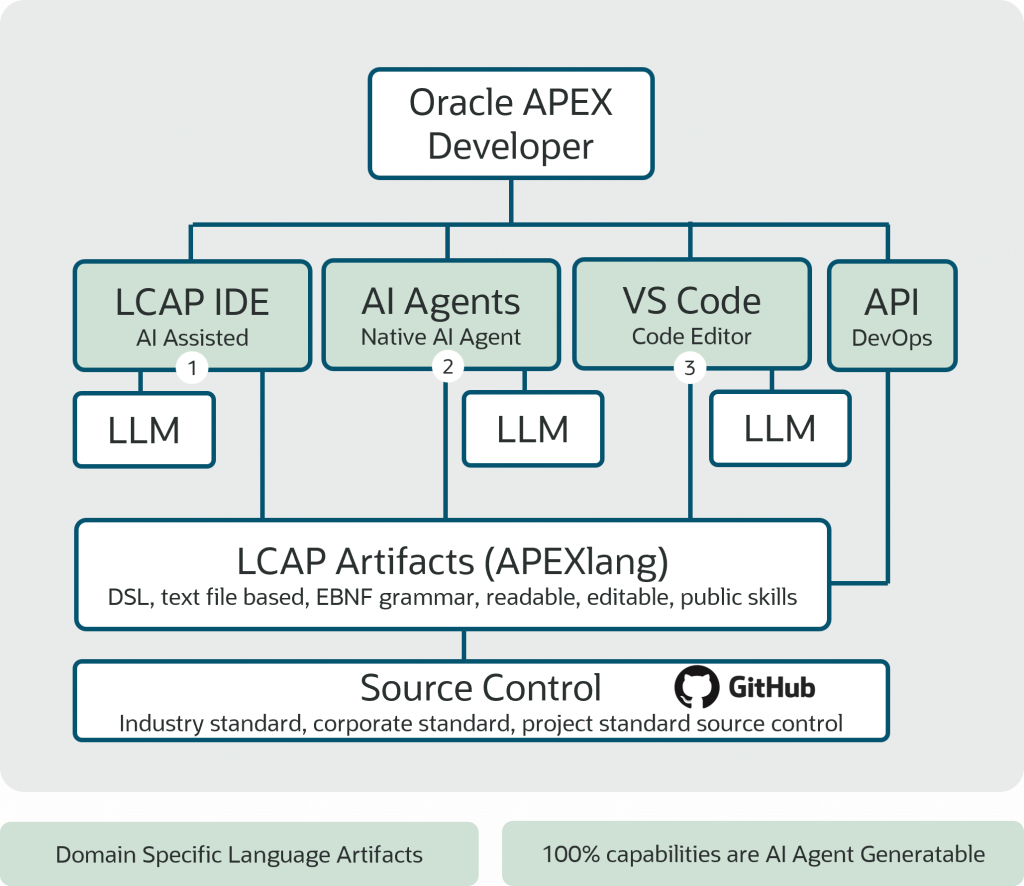
Figure 2: Oracle APEX application development paths
Regardless of the development experience or AI model, the underlying application definition remains consistent.
Building Applications Conversationally
Generating applications from natural language to abstraction layer (APEXlang), and not to a direct high-control implementation, allows organizations to generate more consistent and more declarative application artifacts:
“Add a chart showing assignments by priority.”
“Translate my application into Spanish.”
“Add an AI agent to answer questions about customer orders.”
“Rename every ‘Apply Changes’ button to ‘Save.'”
The AI coding agent interprets the request and adds or updates the APEXlang-based application definition.
Developers don’t need to learn APEXlang syntax to benefit. They can work conversationally, focusing less on implementation details and more on business intent.
Additional Oracle APEX 26.1 AI Features
Oracle APEX 26.1 also introduces new ways to add AI capabilities directly to applications. Developers can build AI Agents conversationally, grounded by tools and capabilities defined by application developers. This enables agents to interact with enterprise data in purposeful, controlled ways based on the business capabilities exposed by the application.
We’re also introducing AI Interactive Reports. Users can interact with reports using natural language, with requests such as “Pivot sales by region,” “Show Northern Europe,” or “Sort by customer count.” Oracle APEX translates these requests into report operations without requiring users to manually configure report controls.
What This Means for Enterprise App Development
The question is no longer whether AI can help developers build applications; it clearly can. The more important question is how AI can help build enterprise-class applications.
Oracle APEX AI Application Generator enables organizations to exploit the full power of AI agents to generate enterprise-class, data-centric applications.
Best of all, enterprises can leverage the AI coding agents they are already using (ex: Codex), and can manage the generated artifacts using existing organizational source control standards. The same artifacts can move through established enterprise development lifecycles—from source control and review to test, production deployment, rollback, and recovery. This means organizations can innovate faster without giving up the data governance, security, reliability, and operational consistency they depend on.
Generating an abstracted application definition (APEXlang) instead of implementation code helps enterprises reduce technical debt, while enabling enterprises to take advantage of the latest AI coding agents.
Because your application runs on the managed APEX runtime engine, even applications built years ago run on the platform with the latest patches and updates. The result: generated applications continue to benefit from the latest capabilities, security updates, and platform enhancements—without needing to be rewritten or regenerated. In effect, organizations maintain application intent rather than large volumes of AI-generated implementation code.
Resources:
- Learn more: https://www.oracle.com/apex/
- Documented language & grammar: https://docs.oracle.com/en/database/oracle/apex/26.1/apxln
- Public Skills: https://github.com/oracle/skills
- Examples: https://github.com/oracle/apex/tree/26.1